

TeraWulf Inc. stocks have been trading down by -7.38 percent amid bearish sentiment over Bitcoin price weakness and mining margins.
Key Takeaways
- Neocloud and GPU data-center operators such as Nebius, IREN, Applied Digital, TeraWulf, and CoreWeave saw share gains.
- Elon Musk warned that debt markets have “almost entirely shut off” to AI data centers that lack significant non-AI revenue.
- Morgan Stanley flagged financing and capacity-deployment uncertainty for CoreWeave, underscoring broader risk perceptions around AI data-center buildout.
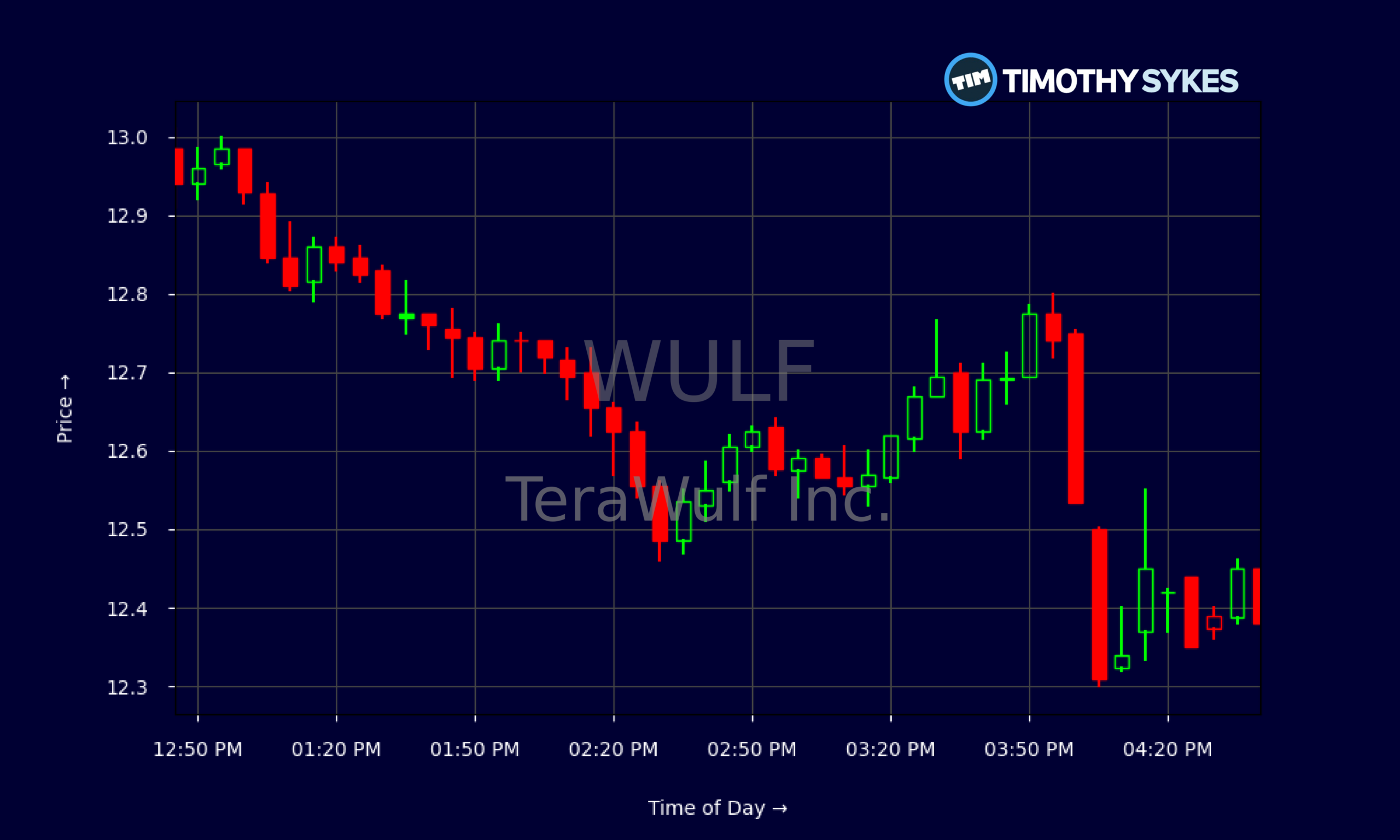
Live Update At 16:46:36 EDT: On Thursday, October 29, 2026 TeraWulf Inc. stock [NASDAQ: WULF] is trending down by -7.38%! Discover the key drivers behind this movement as well as our expert analysis in the detailed breakdown below.
Quick Financial Overview
WULF has been trading like a pure AI-infrastructure momentum name. Over the last couple of weeks, TeraWulf Inc. has swung from a close near $14.79 on 2026/10/05 down into the $11s, then back toward the mid-$12s. That’s a textbook volatility playground for active traders. The most recent close around $12.75 came after a session where WULF popped to $13.30 but faded into the close, signaling profit-taking and supply overhead.
Intraday, WULF’s 5‑minute chart shows a push above $13 in the late morning, then a steady grind lower through the afternoon toward the $12.50–$12.70 zone. That intraday rollover tells traders the stock is struggling to hold breakouts and is better treated as a trade, not a trend, until it proves otherwise.
More Breaking News
Fundamentally, TeraWulf Inc. is still in heavy build‑out mode. Revenue of about $168.5M comes with very deep losses, with margins deeply negative and free cash flow around -$992.3M in the latest quarter. WULF’s balance sheet shows roughly $2.6B in cash and short‑term investments but also more than $4.0B of long‑term debt and negative working capital. For traders, WULF is a high‑beta AI infrastructure story, not a steady compounder.
Why Traders Are Watching WULF Right Now
WULF is back on screens because it’s tied directly to one of the hottest themes in the market: GPU data centers powering AI workloads. TeraWulf Inc. is being mentioned in the same breath as Neocloud, Nebius, IREN, Applied Digital, and CoreWeave, all part of the GPU data‑center trade that just saw share gains. When an entire peer group moves, momentum traders pay attention, and WULF is right in that slipstream.
But this AI data-center rally comes with a big asterisk. Elon Musk recently warned that debt markets have “almost entirely shut off” to AI data centers that don’t have strong non‑AI revenue. That warning hits right where WULF and its peers live: capital‑intensive infrastructure that needs constant funding to keep building capacity. At the same time, Morgan Stanley flagged financing and capacity‑deployment uncertainty for CoreWeave, another GPU player. When a major bank questions how a leading operator will finance and roll out capacity, traders in WULF should listen.
Put together, WULF is being pulled in two directions. On one side, traders are chasing AI data‑center exposure, helping push TeraWulf Inc. off recent lows and into multi‑point intraday swings. On the other, the macro message is clear: easy money is drying up, and only the strongest balance sheets and execution stories will last. That tension is exactly what short‑term traders thrive on—fast moves driven by shifting narratives.
Conclusion
For active traders, WULF is the definition of a high‑risk, high‑reward AI infrastructure play. TeraWulf Inc. sits at the crossroads of massive AI demand and a credit market that, as Musk put it, has “almost entirely shut off” for weaker funding stories. The company’s numbers back up that risk profile: big revenue growth, but huge negative margins, heavy capital spending, and a levered balance sheet. This is not a slow‑and‑steady compounder; it’s a speculative build‑out.
That’s exactly why disciplined chart readers track WULF so closely. The daily chart shows a name that can move $1–$2 in a session, while the intraday action reveals clear levels where momentum stalls or ignites. When a stock like TeraWulf Inc. is riding an AI headline wave, every funding headline, every peer note, and every big candle matters.
Tim Sykes likes to remind traders, “The market doesn’t owe you anything — protect yourself first, then worry about profits.” As millionaire penny stock trader and teacher Tim Sykes, says, “Preparation plus patience leads to big profits.”. WULF is a prime example. Respect the volatility, trade the levels, and stay aware that enthusiasm for AI data centers can flip fast if funding windows narrow further. For now, WULF remains a powerful trading vehicle in the AI build‑out story, but one that demands strict risk management and fast decision‑making.
This is stock news, not investment advice. Timothy Sykes News delivers real-time stock market news focused on key catalysts driving short-term price movements. Our content is tailored for active traders and investors seeking to capitalize on rapid price fluctuations, particularly in volatile sectors like penny stocks. Readers come to us for detailed coverage on earnings reports, mergers, FDA approvals, new contracts, and unusual trading volumes that can trigger significant short-term price action. Some users utilize our news to explain sudden stock movements, while others rely on it for diligent research into potential investment opportunities.
Dive deeper into the world of trading with Timothy Sykes, renowned for his expertise in penny stocks. Explore his top picks and discover the strategies that have propelled him to success with these articles:
- Penny Stocks Trading Guide
- Best Penny Stocks Under $1 to Buy Today
- Top 8 Penny Stocks to Watch on Robinhood
Once you’ve got some stocks on watch, elevate your trading game with StocksToTrade the ultimate platform for traders. With specialized tools for swing and day trading, StocksToTrade will guide you through the market’s twists and turns.
Dig into StocksToTrade’s watchlists here:





Leave a reply