

Insmed Incorporated stocks have been trading up by 15.06 percent following promising clinical trial progress that energized investors.
Key Takeaways
- Brinsupri/BRINSUPRI is now launched in Japan, making it the first approved treatment for non‑cystic fibrosis bronchiectasis (NCFB) in patients 12+ and commercially available across the U.S., EU/UK, and Japan.
- Insmed reaffirmed 2026 revenue guidance of $1.25B–$1.4B for Brinsupri and $450M–$470M for Arikayce, backing a strong growth outlook despite recent volatility and leadership changes.
- CFO Sara Bonstein will step down after October 2026, with Insmed emphasizing a smooth transition and no disputes over accounting, controls, or operations while keeping guidance intact.
- Major banks trimmed INSM price targets but kept bullish ratings, while Wolfe Research downgraded to Peer Perform even as the average rating remains Buy with a mean target of $200.18.
- The TPIP Phase 3 PALM program is underway across four serious pulmonary indications, positioning Insmed for a potential second major respiratory franchise if late‑stage data deliver.
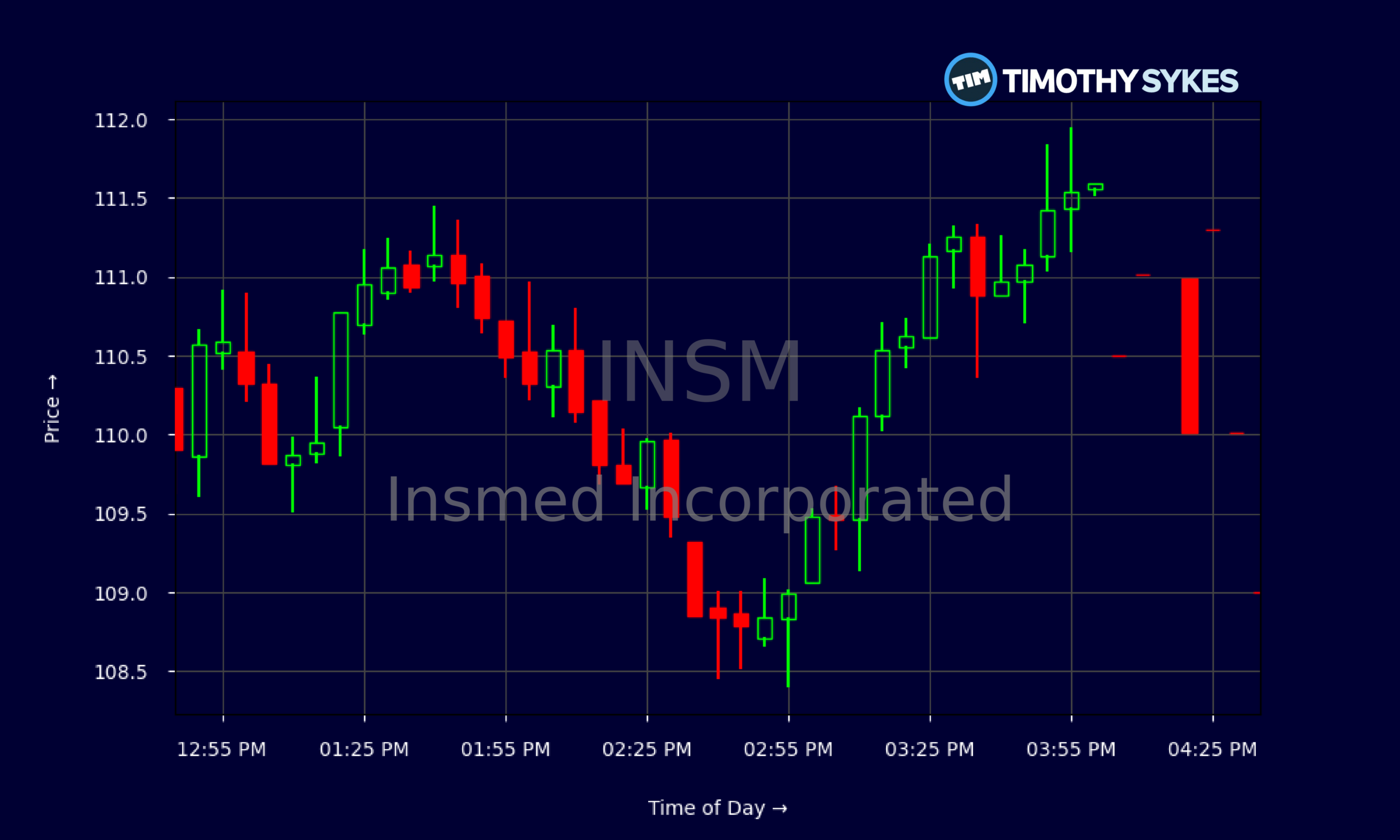
Live Update At 16:47:22 EDT: On Thursday, October 29, 2026 Insmed Incorporated stock [NASDAQ: INSM] is trending up by 15.06%! Discover the key drivers behind this movement as well as our expert analysis in the detailed breakdown below.
Quick Financial Overview
INSM has been acting like a momentum biotech with real revenue behind it. Over the last two weeks, the stock climbed from a close near $103.83 on 2026/10/05 to $111.59 on 2026/10/29, with several sessions holding above $95. That tells traders the market is still willing to pay up for the Insmed growth story even after a big run.
Intraday on 2026/10/29, INSM swung between about $103.78 and $114.51, but the close near the top of the daily range shows dip buyers are active. Volume-backed strength into the close is the kind of pattern momentum traders scan for when planning next‑day setups.
Fundamentally, Insmed reported roughly $606.4M in trailing revenue, but it is still deep in the red, with profit margins sharply negative and return on equity below zero. This is classic high‑growth biotech: huge gross margin near 95%, aggressive spend on R&D and SG&A, and a price‑to‑sales ratio around 19.3 that assumes strong future expansion.
More Breaking News
On the balance sheet, INSM shows over $1.16B in cash and short‑term investments, a current ratio of 3.7, and manageable leverage. For traders, that combination — strong cash, high burn, and big guidance numbers — sets up a clear binary: either execution keeps validating the premium, or the multiple compresses fast.
Why Traders Are Watching INSM Right Now
Insmed is not trading like a sleepy mid‑cap pharma. It is trading like a company trying to build a respiratory empire. The most important near‑term driver is Brinsupri/BRINSUPRI. Insmed has now commercially launched the 25 mg tablet in Japan for NCFB patients 12 and older, on top of existing launches in the U.S. and EU/UK. That means INSM has turned a single Phase 3 ASPEN win into a three‑continent commercial footprint.
For traders, that matters because management reaffirmed 2026 revenue guidance at $1.25B–$1.4B for Brinsupri and $450M–$470M for Arikayce. Those are big numbers relative to today’s ~$606M revenue base. If Insmed stays on that trajectory, the current valuation starts to look more grounded in math than in hype.
The Street is recalibrating, not abandoning, the story. Barclays, Morgan Stanley, Bank of America, and Raymond James all trimmed INSM price targets, but they kept Overweight/Buy/Outperform ratings. The message is clear: expectations for near‑term prescriptions may have been a bit hot, yet the long‑term Brinsupri and TPIP thesis still stands.
There is some caution in the air. Wolfe Research downgraded Insmed to Peer Perform, and shares slipped about 2% on that call, plus another hit around 2.7% in premarket when CFO Sara Bonstein’s planned departure surfaced. However, INSM quickly stabilized, helped by reiterated guidance and the company’s note that the CFO change was not driven by any accounting disagreements.
Traders also have their eyes on TPIP. Insmed’s global Phase 3 PALM program spans four indications — PAH, PH‑ILD, PPF, and IPF — with more than 2,000 patients targeted. That level of late‑stage spend signals that Insmed wants TPIP to be the next pillar after Brinsupri. Upcoming data presentations at CHEST 2026 and IDWeek 2026 may not be label‑changing, but they can fine‑tune sentiment on both TPIP and Brinsupri as the story matures.
Conclusion
For active traders, INSM is a textbook high‑beta biotech built around execution. On one side, you have global Brinsupri/BRINSUPRI launches, reaffirmed 2026 guidance above $1.7B in combined Brinsupri and Arikayce revenue, and a deep respiratory pipeline led by TPIP. On the other side, Insmed is still burning cash, posting negative earnings, and carrying a rich price‑to‑sales multiple that leaves no room for complacency.
The recent price‑target trims from Barclays, Morgan Stanley, Bank of America, and Raymond James reflect that balance. The Street is still bullish on INSM, but it now wants proof: revenue beats, strong NCFB patient metrics, and a clear path to sustainable growth into and beyond 2027. The Wolfe Research downgrade and the CFO transition are reminders that sentiment can shift quickly if Insmed stumbles on any of those fronts.
This is where disciplined trading comes in. As Tim Sykes likes to hammer home, “Cut losses quickly — that’s your only real edge in a market you can’t control.” As millionaire penny stock trader and teacher Tim Sykes, says, “The goal is not to win every trade but to protect your capital and keep moving forward.”. For those studying INSM, that means respecting the volatility, tracking upcoming Q3 2026 earnings, guidance updates, and TPIP data, and treating every trade as a research‑driven decision — not a hope trade. This article is for educational and research purposes only and is not investment advice.
This is stock news, not investment advice. Timothy Sykes News delivers real-time stock market news focused on key catalysts driving short-term price movements. Our content is tailored for active traders and investors seeking to capitalize on rapid price fluctuations, particularly in volatile sectors like penny stocks. Readers come to us for detailed coverage on earnings reports, mergers, FDA approvals, new contracts, and unusual trading volumes that can trigger significant short-term price action. Some users utilize our news to explain sudden stock movements, while others rely on it for diligent research into potential investment opportunities.
Dive deeper into the world of trading with Timothy Sykes, renowned for his expertise in penny stocks. Explore his top picks and discover the strategies that have propelled him to success with these articles:
- Penny Stocks Trading Guide
- Best Penny Stocks Under $1 to Buy Today
- Top 8 Penny Stocks to Watch on Robinhood
Once you’ve got some stocks on watch, elevate your trading game with StocksToTrade the ultimate platform for traders. With specialized tools for swing and day trading, StocksToTrade will guide you through the market’s twists and turns.
Dig into StocksToTrade’s watchlists here:





Leave a reply