

Crocs Inc. stocks have been trading up by 24.69 percent after upbeat earnings and robust footwear demand fueled investor optimism.
Key Takeaways Traders Are Watching
- Barclays upgraded CROX to Overweight from Equal Weight and hiked its price target to $139, pointing to a multi‑year growth story and stronger international sales despite North America noise.
- Shares of CROX popped roughly 6–7% on the upgrade and new $139 target, even though trading volume was slightly below average on the move.
- UBS flagged mixed sentiment ahead of Q3 for CROX, expecting softer North America but an EPS beat and slightly higher full‑year EPS guidance, with a Neutral rating and $120 target.
- The BARK x Crocs collaboration is expanding from sold‑out Pet Crocs shoes into pet beds, toys, and dog‑walk accessories sold via bark.co and crocs.com.
- Crocs, Inc. set a 2026/10/29 conference call to review Q3 2026 earnings, a key near‑term catalyst for CROX traders.
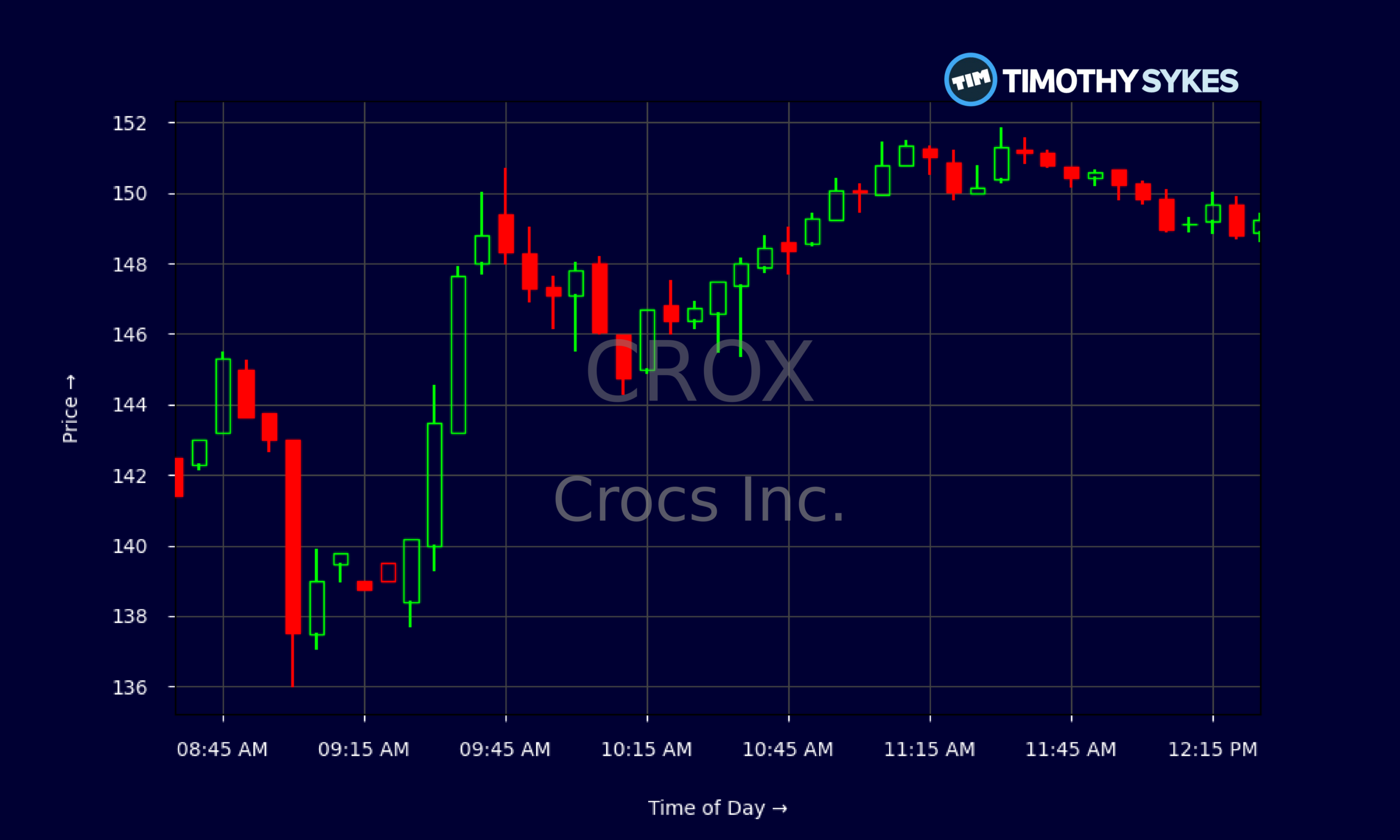
Live Update At 12:32:01 EDT: On Thursday, October 29, 2026 Crocs Inc. stock [NASDAQ: CROX] is trending up by 24.69%! Discover the key drivers behind this movement as well as our expert analysis in the detailed breakdown below.
Quick Financial Overview
CROX is trading like a name the market finally respects again. The daily chart shows a sharp ramp from the low‑$110s in early October to a close near $149.245 on 2026/10/29. That’s a powerful trend, with CROX putting in higher lows almost every session before the big breakout day where it opened at $140 and ripped toward the $150s.
Intraday, CROX held those gains well. After a strong push from the low $140s at the open, the stock based between $148 and $151 through midday, with repeated attempts at new highs. That kind of tight consolidation near the top of the day tells traders that dip buyers are active and shorts are on their heels.
More Breaking News
Under the hood, Crocs Inc. is throwing off serious cash. The latest quarter shows about $1.18B in revenue and roughly $204.9M in net income, supported by a fat 57.5% gross margin and an EBIT margin above 20%. A price‑to‑earnings ratio near 10.15 and a price‑to‑sales ratio around 1.36 leave CROX looking inexpensive versus that growth and profitability profile. For traders, this combo of momentum and value is exactly the kind of setup that can fuel multi‑day moves.
Why Traders Are Locked In On CROX Now
The real spark behind CROX’s latest surge is the Barclays call. The bank upgraded Crocs Inc. to Overweight from Equal Weight and lifted its price target to $139 from $118. That’s not a small bump. Barclays is basically saying the Crocs story is not just a one‑off pandemic fad; it sees visibility into a multi‑year growth runway driven by stronger international sales and real product innovation.
Traders saw the upgrade and piled in. CROX jumped roughly 6–7%, moving from the mid‑$120s toward the $130s and then pushing on to the high‑$140s in the following sessions. What stands out is that the move happened on slightly below‑average trading volume. When a stock can rally that hard without huge volume, it usually means supply is tight and sellers are not eager. That’s the kind of action momentum traders hunt every day.
But it’s not just the rating. Barclays referenced brand investment and innovation, and CROX is backing that up. The expanded BARK x Crocs line takes the quirky Pet Crocs success and stretches it into beds, toys, and dog‑walk accessories, all themed around the Classic Clog look. On the surface, that sounds like a tiny side hustle. For active traders, though, it’s a signal: Crocs Inc. is pressing its brand into new lifestyle niches, keeping customers engaged and diversifying its revenue mix.
Still, not every firm is all‑in bullish. UBS kept a Neutral rating with a $120 target. Its note highlights strong international momentum but softer North America, partly because Amazon sales are shifting from a higher‑margin direct model to a wholesale setup. UBS still expects an EPS beat and slightly higher full‑year EPS guidance, but it’s reminding traders to watch the channel‑mix math, not just the headline revenue prints. That tension between Barclays optimism and UBS caution is exactly what creates trading ranges, breakouts, and sharp squeezes in CROX.
Conclusion
From a trader’s standpoint, CROX is a classic momentum‑meets‑fundamentals story. The stock has exploded off its October base, the daily chart is trending hard, and an influential upgrade from Barclays has reset the narrative around Crocs Inc. to “multi‑year growth” rather than “post‑fad clean‑up.” Strong margins, solid free cash flow around $331M for the recent quarter, and a P/E near 10 keep a value floor under that story.
At the same time, CROX is not risk‑free. UBS is right to highlight the softer North America picture and the Amazon channel shift. If traders only look at headline sales without understanding DTC versus wholesale, they may misread the Q3 print. That 2026/10/29 earnings call is the next big catalyst: the company’s commentary on international strength, North America demand, and the pipeline of brand collaborations like BARK x Crocs will decide whether CROX keeps grinding higher or finally takes a breather.
For active traders, the plan is simple but not easy. Watch how CROX reacts around key levels near recent highs and the Barclays $139 target. Track volume spikes, gap moves, and whether dips get bought quickly or not. As Tim Sykes loves to say, “Patterns repeat because human nature never changes — your job is to study them, not to hope.” In that same spirit, as millionaire penny stock trader and teacher Tim Sykes says, “Embrace the journey, the ups and downs; each mistake is a lesson to improve your strategy.”. This article is for educational and research purposes only, but if you treat CROX as a classroom in real time, there’s a lot to learn about momentum, sentiment, and disciplined trading.
This is stock news, not investment advice. Timothy Sykes News delivers real-time stock market news focused on key catalysts driving short-term price movements. Our content is tailored for active traders and investors seeking to capitalize on rapid price fluctuations, particularly in volatile sectors like penny stocks. Readers come to us for detailed coverage on earnings reports, mergers, FDA approvals, new contracts, and unusual trading volumes that can trigger significant short-term price action. Some users utilize our news to explain sudden stock movements, while others rely on it for diligent research into potential investment opportunities.
Dive deeper into the world of trading with Timothy Sykes, renowned for his expertise in penny stocks. Explore his top picks and discover the strategies that have propelled him to success with these articles:
- Penny Stocks Trading Guide
- Best Penny Stocks Under $1 to Buy Today
- Top 8 Penny Stocks to Watch on Robinhood
Once you’ve got some stocks on watch, elevate your trading game with StocksToTrade the ultimate platform for traders. With specialized tools for swing and day trading, StocksToTrade will guide you through the market’s twists and turns.
Dig into StocksToTrade’s watchlists here:





Leave a reply