

Transocean Ltd (Switzerland) stocks have been trading up by 5.75 percent after upbeat offshore drilling contract and utilization news.
Key Takeaways
- Backlog jumped by about $1.1B after a new $62M Norway contract for Transocean Norge and Equinor converting roughly $1.0B of harsh‑environment work into firm commitments.
- Ultra‑deepwater demand stayed strong as Transocean Ltd (Switzerland) locked in about $550M of new U.S. Gulf of Mexico drillship backlog starting in 2027.
- Brazil approved the Valaris–Transocean merger without restrictions, clearing the way for Q4 closing and a larger combined offshore driller.
- The company extended its main revolver to 2031, upsized it to $750M, and redeemed $165M of 8% notes, trimming future interest expense by roughly $22M.
- RIG agreed to buy Valaris in an all‑stock deal at 15.235 RIG shares per VAL share, while a law firm reviews whether Valaris holders are getting full value.
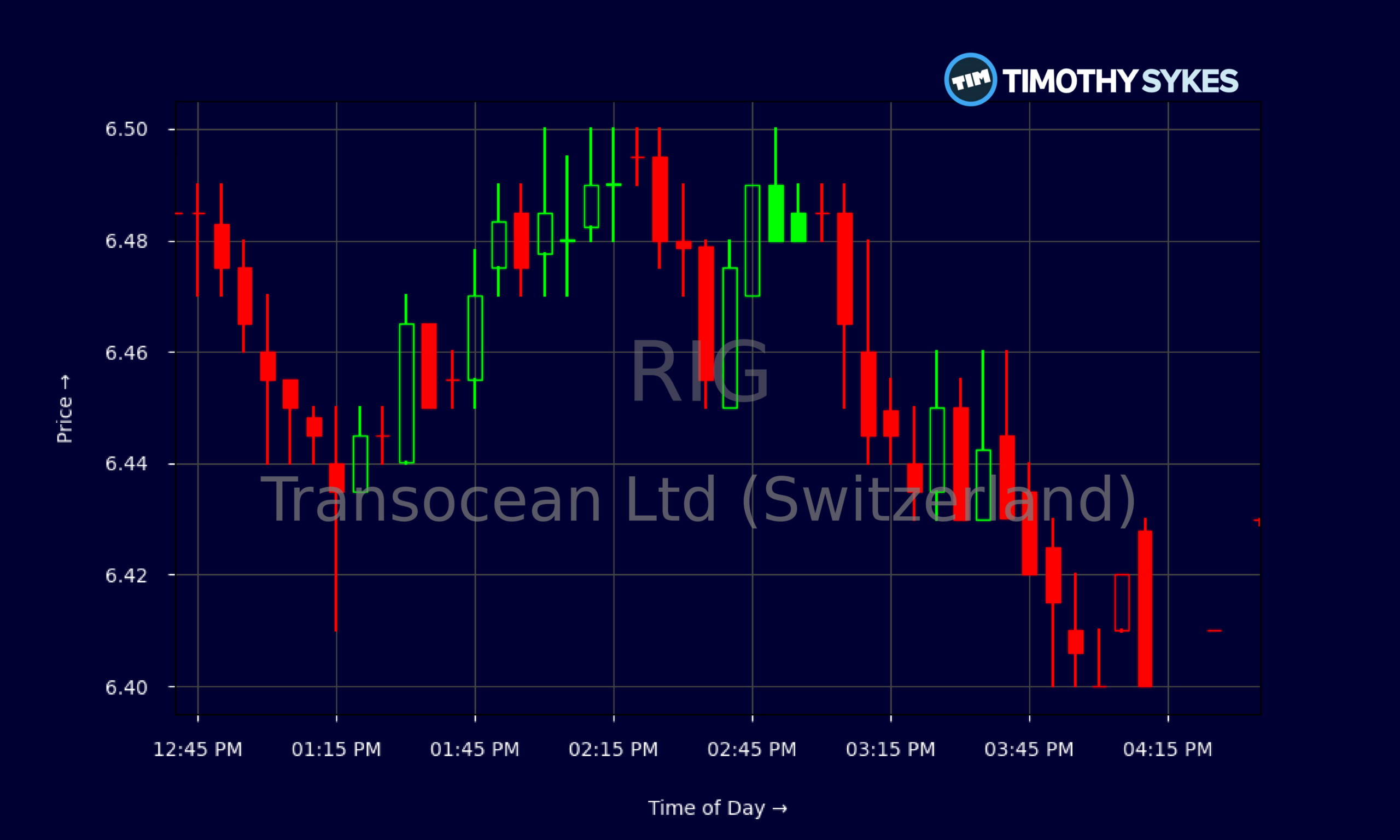
Live Update At 16:46:53 EDT: On Friday, October 23, 2026 Transocean Ltd (Switzerland) stock [NYSE: RIG] is trending up by 5.75%! Discover the key drivers behind this movement as well as our expert analysis in the detailed breakdown below.
Quick Financial Overview
RIG has been grinding higher on the chart. Over the last few weeks, Transocean moved from roughly $5.20 to around $6.40, a steady uptrend with higher lows from late September into late October 2026. That tells traders dip‑buyers have been in control, not short‑sellers.
Intraday, RIG traded in a tight band near $6.40, with repeated pushes toward $6.50 and shallow pullbacks. That kind of controlled consolidation after a run is classic “rest before the next move” price action. Volatility is present but not wild, which often helps day traders plan risk.
Fundamentally, Transocean generated about $966M in quarterly revenue and $312M in EBITDA, with operating cash flow of $236M and free cash flow of $212M. For a capital‑heavy offshore driller, that free‑cash‑flow number matters. It shows RIG is not just busy; it is actually converting work into cash.
More Breaking News
The balance sheet is still leveraged, with about $4.7B in long‑term debt, but liquidity is solid. Current assets of roughly $1.9B and a current ratio around 1.6 give RIG room to manage swings in dayrates and utilization. For active traders, the mix of improving cash flow and firm backlog supports the recent uptrend, even as headline margins remain pressured.
Why Traders Are Watching RIG Right Now
Transocean is in the middle of a major upgrade cycle, both on the contract side and on the balance sheet. RIG just added roughly $1.1B of firm backlog, anchored by a new ~$62M, 120‑day, two‑well deal for Transocean Norge with A/S Norske Shell and Equinor’s final sign‑off on about $1.0B of previously announced Norway semisubmersible agreements. For traders, that is not just another press release. It is four‑plus months of guaranteed work on Norge and multi‑rig, harsh‑environment coverage that locks in revenue visibility in a premium market.
On top of that, Transocean secured about $550M in firm backlog for the Deepwater Proteus and Deepwater Conqueror drillships in the U.S. Gulf of Mexico. These are multi‑year campaigns starting in 2027 that directly continue current jobs. Direct continuation is key: it reduces idle time, keeps crews together, and usually supports stronger dayrates. The market noticed. News of these U.S. Gulf deals pushed RIG more than 1% higher pre‑market even while oil benchmarks were softer.
The strategic story is evolving just as fast. Brazil’s competition authority cleared the Valaris–Transocean business combination without restrictions, which means all regulatory approvals are in place and the merger is on track to close in Q4 2026. At the same time, RIG amended its main credit facility, extending the maturity to 2031, bumping commitments to $750M (once the Valaris deal closes), and redeeming $165M of 8% Aquila Notes. Those moves save around $22M in future interest and signal that lenders are comfortable backing a larger, more leveraged Transocean.
Traders watching RIG now are not just betting on day‑to‑day oil prices. They are watching a company stack long‑dated contracts, lower funding costs, and build scale via the Valaris acquisition in real time.
Conclusion
Put it together and RIG is lining up multiple tailwinds at once: more than $1.6B of fresh firm backlog, a bigger and longer‑dated credit line, and a clear regulatory path to absorb Valaris. The all‑stock deal, at 15.235 RIG shares per VAL share, will significantly expand Transocean’s fleet and bargaining power if it closes as planned in Q4. The law firm review into whether Valaris is undervalued is a headline risk, but these actions are common in large stock‑for‑stock tie‑ups and rarely derail deals by themselves.
Financially, Transocean is still wrestling with negative GAAP margins and a heavy debt stack, but the latest quarter showed $170M in net income and strong free cash flow. With Net PPE over $12B and revenue around $3.97B annually, this is a classic asset‑rich, cycle‑sensitive name that trades at about 0.74x book value and roughly 1.5x sales. For many chart‑focused traders that combination — asset backing plus momentum — is exactly what they hunt, while always needing to remember basic risk‑management wisdom. As millionaire penny stock trader and teacher Tim Sykes, says, “It’s better to go home at zero than to go home in the red.”.
Near‑term, the scheduled Q3 2026 earnings release and fleet status report will be the next catalyst for RIG. The market will want to see how these new contracts feed into utilization, dayrates, and guidance. As Tim Sykes likes to say, “The market rewards preparation, not prediction.” For traders tracking Transocean, that means studying the backlog, the debt profile, and the price action now — long before the next headline hits. This content is for educational and research purposes only, and nothing here is investment advice.
This is stock news, not investment advice. Timothy Sykes News delivers real-time stock market news focused on key catalysts driving short-term price movements. Our content is tailored for active traders and investors seeking to capitalize on rapid price fluctuations, particularly in volatile sectors like penny stocks. Readers come to us for detailed coverage on earnings reports, mergers, FDA approvals, new contracts, and unusual trading volumes that can trigger significant short-term price action. Some users utilize our news to explain sudden stock movements, while others rely on it for diligent research into potential investment opportunities.
Dive deeper into the world of trading with Timothy Sykes, renowned for his expertise in penny stocks. Explore his top picks and discover the strategies that have propelled him to success with these articles:
- Penny Stocks Trading Guide
- Best Penny Stocks Under $1 to Buy Today
- Top 8 Penny Stocks to Watch on Robinhood
Once you’ve got some stocks on watch, elevate your trading game with StocksToTrade the ultimate platform for traders. With specialized tools for swing and day trading, StocksToTrade will guide you through the market’s twists and turns.
Dig into StocksToTrade’s watchlists here:





Leave a reply