

WISeSat.Space Holdings Corp. stocks have been trading up by 25.88 percent amid strong optimism over its latest satellite deployment.
Key Takeaways Traders Need To Know
- WISeSat.Space completed its business combination with Columbus Acquisition Corp and now trades on Nasdaq as SAIQ, focused on post‑quantum‑secure satellite and IoT connectivity.
- After the deal closed, shares spiked roughly 260%–500% with volume exploding versus typical trading levels, spotlighting SAIQ as a high‑beta momentum name.
- A $10M PIPE from affiliate SEALSQ funded cybersecurity and next‑gen satellites, but SAIQ dropped about 27% as traders reacted to dilution and deal structure.
- A new‑generation satellite launch with partner FOSSA Systems on a SpaceX mission sent SAIQ up around 66% on heavy volume.
- SAIQ is positioned as the space‑infrastructure partner for the Quantum Spatial Orbital Cloud (QSOC), a planned secure orbital cloud of up to 100 satellites through 2033.
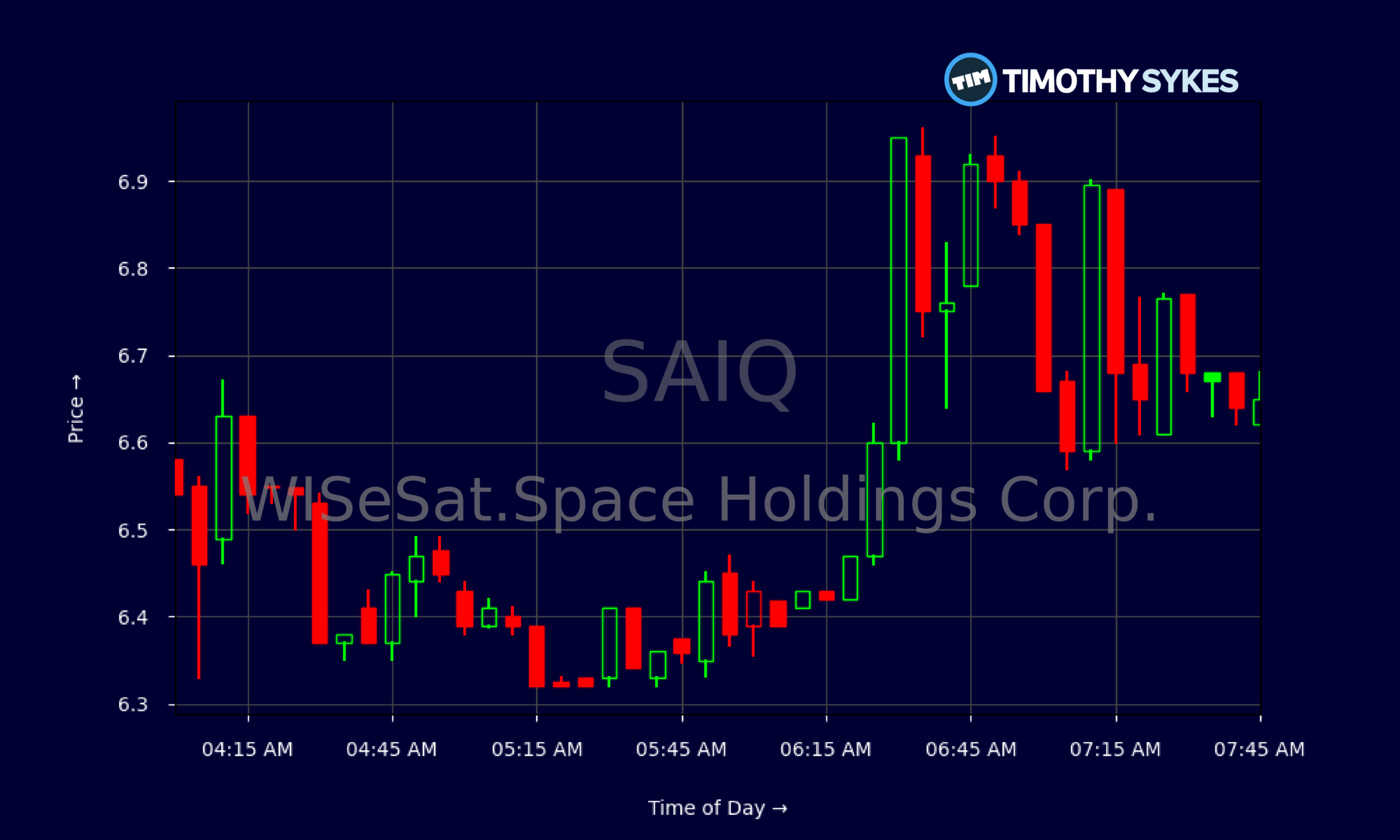
Live Update At 07:47:44 EDT: On Friday, October 23, 2026 WISeSat.Space Holdings Corp. stock [NASDAQ: SAIQ] is trending up by 25.88%! Discover the key drivers behind this movement as well as our expert analysis in the detailed breakdown below.
Quick Financial Overview
SAIQ is trading like a classic low‑float space tech SPAC just unleashed on the Nasdaq. Daily candles show violent swings. On 2026/10/02, WISeSat.Space Holdings Corp. closed at $1.85. Three days later, after the Columbus Acquisition business combination and huge premarket spike, SAIQ printed a $9.94 intraday high before fading to a $6.67 close. That is a massive rerating on pure deal momentum.
The next sessions kept the rollercoaster going. SAIQ ran from the low‑$3s to nearly $7 again on 2026/10/20, coinciding with the new‑generation satellite deployment with FOSSA Systems on a SpaceX mission. The latest daily close around $5.28 still leaves the stock well above its SPAC debut levels, but also well below peak highs, confirming heavy churn between momentum buyers and profit‑takers.
More Breaking News
Intraday, the 5‑minute chart shows SAIQ holding a tight band around $6.30–$6.90 in premarket and early hours, with repeated pushes toward the high‑$6s getting sold into. That tells traders this is currently a range‑bound momentum name, not a clean trend. Fundamentally, the company has modest reported revenue of about $0.20M against an enterprise value near $157.3M, so the market is clearly pricing SAIQ on story, catalysts, and future potential rather than current cash flows.
Why Traders Are Watching SAIQ’s Wild Moves
SAIQ has checked nearly every box that excites short‑term traders. Fresh SPAC deal. Tiny revenue base. Hot themes like post‑quantum security and satellite IoT. And most importantly, extreme volatility.
The real ignition point came right after WISeSat.Space completed its business combination with Columbus Acquisition Corp and began trading independently as SAIQ. Pre‑market, the stock reportedly jumped more than 500%, then still finished the regular session up roughly 260% with volume exploding versus prior averages. That type of action attracts day traders, swing traders, and algos all at once. From there, SAIQ turned into a momentum battleground.
Catalysts have kept feeding the fire. The FOSSA Systems satellite launch on a SpaceX mission was a tangible proof‑of‑execution moment. The market rewarded it with another 66% spike in SAIQ on huge volume. Days later, premarket gains of more than 50%, on top of a prior 7.9% advance, came with no fresh fundamental news, showing pure momentum and crowded positioning.
At the same time, traders have already seen the downside of this type of story stock. When SAIQ announced a $10M PIPE from affiliate SEALSQ to fund cybersecurity, next‑gen satellites, and secure post‑quantum communications, the stock sold off about 27%. The financing supports the mission, but the market pushed back on dilution and valuation. That reaction tells traders to watch every capital‑raising headline closely.
Longer term, SAIQ’s role as the space‑infrastructure partner for the Quantum Spatial Orbital Cloud — a planned secure orbital constellation of up to 100 satellites through 2033 — gives WISeSat.Space Holdings Corp. a real narrative tailwind. But that QSOC roadmap stretches years out, so near‑term trading is still all about catalysts, liquidity, and chart levels, not steady fundamentals.
Conclusion
For active traders, SAIQ is a live case study in how early‑stage space and cybersecurity names trade when they first hit the market. WISeSat.Space Holdings Corp. brings a compelling theme — post‑quantum‑secure satellite connectivity for IoT, tied into the broader WISeKey and SEALSQ ecosystem and the QSOC initiative — but the tape shows that price is being driven mainly by speculation and news flow.
The chart tells the story clearly. SAIQ ripped from sub‑$3 levels to near $10, then pulled back into the mid‑single digits, with multiple 50%+ moves linked to business‑combination headlines, satellite launches, and even pure momentum days. The PIPE‑driven 27% drop is a reminder that these same forces work in both directions. Liquidity and emotion dominate when a stock like SAIQ is still proving out its business model.
For traders studying this name, the key is discipline — planning entries and exits around concrete catalysts, premarket gaps, and intraday range breaks. The numbers show that SAIQ rewards precision but punishes hope. As millionaire penny stock trader and teacher Tim Sykes, says, “Cut losses quickly, let profits ride, and don’t overtrade.”. As Tim Sykes likes to say, “Volatility is opportunity, but only if you respect the risk and cut losses fast.” That mindset is crucial when navigating SAIQ’s sharp swings. This coverage is for educational and research purposes only and is not trading advice.
This is stock news, not investment advice. Timothy Sykes News delivers real-time stock market news focused on key catalysts driving short-term price movements. Our content is tailored for active traders and investors seeking to capitalize on rapid price fluctuations, particularly in volatile sectors like penny stocks. Readers come to us for detailed coverage on earnings reports, mergers, FDA approvals, new contracts, and unusual trading volumes that can trigger significant short-term price action. Some users utilize our news to explain sudden stock movements, while others rely on it for diligent research into potential investment opportunities.
Dive deeper into the world of trading with Timothy Sykes, renowned for his expertise in penny stocks. Explore his top picks and discover the strategies that have propelled him to success with these articles:
- Penny Stocks Trading Guide
- Best Penny Stocks Under $1 to Buy Today
- Top 8 Penny Stocks to Watch on Robinhood
Once you’ve got some stocks on watch, elevate your trading game with StocksToTrade the ultimate platform for traders. With specialized tools for swing and day trading, StocksToTrade will guide you through the market’s twists and turns.
Dig into StocksToTrade’s watchlists here:





Leave a reply