

Palo Alto Networks Inc. stocks have been trading up by 7.39 percent amid strong cybersecurity demand and upbeat growth expectations.
What Traders Need To Know
- Wells Fargo raised its price target on Palo Alto Networks from $475 to $525 and reiterated an Overweight rating, highlighting security platforms as major IT budget winners through 2027.
- Citigroup lifted its price target to $440 from $410 and kept a Buy rating, pointing to stronger cybersecurity demand and AI-led security spending from CIO surveys.
- The company became a founding partner in Anthropic’s Critical Infrastructure Defense Program, adding early access to advanced Claude models and joint threat research.
- Phillip Securities cut its rating to Reduce, arguing Palo Alto Networks valuation looks stretched after a sharp run in software names.
- Recent trading has been volatile, with a 5.1% gain in one broad tech rally followed by a 7.6% drop as traders rotated out of high-growth AI plays.
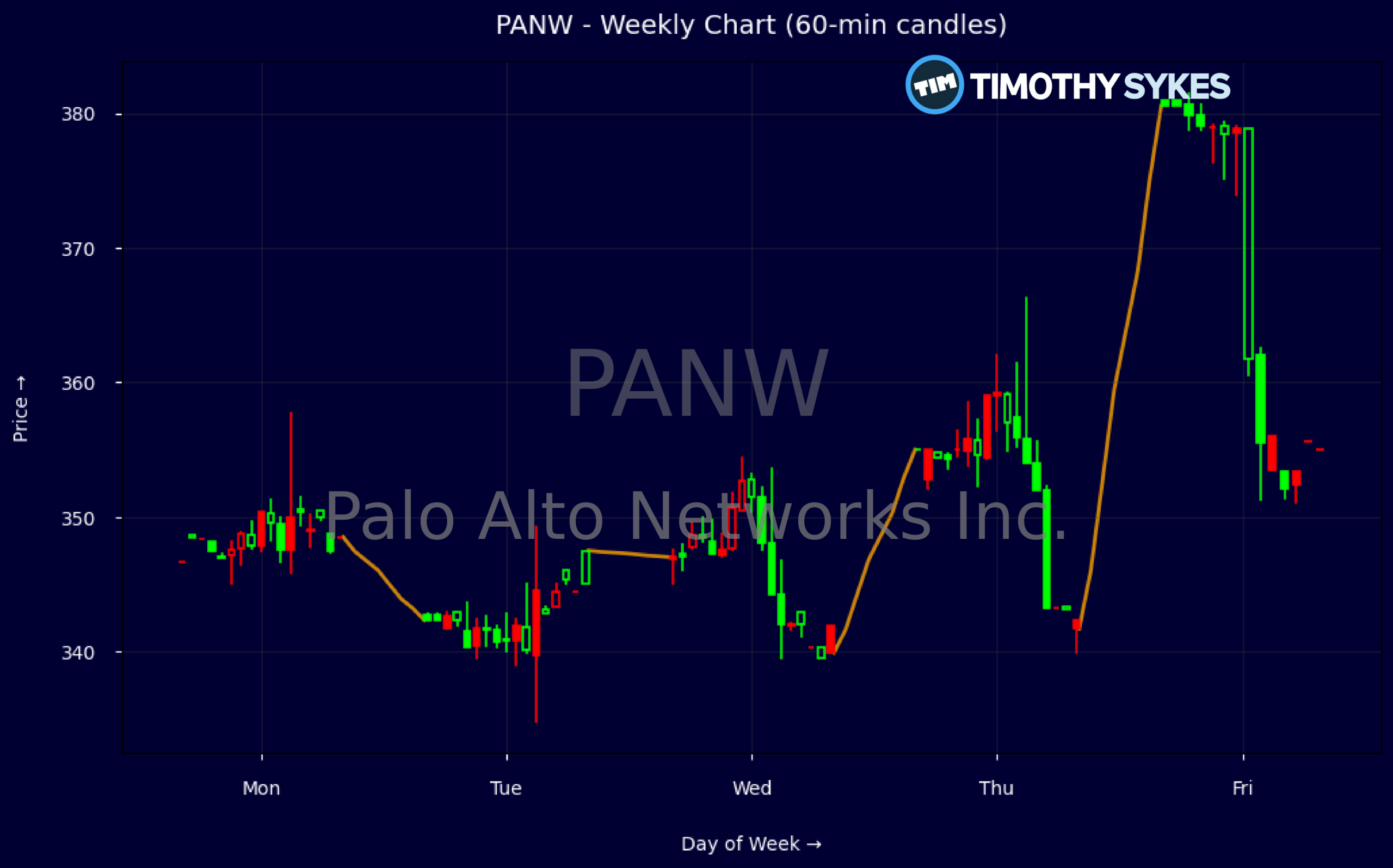
Weekly Update Oct 19 – Oct 23, 2026: On Friday, October 23, 2026 Palo Alto Networks Inc. stock [NASDAQ: PANW] is trending up by 7.39%! Discover the key drivers behind this movement as well as our expert analysis in the detailed breakdown below.
Technology industry expert:
Analyst sentiment – positive
Palo Alto Networks is the clear scale leader in next‑gen cybersecurity, with $11.5B revenue growing high teens and best‑in‑class 71.9% gross margin. EBIT margin of 13.2% and FCF of $1.25B on negative GAAP net income highlight the heavy stock‑based comp and M&A amortization underpinning economics. The balance sheet is strong (debt/equity 0.07, interest coverage >20k, substantial deferred revenue), but valuation is extreme: 32x sales, ~343x GAAP P/E, ~109x FCF, embedding flawless execution.
Technically, PANW has broken sharply higher, moving from ~347 to ~381 over five sessions, with successive higher highs and no meaningful pullbacks, confirming a strong uptrend. Intraday 5‑minute action shows persistent bid, tight consolidations, and elevated volume on breakouts, consistent with institutional accumulation rather than a retail spike. First actionable level is support around $347–350, the recent multi‑day pivot; a pullback toward that zone offers a higher‑probability entry with a stop near $340 for swing traders.
Sector catalysts are unequivocally favorable: escalating PHP2Shell‑type vulnerabilities, AI‑assisted attacks, and Anthropic’s Critical Infrastructure Defense partnership all point to multi‑year platform demand, while Wells Fargo and Citi target hikes (to $525 and $440) reflect this. However, insider Form 144 filings and a downgrade on valuation confirm the name is crowded versus Technology and Software & IT Services peers. I view PANW as a high‑quality compounder but tactically extended; accumulate on pullbacks toward $350 with upside potential to $440–460 and strong resistance above $500.
More Breaking News
Quick Financial Overview
Palo Alto Networks Inc. has been in a strong uptrend on the weekly chart, pushing from the mid-$340s to just under $381 within a short window. That move reflects heavy demand and aligns with multiple target hikes from large banks, even as at least one brokerage flagged valuation risk. The weekly candles show steady higher highs and higher lows, a classic momentum pattern that often attracts short-term trend traders.
Intraday, PANW has been consolidating around $380 with tight swings between roughly $376 and $381 in regular hours. That kind of narrow range near recent highs signals digestion after a strong run rather than an immediate breakdown. For active day traders, liquidity and two-sided action around this level create clear scalping zones, with $370–$372 as an obvious near-term support band from the morning push.
Fundamentally, Palo Alto Networks is a high-growth, high-multiple name. Trailing 12-month revenue sits near $11.48B with roughly 18%–22% multi-year growth, and gross margin is a hefty 71.9%, showing strong pricing power and software mix. At the same time, the stock trades at a rich 343x earnings and about 32x sales, with free cash flow at $1.254B this quarter but net income still negative, helped by heavy stock-based pay. Balance sheet risk looks contained with total debt to equity around 0.07 and interest coverage extremely high, but the valuation leaves little room for error in future quarters.
Conclusion
This is stock news, not investment advice. Timothy Sykes News delivers real-time stock market news focused on key catalysts driving short-term price movements. Our content is tailored for active traders and investors seeking to capitalize on rapid price fluctuations, particularly in volatile sectors like penny stocks. Readers come to us for detailed coverage on earnings reports, mergers, FDA approvals, new contracts, and unusual trading volumes that can trigger significant short-term price action. Some users utilize our news to explain sudden stock movements, while others rely on it for diligent research into potential investment opportunities.
Dive deeper into the world of trading with Timothy Sykes, renowned for his expertise in penny stocks. Explore his top picks and discover the strategies that have propelled him to success with these articles:
- Penny Stocks Trading Guide
- Best Penny Stocks Under $1 to Buy Today
- Top 8 Penny Stocks to Watch on Robinhood
Once you’ve got some stocks on watch, elevate your trading game with StocksToTrade the ultimate platform for traders. With specialized tools for swing and day trading, StocksToTrade will guide you through the market’s twists and turns.
Dig into StocksToTrade’s watchlists here:





Leave a reply