

Nokia Corporation Sponsored stocks have been trading up by 3.41 percent following upbeat 5G contract wins and guidance.
Key Takeaways For NOK Traders
- Q3 for Nokia landed with in-line EPS but a clear revenue beat, 9% net sales growth, and a 220 bps margin jump, backed by faster Infinera synergy plans targeting €200M by 2026.
- Across multiple reports, NOK beat Q3 expectations and guided for powerful Q4 net sales growth of 20%–24% quarter over quarter, signaling accelerating business momentum.
- Management at Nokia guided for Q4 operating profit to top the midpoint of its full‑year outlook, reinforcing confidence in execution and demand trends.
- The company is leaning hard into AI‑RAN, pairing with Nvidia, T‑Mobile, and SoftBank for pilots and 2027 commercial trials that showcase NOK’s network software ambitions.
- Nokia is divesting its Enterprise Campus Edge unit to Aurelius by the first half of 2027, tightening focus on core networks, AI‑RAN, and higher‑scale platforms.
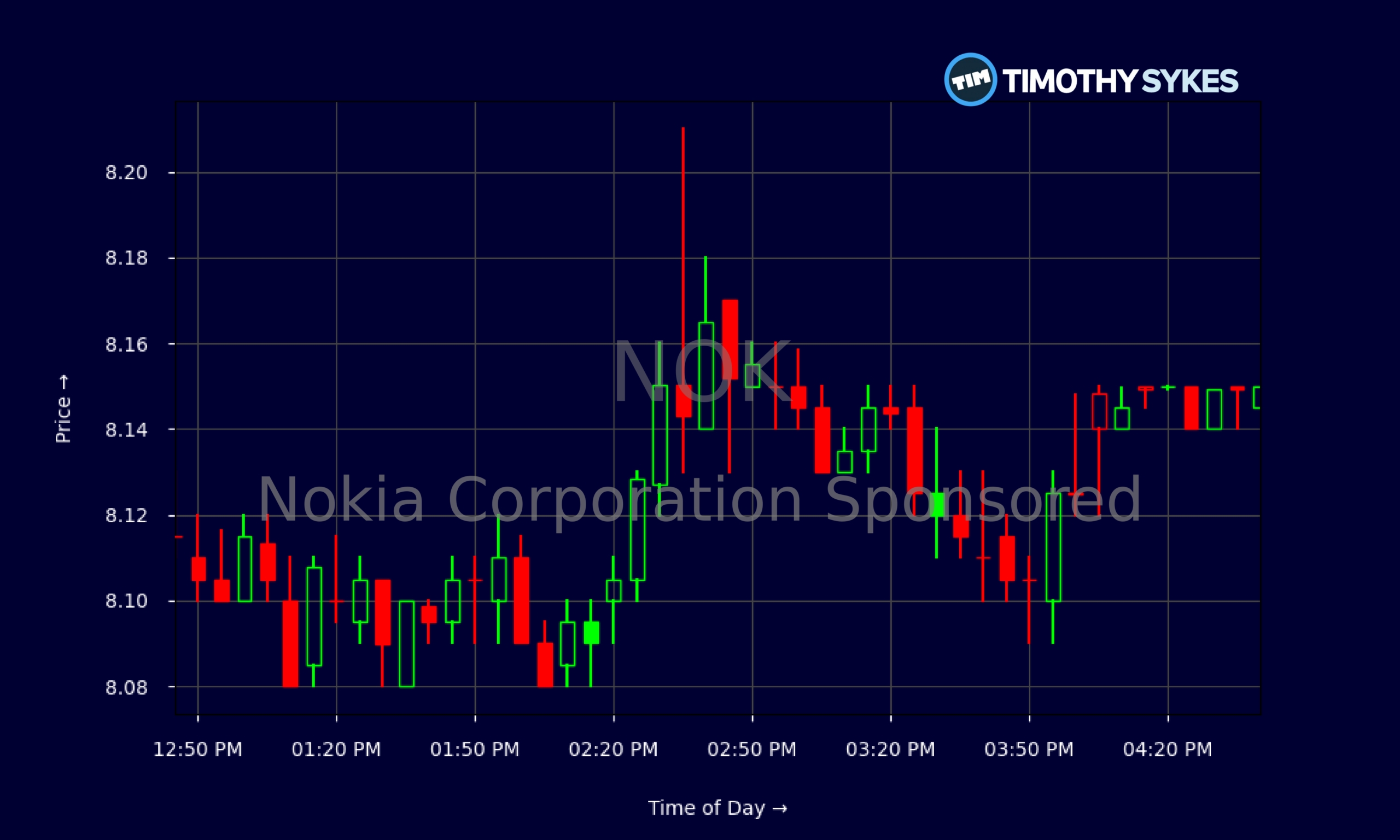
Live Update At 16:47:01 EDT: On Friday, October 23, 2026 Nokia Corporation Sponsored stock [NYSE: NOK] is trending up by 3.41%! Discover the key drivers behind this movement as well as our expert analysis in the detailed breakdown below.
Quick Financial Overview
NOK has been on a wild ride this month. The stock traded above $10 in early October, then slid into the high‑$7s before bouncing to around $8.14 on the latest close. For short‑term traders, that’s a clear downtrend turning into a potential stabilization zone.
The daily chart shows a sharp break from about $10.60 on 2026/10/02 down toward $7.78 on 2026/10/22, right as Nokia dropped its Q3 and Q4 guidance news. Since then, NOK has started carving out a tight range near $8, with intraday 5‑minute candles mostly pinned between $8.08 and $8.21. That compression after big news often sets up the next momentum leg.
More Breaking News
Fundamentally, Nokia just posted roughly €19.22B (about $19.2B) in revenue with a pretax margin near 6.8%. NOK trades at a rich 74.4 P/E and about 2.6x sales, with price‑to‑book around 2.45. Return on equity sits near 5.8%, modest but improving as margins expand. A dividend yield around 2.3% puts some income behind the story. For active traders, this is a classic case of a value‑tilted telecom name trying to earn a growth multiple through AI and network software.
Why Traders Are Watching NOK Right Now
The reason NOK is suddenly back on watchlists is simple: execution plus aggressive guidance. Nokia beat Q3 earnings and revenue expectations, while comparable EPS landed higher year over year and net sales grew 9%. The company printed €5.15B in Q3 revenue versus €5.07B expected and widened its comparable operating margin by 220 basis points. That is real progress, not just a story.
On top of that, Nokia guided for Q4 revenue to jump 20%–24% quarter over quarter and flagged operating profit strong enough to clear the midpoint of its full‑year profit outlook. For traders, such bold quarter‑on‑quarter guidance usually reflects solid visibility into carrier demand and a clearer 5G and cloud spending pipeline. NOK also reaffirmed its 2026 operating profit outlook and kept paying a regular €0.03 dividend per quarter, which helps frame downside risk.
The AI angle gives NOK a second act. Nokia is teaming up with Nvidia and T‑Mobile on live AI‑RAN calls, running its anyRAN software stack on Nvidia hardware. It is plugging Nvidia models into its network automation software, trying to turn RAN from a hardware‑only game into a software‑plus‑AI service. Looking further out, Nokia will run a 2027 commercial AI‑RAN trial with SoftBank in Japan, again using anyRAN and Nvidia’s Aerial RAN Computer. Each of these milestones is a potential news catalyst that can drive trading volume and price spikes as NOK proves it belongs in the AI telecom race.
Behind the scenes, Nokia is also adopting Cadence’s AuraStack AI Super Agent to speed internal engineering and system design. Combined with the sale of its Enterprise Campus Edge business to Aurelius by the first half of 2027, NOK is clearly pruning side bets to double down on scalable network and AI platforms.
Conclusion
For active traders, NOK now sits at an interesting crossroads. The chart shows a beaten‑down telecom name stabilizing around $8 after a hard pullback. The news flow shows Nokia delivering Q3 beats, stronger margins, and guiding to 20%–24% quarter‑on‑quarter revenue growth in Q4 while sticking with its 2026 profit outlook and dividend. Add in AI‑RAN partnerships with Nvidia, T‑Mobile, and SoftBank plus internal AI tooling, and NOK is pushing hard to be seen as more than a slow‑growth equipment vendor.
None of this removes risk. The valuation, with a 74.4 P/E, already bakes in a decent amount of future progress, and the long‑dated 2027 AI‑RAN trials will take time to show real revenue impact. The planned sale of the Enterprise Campus Edge unit to Aurelius has unknown financial terms, so traders do not yet know how much capital Nokia will unlock.
This is where process matters. As Tim Sykes loves to remind his students, “Trade the price action, not the hype.” As millionaire penny stock trader and teacher Tim Sykes, says, “It’s better to go home at zero than to go home in the red.”. NOK’s story right now is stronger earnings, bolder guidance, and visible AI partnerships. For educational and research purposes, disciplined traders will track how the stock reacts around support near $8, watch for volume on any breakout fueled by new AI‑RAN headlines, and stay ready to cut losses fast if the narrative or the chart breaks down.
This is stock news, not investment advice. Timothy Sykes News delivers real-time stock market news focused on key catalysts driving short-term price movements. Our content is tailored for active traders and investors seeking to capitalize on rapid price fluctuations, particularly in volatile sectors like penny stocks. Readers come to us for detailed coverage on earnings reports, mergers, FDA approvals, new contracts, and unusual trading volumes that can trigger significant short-term price action. Some users utilize our news to explain sudden stock movements, while others rely on it for diligent research into potential investment opportunities.
Dive deeper into the world of trading with Timothy Sykes, renowned for his expertise in penny stocks. Explore his top picks and discover the strategies that have propelled him to success with these articles:
- Penny Stocks Trading Guide
- Best Penny Stocks Under $1 to Buy Today
- Top 8 Penny Stocks to Watch on Robinhood
Once you’ve got some stocks on watch, elevate your trading game with StocksToTrade the ultimate platform for traders. With specialized tools for swing and day trading, StocksToTrade will guide you through the market’s twists and turns.
Dig into StocksToTrade’s watchlists here:





Leave a reply