

AT&T Inc. stocks have been trading down by -7.29 percent amid heightened concerns over lead-covered cables and mounting legal risks.
Key Takeaways
- Shares of AT&T, Verizon, and T-Mobile dropped 10–13% after SpaceX agreed to acquire a nationwide low-band spectrum portfolio, fueling fears Starlink Mobile will disrupt U.S. wireless networks.
- Scotiabank lowered its AT&T price target, calling SpaceX’s hybrid satellite–terrestrial network a credible long-term threat that could pressure carrier valuations.
- Bernstein downgraded AT&T from Outperform to Market Perform and cut its price target to $24, citing rising Starlink competition, pricing pressure, and seasonal Q4 headwinds.
- AT&T expects Q4 EBITDA to be hit by unfavorable vendor dispute settlements, implying higher costs or weaker recoveries.
- AT&T beat on Q3 earnings and revenue and raised full-year guidance, but T still fell 5–6.5% as postpaid phone subscriber growth missed expectations.
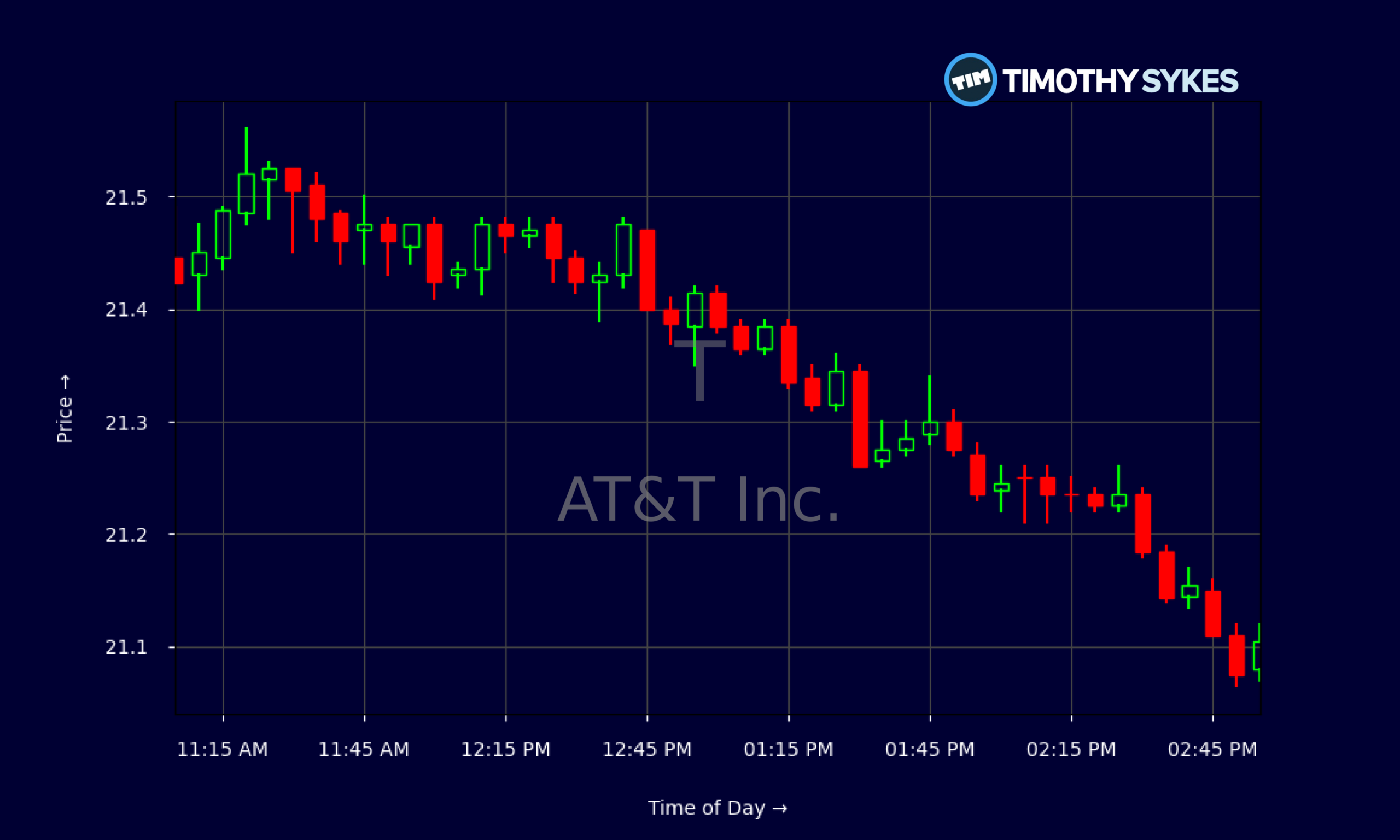
Live Update At 15:02:21 EDT: On Friday, October 23, 2026 AT&T Inc. stock [NYSE: T] is trending down by -7.29%! Discover the key drivers behind this movement as well as our expert analysis in the detailed breakdown below.
Quick Financial Overview
AT&T Inc. (T) is delivering solid headline numbers, but the tape is telling a different story. In the latest quarter, AT&T posted $32.3B in revenue and generated EBITDA of about $9.7B, showing that the core business still throws off serious cash. Free cash flow of roughly $5.46B and operating cash flow above $10B back that up.
Margins are healthy. AT&T’s EBIT margin sits around 26.2%, with an EBITDA margin over 40%. Profitability ratios like a 19.85% return on equity and roughly 5% return on assets suggest T is using its capital reasonably well. On paper, a price-to-earnings ratio near 7.4 and price-to-cash-flow near 3.5 make AT&T look cheap relative to its cash generation.
More Breaking News
The problem, and what traders care about, is the chart. Over the last few weeks, T has slid from the mid-$24s to just above $21, breaking a multi-week range between $23 and $25. The daily candles show a steady series of lower highs. Intraday, AT&T trades choppy, with quick pops getting sold and the stock closing near session lows around $21.08. For active traders, that signals control is with the sellers until $23 is reclaimed with real volume.
Why Traders Are Watching AT&T’s Breakdown
Traders are glued to AT&T right now because the fundamental story and the trading action are moving in opposite directions. On one side, AT&T just posted higher Q3 adjusted earnings and operating revenue, then raised full-year guidance. That should have been bullish. Instead, T dropped 5–6.5% and ranked as the worst S&P 500 performer on the day. The miss on postpaid phone subscriber additions mattered more than the beat.
That tells you how fragile sentiment is around AT&T. The market no longer rewards “good enough” numbers. It wants proof that T can grow high-quality wireless subs in a world where competition keeps tightening. When a stock sells off on an earnings beat, traders know they’re dealing with a name priced for disappointment, not perfection.
Layer on the SpaceX and Starlink narrative. Shares of AT&T, Verizon, and T-Mobile sank 10–13% after SpaceX agreed to buy a nationwide 800 MHz low-band spectrum portfolio for Starlink Mobile. That single move reframed the entire sector. Suddenly, Starlink’s satellite–terrestrial hybrid network is not a science project; it’s a tangible, funded threat aimed right at rural and weak-signal markets where AT&T has long counted on steady cash flow.
Scotiabank responded by lowering its AT&T price target and warning this new Starlink Mobile setup is a credible, long-term competitor. Bernstein went further, downgrading AT&T from Outperform to Market Perform and trimming its target to $24, tying the call directly to Starlink competition, pricing pressure, and Q4 seasonal softness. For traders, that’s the sell-side effectively saying, “The rerating has started, and it might not be done.”
At the same time, AT&T has its own internal issues. The company expects Q4 EBITDA pressure from unfavorable vendor dispute settlements. That means non-operational hits to profitability right as the market is laser-focused on margins and cash. Combine rising external competition with these extra costs, and you get why T’s chart is breaking down despite strong cash flow and a near-5% dividend yield.
Conclusion
For active traders, AT&T is turning into a classic battleground name. On one side, you have a telecom giant with $125.6B in annual revenue, thick margins, and hefty free cash flow. On the other, you have a stock that sells off on earnings beats, gets punished on every hint of subscriber softness, and trades as a proxy for Starlink Mobile disruption risk.
The recent slide from the $24–$25 zone down toward $21 shows how quickly sentiment has flipped. Until AT&T stabilizes its postpaid phone growth and shows that Starlink competition is manageable, rallies are likely to be sold by short-term traders. Support near $21 is key; a clean break and hold below there opens the door to more downside, especially if Q4 EBITDA headlines from vendor disputes hit the tape.
For now, T offers volatility, headline risk, and clear technical levels — exactly what short-term traders track. As millionaire penny stock trader and teacher Tim Sykes, says, “Consistency is key in trading; don’t let emotions dictate your trades.” But as Tim Sykes often reminds his students, “The market doesn’t care about what you think is cheap; it only cares about supply, demand, and the story driving the stock.” With analyst downgrades, Starlink’s spectrum grab, and near-term earnings pressure, AT&T’s story is skewing cautious, and traders need to respect the trend until the chart proves otherwise.
This is stock news, not investment advice. Timothy Sykes News delivers real-time stock market news focused on key catalysts driving short-term price movements. Our content is tailored for active traders and investors seeking to capitalize on rapid price fluctuations, particularly in volatile sectors like penny stocks. Readers come to us for detailed coverage on earnings reports, mergers, FDA approvals, new contracts, and unusual trading volumes that can trigger significant short-term price action. Some users utilize our news to explain sudden stock movements, while others rely on it for diligent research into potential investment opportunities.
Dive deeper into the world of trading with Timothy Sykes, renowned for his expertise in penny stocks. Explore his top picks and discover the strategies that have propelled him to success with these articles:
- Penny Stocks Trading Guide
- Best Penny Stocks Under $1 to Buy Today
- Top 8 Penny Stocks to Watch on Robinhood
Once you’ve got some stocks on watch, elevate your trading game with StocksToTrade the ultimate platform for traders. With specialized tools for swing and day trading, StocksToTrade will guide you through the market’s twists and turns.
Dig into StocksToTrade’s watchlists here:





Leave a reply