

Corteva Inc. stocks have been trading down by -3.19 percent amid heightened concerns over weaker agricultural demand and pricing pressures.
What Traders Need To Know
- Federal court denial of a block on the Vylor separation cleared the way for completion, and Corteva Inc. (CTVA) shares plunged about 84.3% as value shifted to the new entity.
- Shares fell another 5.2% after the Vylor spinoff and S&P index reshuffling, pointing to both investor unease and mechanical selling from benchmark changes.
- Premarket trade saw CTVA down over 81% immediately after the spin-off, showing how quickly the market repriced the post-seed-business company.
- The 84.3% drop reflects a transfer of value into Vylor as a newly listed company, not just a collapse in Corteva Inc.’s remaining operations.
- A US District Court’s refusal to halt the Vylor deal triggered the sharp plunge, underlining how legal green lights can unleash abrupt volatility in CTVA.
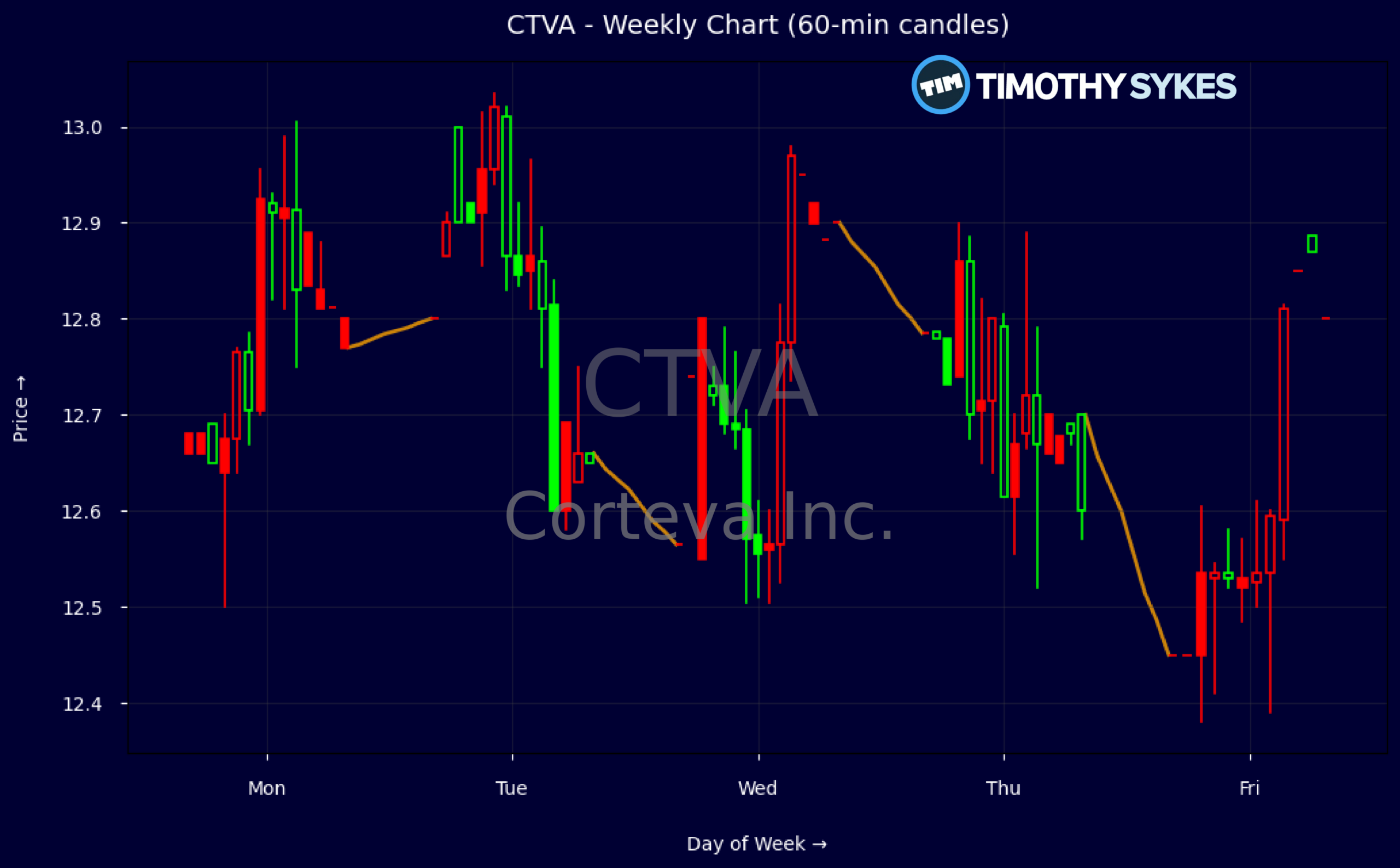
Weekly Update Oct 19 – Oct 23, 2026: On Friday, October 23, 2026 Corteva Inc. stock [NYSE: CTVA] is trending down by -3.19%! Discover the key drivers behind this movement as well as our expert analysis in the detailed breakdown below.
Materials industry expert:
Analyst sentiment – positive
Corteva now trades as a post-spin chemicals and crop-protection platform with unusually attractive but noisy fundamentals. A 49.5% gross margin and 16.8% EBITDA margin highlight a high-value portfolio, while pre-tax margin near 10% and ROIC in the mid-single digits signal only moderate capital efficiency. Valuation is compressed: ~0.5x sales, 0.35x book, and single-digit P/E versus historical extremes, despite a clean balance sheet (total debt/equity 0.19, interest coverage 17x). Negative free cash flow and working-capital drag are watchpoints but not structural threats.
Technically, the stock has reset into a new regime after the Vylor spin, with price compressing in a tight 12.45–13.00 weekly range and closing at 12.45, near the low, indicating persistent supply. Intraday 5-minute action shows weak bounces being sold and low follow-through on upticks, consistent with a developing down-to-sideways trend under heavy rotation. Key actionable level: 12.80. Below 12.80, short bias is appropriate with a tactical target near 12.20; sustained closes above 12.80 would trigger short-covering and a move toward 13.40.
The Vylor seed spin has mechanically removed a large, higher-growth earnings stream, explaining the >80% headline price decline, but the remaining Corteva now resembles a discounted, cash-generative crop chemicals peer. Near term, index reshuffling and event-driven overhang keep volatility and pressure elevated relative to Materials and AgChem benchmarks like MOS and FMC. I expect mean re-rating once index flows normalize. Trading range: support 12.00–12.20, resistance 13.40–13.75; 6–12 month fair value is 14.50.
More Breaking News
Quick Financial Overview
Corteva Inc. now trades around the mid-$12 area after the Vylor spin-off, with the weekly chart showing tight closes between $12.45 and just under $13. The 5-day action suggests the bulk of the repricing already hit, with price stabilizing but not yet attracting strong upside follow-through. For short-term traders, that reads as a stock in price discovery, where every new level is being tested for real demand.
Intraday, the 5-minute chart shows a narrow intraday range roughly between $12.40 and $12.60, and a close pinned near $12.45. That tight band, after an 80%+ structural gap down, looks more like consolidation than panic. CTVA is holding its opening region, but the lack of aggressive bids tells traders that big money is still recalibrating exposure post-spin.
Fundamentally, Corteva Inc. remains a large revenue machine, with about $17.4B in annual sales and a strong gross margin near 49.5%. Profitability metrics are decent, with EBIT margin around 9.9% and net margin on continuing operations over 6%, and leverage is low with total debt to equity at 0.19 and interest coverage of 17.1. The stock now trades at a low price-to-sales near 0.5 and price-to-book around 0.35, paired with a high single-digit P/E near 8.7 and a dividend yield around 5.6%, which together signal a compressed valuation that the market will need time to reassess.
Conclusion
This is stock news, not investment advice. Timothy Sykes News delivers real-time stock market news focused on key catalysts driving short-term price movements. Our content is tailored for active traders and investors seeking to capitalize on rapid price fluctuations, particularly in volatile sectors like penny stocks. Readers come to us for detailed coverage on earnings reports, mergers, FDA approvals, new contracts, and unusual trading volumes that can trigger significant short-term price action. Some users utilize our news to explain sudden stock movements, while others rely on it for diligent research into potential investment opportunities.
Dive deeper into the world of trading with Timothy Sykes, renowned for his expertise in penny stocks. Explore his top picks and discover the strategies that have propelled him to success with these articles:
- Penny Stocks Trading Guide
- Best Penny Stocks Under $1 to Buy Today
- Top 8 Penny Stocks to Watch on Robinhood
Once you’ve got some stocks on watch, elevate your trading game with StocksToTrade the ultimate platform for traders. With specialized tools for swing and day trading, StocksToTrade will guide you through the market’s twists and turns.
Dig into StocksToTrade’s watchlists here:





Leave a reply