
NRX Pharmaceuticals Inc. surged as positive trial news and regulatory progress lifted sentiment, and stocks have been trading up by 18.8 percent.
Key Takeaways
- NRx Pharmaceuticals received an FDA Discipline Review Letter for its preservative-free ketamine (NRX-100) ANDA ahead of the 2026/11/10 GDUFA goal date, with only minor labeling changes requested, signaling a largely positive review.
- The company has completed three FDA-required commercial-scale validation lots and shown two-year room-temperature stability, setting NRXP up to supply a ketamine product currently in shortage if approval lands.
- Management is pre-ordering 5 million Ketafree doses as NRx Pharmaceuticals positions to lead the FDA approval race in ketamine-based mental health treatments.
- NRx Defense Systems secured an initial ~$11–11.25M DARPA prime contract to fund the SPARC-TMS trial pairing advanced TMS with NRX-101 for treatment-resistant depression.
- The company has challenged the safety of benzethonium chloride in rival ketamine products, winning a New York Times correction while promoting its preservative-free, room-temperature stable alternative as a safer, compliant option.
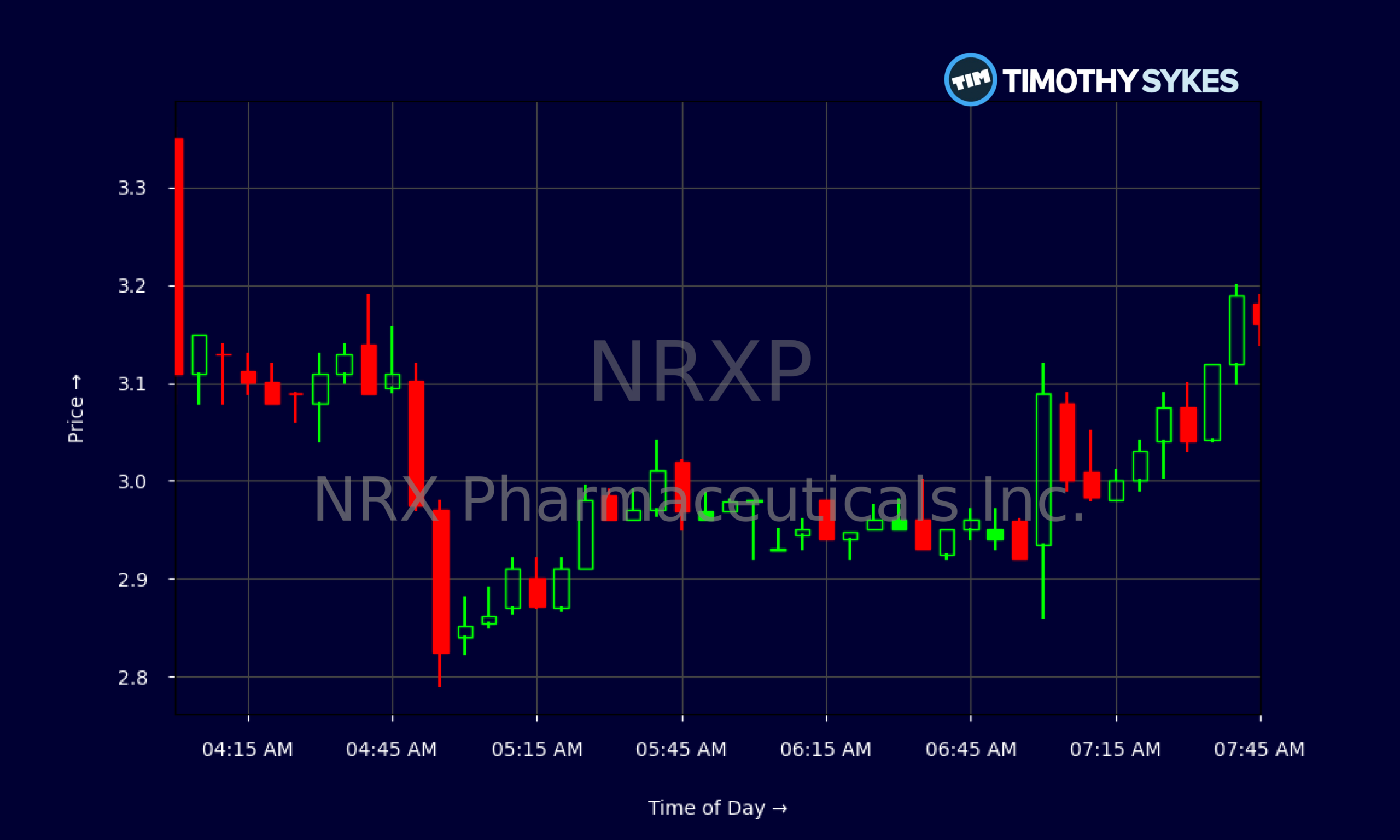
Live Update At 07:47:51 EDT: On Friday, October 30, 2026 NRX Pharmaceuticals Inc. stock [NASDAQ: NRXP] is trending up by 18.8%! Discover the key drivers behind this movement as well as our expert analysis in the detailed breakdown below.
Quick Financial Overview
NRXP is trading like a biotech name sitting on a binary catalyst. The recent daily chart shows the stock holding a tight band between roughly $2.40 and $2.90, with most closes clustering in the mid‑$2 range. That tells traders the market is waiting on the FDA ketamine decision more than reacting to day‑to‑day headlines.
Intraday, the 5‑minute tape shows NRXP pushing from sub‑$3 levels up toward $3.19 in premarket, with repeated tests over $3.00. That kind of stair‑step action signals active day trading and momentum interest, not dead money. Dips get bought; spikes get sold.
Financials remind you why NRX Pharmaceuticals trades like a story stock. Quarterly revenue sits around $1.1M, while net loss is about $16.5M and EBITDA is deeply negative. Cash of roughly $26.7M plus a DARPA contract near $11M helps, but the income statement still bleeds red.
More Breaking News
Margins and returns on assets are sharply negative, and working capital is slightly underwater. For traders, that means NRXP is all about timing catalysts — mainly the ANDA and DARPA‑backed programs — rather than traditional value metrics.
Why Traders Are Watching NRXP Now
NRX Pharmaceuticals is lining up multiple shots on goal at the same time, and that’s exactly what short‑term traders hunt for. The core story is Ketafree, NRXP’s preservative‑free ketamine product. The FDA Discipline Review Letter says only minor labeling tweaks are needed ahead of the 2026/11/10 GDUFA goal date. When the agency is talking labels instead of data, most of the heavy regulatory lifting is usually done. That de‑risks the setup.
On the manufacturing side, NRXP has already run three FDA‑required commercial‑scale validation lots and posted two‑year room‑temperature stability. That matters because ketamine is on shortage lists, and NRx Pharmaceuticals claims it can step in quickly once the ANDA is cleared. For momentum traders, that’s the ideal combo: clear catalyst plus a direct revenue angle if approval comes.
Management is acting like they expect to win. NRx Pharmaceuticals is pre‑ordering 5 million Ketafree doses. That’s not a defensive move; that’s a bet on demand and a grab for first‑mover advantage. It also raises execution risk if timelines slip, and sharp traders will watch any updates closely.
At the same time, NRXP is drawing a sharp line versus rivals by attacking benzethonium chloride preservatives in competing products. The New York Times correction and partial retraction around its FDA petition gives the company some credibility in that safety debate. NRX Pharmaceuticals is trying to own the “safer, preservative‑free, U.S.-made” ketamine lane, which can be powerful marketing if the science and regulators stay aligned.
Layer on top the ~$11–11.25M DARPA prime contract through NRx Defense Systems to run the SPARC‑TMS trial with NRX‑101, and the NRXP story broadens beyond generic ketamine. That trial is FDA‑approved and may be registration‑grade, hinting at longer‑term upside around differentiated depression treatments, not just a commodity shortage play.
Conclusion
For active traders, NRXP sits at the crossroad of near‑term FDA risk and longer‑term depression‑treatment optionality. The stock’s tight trading range and intraday pops around $3 show that the market is already positioning for a headline around 2026/11/10. NRX Pharmaceuticals has done the homework: process validation, stability data, and a shelf‑ready Ketafree supply chain aiming straight at a documented ketamine shortage.
The DARPA‑funded NRX‑101 program and the defense‑side SPARC‑TMS trial add a second engine to the story, backed by non‑dilutive cash and top‑tier academic and military partners. Meanwhile, the preservative‑safety fight and the New York Times correction turn into part of NRX Pharmaceuticals’ branding — pushing NRXP as the clean, compliant alternative.
Traders still need to respect the downside. Losses are heavy, the balance sheet is thin, and a negative FDA surprise would punish anyone overstaying the trade. This is a catalyst name, not a balance‑sheet safe haven.
Tim Sykes always says, “Cut losses quickly and don’t believe the hype — let the price action confirm the story.” As millionaire penny stock trader and teacher Tim Sykes, says, “Consistency is key in trading; don’t let emotions dictate your trades.”. With NRXP, that means mapping your risk around the FDA calendar, watching volume on every headline, and letting the chart — not the buzz — tell you when the real move starts. This article is for educational and research purposes only and is not investment advice.
This is stock news, not investment advice. Timothy Sykes News delivers real-time stock market news focused on key catalysts driving short-term price movements. Our content is tailored for active traders and investors seeking to capitalize on rapid price fluctuations, particularly in volatile sectors like penny stocks. Readers come to us for detailed coverage on earnings reports, mergers, FDA approvals, new contracts, and unusual trading volumes that can trigger significant short-term price action. Some users utilize our news to explain sudden stock movements, while others rely on it for diligent research into potential investment opportunities.
Dive deeper into the world of trading with Timothy Sykes, renowned for his expertise in penny stocks. Explore his top picks and discover the strategies that have propelled him to success with these articles:
- Penny Stocks Trading Guide
- Best Penny Stocks Under $1 to Buy Today
- Top 8 Penny Stocks to Watch on Robinhood
Once you’ve got some stocks on watch, elevate your trading game with StocksToTrade the ultimate platform for traders. With specialized tools for swing and day trading, StocksToTrade will guide you through the market’s twists and turns.
Dig into StocksToTrade’s watchlists here:





Leave a reply