

JIADE LIMITED stocks have been trading down by -10.06 percent amid negative sentiment over its latest financial performance.
Key Takeaways
- JDZG has crashed from the $6s to the mid-$1s in two sessions, signaling aggressive selling and trapped longs.
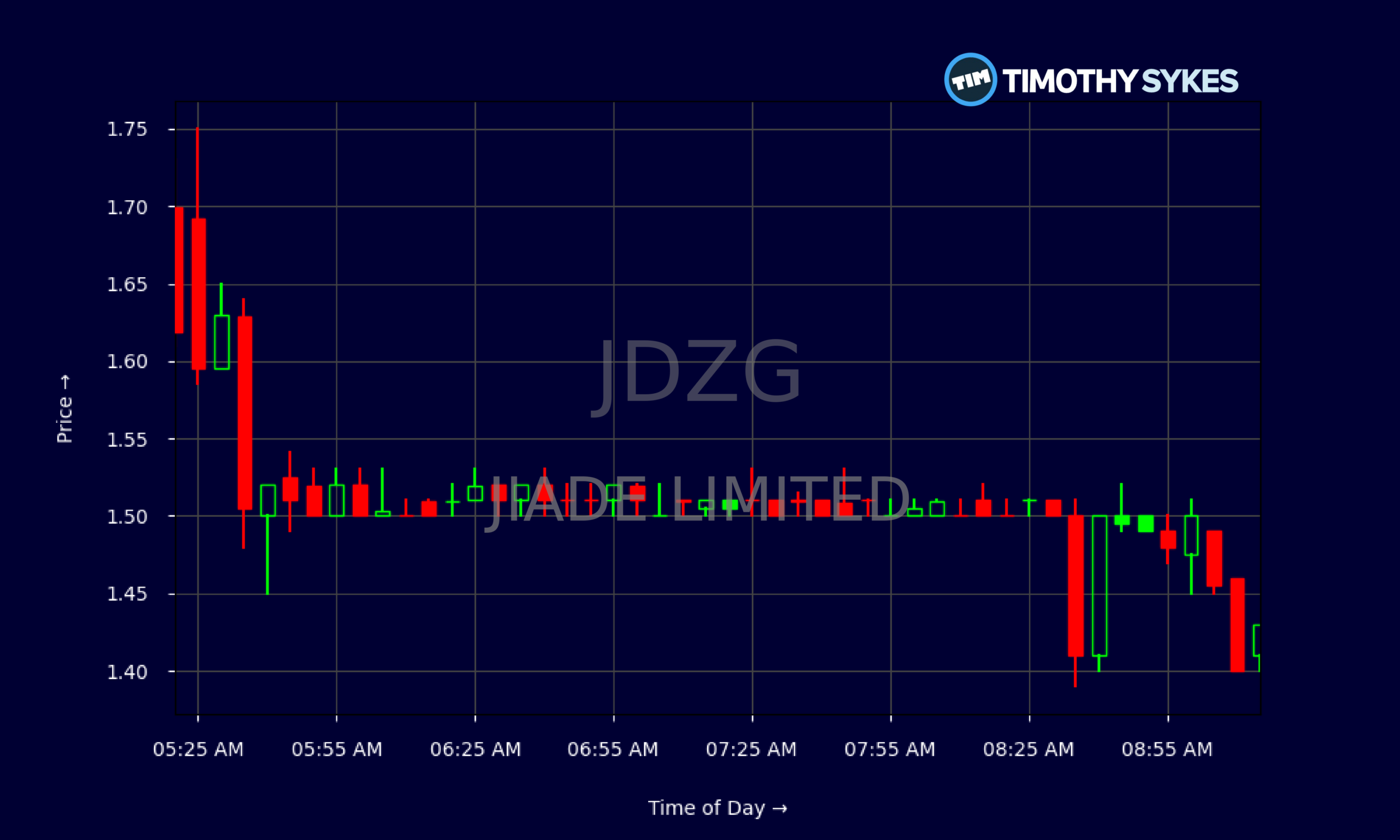
- Intraday JDZG trading shows a huge morning dump followed by tight consolidation, a classic low-float fade pattern.
- JIADE LIMITED holds about $19.8M in cash against roughly $1.5M in long-term debt, giving it balance-sheet breathing room.
- JDZG trades at roughly 8.2x sales, a rich multiple that leaves little margin for error if growth stalls.
Live Update At 09:18:50 EDT: On Friday, October 30, 2026 JIADE LIMITED stock [NASDAQ: JDZG] is trending down by -10.06%! Discover the key drivers behind this movement as well as our expert analysis in the detailed breakdown below.
Quick Financial Overview
JDZG has gone from a steady grind in the $5–$6 range to a full-on collapse into the $1s. For weeks, JIADE LIMITED held near $6, closing at $6.19–$6.56 for many sessions, with relatively tight daily ranges. That looked like a stable, slow mover. Then the floor gave out. On 2026/10/28 JDZG opened at $6.30 and finished the day at $1.50. The next day, JDZG bounced slightly, closing at $1.59 after trading as low as $1.18. That is not normal two-day action; that is liquidation-level volatility.
More Breaking News
Financially, JDZG is not a shell. JIADE LIMITED reported revenue of about $25.7M and sports a price-to-sales ratio near 8.21, which is high for a small-cap, especially after a big price drop. The company carries around $1.0M of long-term debt and roughly $15.3M in current debt against $19.8M in cash and short-term investments, plus strong working capital. JDZG’s return on equity is barely above 1%, and return on assets under 1%, showing modest profitability. For traders, that mix screams “story stock meets liquidation event” on the chart, not yet backed by stellar returns.
Why Traders Are Watching JDZG’s Extreme Reversal
Traders are locked in on JDZG because the stock just demonstrated the textbook pattern of a crowded long trade unwinding in real time. For almost three weeks, JDZG drifted higher from about $5.17 to a high near $6.65, closing in a tight band. JIADE LIMITED looked calm. That kind of slow, steady climb often lures in late buyers who assume the trend will continue.
Then came 2026/10/28. JDZG opened at $6.30, briefly tagged the same high, then flushed to $1.17 and closed at $1.50. The next day, JDZG touched $1.74 but could not reclaim anything close to prior levels, finishing at $1.59. That is a classic momentum rug-pull. On the intraday 5‑minute chart, JDZG spiked briefly into the $2.30–$2.40 area in the premarket, then slid hard into the mid-$1s and bled sideways with tiny 1–2 cent candles. That tells traders the panic phase cooled off, but real dip-buy strength never returned.
For short-term trading, JDZG now behaves like a broken former runner: big range, heavy overhead supply, and cautious bounce buyers. Day traders focus on whether JDZG can ever reclaim $2 or $3 on a short squeeze, while swing traders watch to see if JIADE LIMITED stabilizes above $1.20 support. A break below that recent low opens the door to further downside. A convincing reclaim above $2 with volume shifts the narrative back toward a possible squeeze.
Conclusion
For active traders, JDZG is a live case study in why you respect risk first and hype second. JIADE LIMITED has real revenue, decent cash, and manageable long-term debt, yet JDZG’s chart still imploded when momentum snapped. That combination—okay fundamentals, extreme technical damage—creates a battleground. Bulls will argue JDZG is oversold after a 70%+ slide in two days. Bears will point to the lofty 8.21 price-to-sales ratio and weak returns on equity and assets as reasons to stay skeptical.
For now, JDZG trades like a pure chart play. The key levels are clear: recent low around $1.17 on the downside and the $2–$2.40 premarket spike zone on the upside. JIADE LIMITED trading above that upper band with volume would suggest shorts are under pressure. Failing there keeps JDZG in “dead cat bounce” territory.
This is where discipline matters. Tim Sykes always reminds traders, “Cut losses quickly; small losses are better than big ones.” As millionaire penny stock trader and teacher Tim Sykes says, “It’s better to go home at zero than to go home in the red.”. JDZG’s rapid collapse is exactly the kind of move that punishes traders who ignore that rule. Treat JIADE LIMITED as a teaching chart: study the ramp, the top, the crash, and the weak bounce. Use JDZG to sharpen your planning, risk management, and execution. This analysis is for educational and research purposes only, not a recommendation to buy or sell any security.
This is stock news, not investment advice. Timothy Sykes News delivers real-time stock market news focused on key catalysts driving short-term price movements. Our content is tailored for active traders and investors seeking to capitalize on rapid price fluctuations, particularly in volatile sectors like penny stocks. Readers come to us for detailed coverage on earnings reports, mergers, FDA approvals, new contracts, and unusual trading volumes that can trigger significant short-term price action. Some users utilize our news to explain sudden stock movements, while others rely on it for diligent research into potential investment opportunities.
Dive deeper into the world of trading with Timothy Sykes, renowned for his expertise in penny stocks. Explore his top picks and discover the strategies that have propelled him to success with these articles:
- Penny Stocks Trading Guide
- Best Penny Stocks Under $1 to Buy Today
- Top 8 Penny Stocks to Watch on Robinhood
Once you’ve got some stocks on watch, elevate your trading game with StocksToTrade the ultimate platform for traders. With specialized tools for swing and day trading, StocksToTrade will guide you through the market’s twists and turns.
Dig into StocksToTrade’s watchlists here:




Leave a reply