

Insmed Incorporated stocks have been trading up by 15.66 percent amid heightened optimism over its latest respiratory drug developments.
Key Takeaways
- Brinsupri’s commercial launch in Japan makes it the first and only approved treatment for non‑cystic fibrosis bronchiectasis across the U.S., EU/UK, and Japan, expanding Insmed’s global revenue footprint.
- Management reaffirmed 2026 revenue guidance of $1.25B–$1.4B for Brinsupri and $450M–$470M for Arikayce, signaling confidence in execution despite market volatility and leadership changes.
- Major Wall Street banks trimmed INSM price targets but kept bullish Overweight/Buy/Outperform ratings, pointing to strong long‑term potential for Brinsupri and TPIP.
- Long‑time CFO Sara Bonstein will step down after October 2026, with Insmed stressing no disagreements on financial reporting and reiterating its revenue outlook.
- Insmed is pushing TPIP through a large Phase 3 PALM program in several serious lung diseases, positioning the pipeline as a second major growth engine behind Brinsupri.
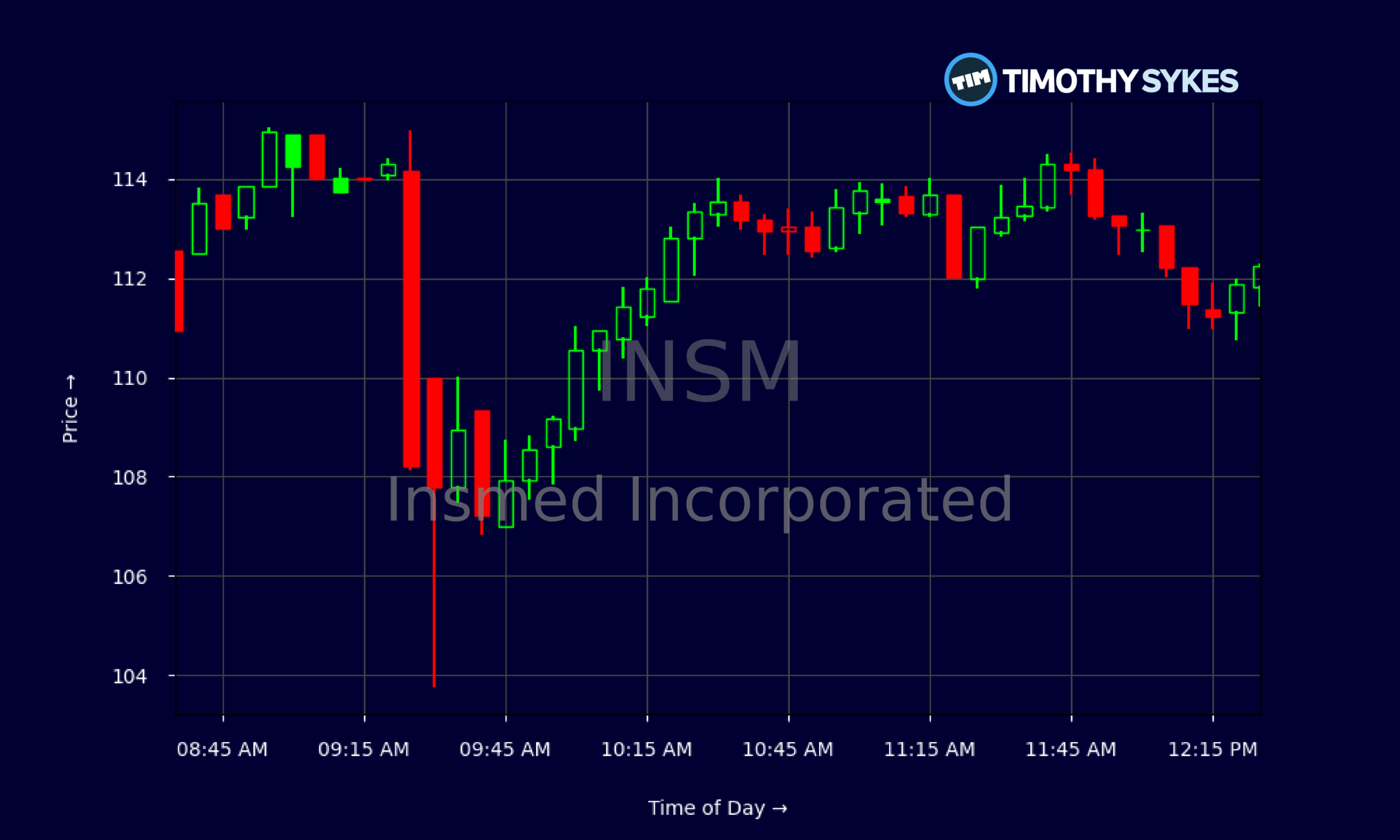
Live Update At 12:32:24 EDT: On Thursday, October 29, 2026 Insmed Incorporated stock [NASDAQ: INSM] is trending up by 15.66%! Discover the key drivers behind this movement as well as our expert analysis in the detailed breakdown below.
Quick Financial Overview
INSM has been trading like a classic high‑growth biotech: big moves, tight ranges, and heavy focus on news. Over the past few weeks, Insmed shares have climbed from the mid‑$90s to close around $112.17, a strong breakout after several sessions stuck in the low‑ to mid‑$90s. That push higher came with intraday swings from $103.78 up to $114.51, telling traders there is real momentum — and real volatility — in the name.
Under the hood, INSM is still a cash‑burn story, but a rapidly scaling one. Insmed reported about $606.4M in revenue with eye‑popping 95.3% gross margins, typical for successful specialty pharma, yet net margins remain deeply negative as the company plows cash into R&D and commercial build‑out. Free cash flow was roughly -$95.1M last quarter, while operating cash flow was about -$88.8M.
More Breaking News
On the balance sheet, Insmed ended the period with roughly $544.8M in cash and $1.16B in total cash and short‑term investments, plus a current ratio of 3.7. For traders, that means INSM has runway to fund launches and the TPIP program without an immediate need for dilutive capital, but the rich price‑to‑sales multiple near 19x demands that Brinsupri execution stay sharp.
Why Traders Are Watching INSM Now
Traders are locked in on INSM because the story has clearly shifted from “clinical hope” to “commercial reality.” Brinsupri, Insmed’s brensocatib tablet, is now fully launched in the U.S., EU/UK, and, as of 2026/10/19, Japan. In Japan, Brinsupri is the first and only approved therapy for non‑cystic fibrosis bronchiectasis in patients 12 and older, backed by positive Phase 3 ASPEN data. That gives Insmed a first‑mover advantage in a chronic, high‑need lung disease across three major regions.
This global footprint is exactly why INSM management felt confident reaffirming 2026 revenue guidance of $1.25B–$1.4B for Brinsupri and $450M–$470M for Arikayce. For momentum traders, that guidance effectively sets the bar the stock will be judged against every quarter. Beats on Brinsupri scripts or Arikayce durability can fuel upside spikes; misses can punish late buyers.
At the same time, Wall Street is recalibrating, not abandoning, the bull case. Barclays cut its target on Insmed from $237 to $207, Morgan Stanley nudged its target to $213 from $218, Bank of America trimmed to $207 from $214, and Raymond James moved from $187 to $173. Yet all kept positive ratings — Overweight, Buy, or Outperform — and the average target still hovers near $200.
The message to traders is clear: expectations for the near term are coming down to more realistic levels, but the Street still sees INSM as a high‑growth respiratory platform. Add in a massive Phase 3 PALM program for TPIP targeting pulmonary arterial hypertension and other serious lung conditions, plus new board heavyweights Paul Hudson and Utpal Koppikar, and you have a company gearing up for a multi‑asset, multi‑region push. Volatility should stay elevated, which is exactly what active traders want.
Conclusion
INSM sits at an important crossroads that traders love to stalk. On one side, Brinsupri’s launch across the U.S., Europe, and Japan transforms Insmed from a single‑product story into a global franchise player in non‑cystic fibrosis bronchiectasis. On the other, the company is still losing money, burning cash, and leaning on a rich valuation that assumes management delivers on that $1.7B–$1.87B 2026 revenue stack from Brinsupri and Arikayce.
The leadership picture is also shifting. Long‑tenured CFO Sara Bonstein is leaving after Q3 2026, which briefly knocked INSM about 2.7% in premarket trading when announced. Yet Insmed emphasized there were no disagreements on accounting or operations and simultaneously reaffirmed its 2026 revenue guidance. That combination, plus the addition of experienced board members from Sanofi, Novartis, and Verily, helps steady the narrative for many on the Street.
For active traders tracking INSM, the game plan is to watch how price reacts around key catalysts: quarterly Brinsupri launch metrics, Arikayce updates, and any fresh TPIP Phase 3 signals. As millionaire penny stock trader and teacher Tim Sykes, says, “Preparation plus patience leads to big profits.”. In that same spirit, his broader reminder to his community still applies: “The market doesn’t care about your opinion, only about price and volume — adapt fast or get left behind.” This coverage is for educational and research purposes only, but the setup around Insmed gives chart‑focused traders plenty to study in the months ahead.
This is stock news, not investment advice. Timothy Sykes News delivers real-time stock market news focused on key catalysts driving short-term price movements. Our content is tailored for active traders and investors seeking to capitalize on rapid price fluctuations, particularly in volatile sectors like penny stocks. Readers come to us for detailed coverage on earnings reports, mergers, FDA approvals, new contracts, and unusual trading volumes that can trigger significant short-term price action. Some users utilize our news to explain sudden stock movements, while others rely on it for diligent research into potential investment opportunities.
Dive deeper into the world of trading with Timothy Sykes, renowned for his expertise in penny stocks. Explore his top picks and discover the strategies that have propelled him to success with these articles:
- Penny Stocks Trading Guide
- Best Penny Stocks Under $1 to Buy Today
- Top 8 Penny Stocks to Watch on Robinhood
Once you’ve got some stocks on watch, elevate your trading game with StocksToTrade the ultimate platform for traders. With specialized tools for swing and day trading, StocksToTrade will guide you through the market’s twists and turns.
Dig into StocksToTrade’s watchlists here:





Leave a reply