

BigBear.ai Inc. rallies as positive AI-contract headlines fuel optimism, and its stocks have been trading up by 11.32 percent.
Key Takeaways
- More than $225M in total contract value since July gives BigBear.ai a sharply larger foothold across U.S. homeland security, defense, intelligence, and federal civilian agencies.
- Over 25 new generative AI awards reach marquee customers, including the FBI, NASA, the U.S. Coast Guard, the Department of Energy, and the Department of Veterans Affairs.
- Key recompete and renewal wins with U.S. Customs and Border Protection reinforce BigBear.ai’s role in national security and trade & travel missions.
- Shares of BBAI jumped roughly 4.6% after the federal contract news, signaling stronger short‑term trading sentiment.
- BigBear.ai has set its Q3 2026 earnings release and call, where traders will look for clarity on backlog, margins, and AI growth.
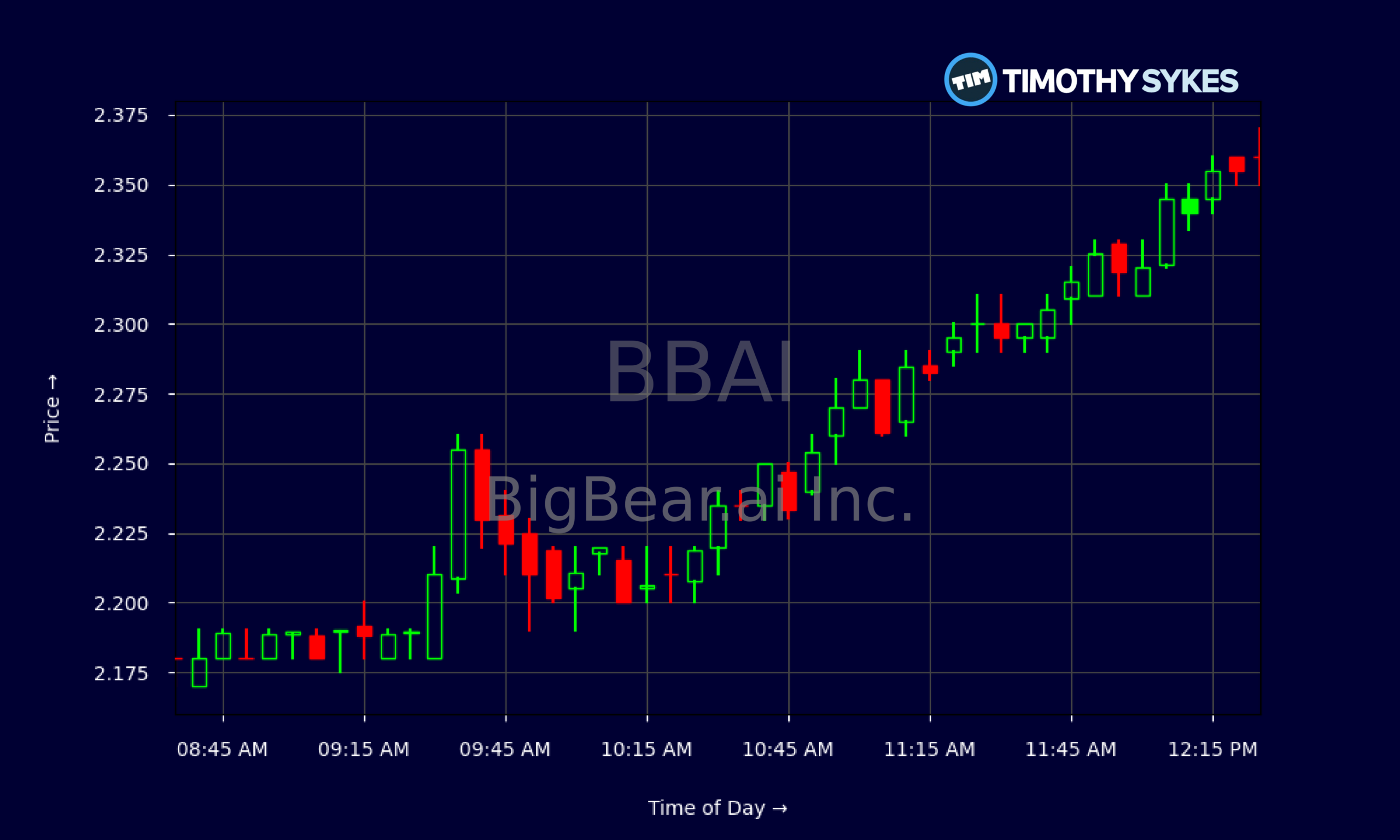
Live Update At 12:32:30 EDT: On Tuesday, October 27, 2026 BigBear.ai Inc. stock [NYSE: BBAI] is trending up by 11.32%! Discover the key drivers behind this movement as well as our expert analysis in the detailed breakdown below.
Quick Financial Overview
BBAI is trading like a small‑cap AI contractor with big headlines but uneven numbers underneath. The recent daily chart shows the stock grinding higher from about $2.10–$2.20 in early 2026/10 to a close near $2.36 on 2026/10/27. That puts BBAI up modestly over the month, with several spikes, including the 4.6% pop tied to the $225M contract announcement.
Intraday on the latest session, BBAI held a steady climb from the low $2.18s at the open to the mid‑$2.30s by midday, with tight 5‑minute candles and higher lows. That kind of controlled push, not a wild gap-and-crash, tells traders there is consistent dip buying, not just one headline spike.
More Breaking News
Fundamentally, BigBear.ai is still deep in the red. Quarterly revenue sits around $36.7M, but EBITDA is about -$18.6M and net income roughly -$25.7M. Margins are brutal: EBIT margin near -75% and profit margin more than -50%. Yet BBAI carries very little debt, with total debt-to-equity near 0.03 and a strong current ratio of about 5.7, plus over $31.9M in cash and short‑term investments. For traders, that combination—weak earnings, solid balance sheet, and hot AI contract flow—sets up a classic high‑beta, news‑driven trading vehicle.
Why Traders Are Watching BBAI Right Now
Traders are glued to BBAI because the news flow finally lines up with the AI hype. Since July, BigBear.ai has locked down more than $225M in total contract value across U.S. homeland security, defense, intelligence, and federal civilian agencies. That is real signed work, not just press‑release promises. For a company doing roughly $127.7M in annual revenue, $225M in awards is material fuel for the future backlog.
The details matter here. BigBear.ai isn’t just winning any contracts; it has more than 25 new generative AI awards across some of the most demanding government customers in the world. Names like the FBI, NASA, the U.S. Coast Guard, the Department of Energy, and the VA tell traders that BBAI’s tools are being trusted on sensitive, mission‑critical jobs. Add key recompete wins and renewals with U.S. Customs and Border Protection, and you see BBAI defending and expanding its beachhead in national security and trade & travel.
The market reaction backs this up. After announcing the $225M‑plus haul and those generative AI contracts, BBAI shares climbed about 4.6%. For short‑term traders, that pop confirms the tape respects these headlines. BigBear.ai has long been treated as an AI story stock; now the contract wins give that story some hard numbers.
At the same time, the Form 4 filings showing changes in beneficial ownership at BBAI are basically noise with the limited data available. The disclosures do not state whether the insider transactions were buys, sells, or awards. Without that clarity, disciplined traders avoid over‑reading it and stay focused on the contract pipeline and price action instead.
Conclusion
BigBear.ai is in that tricky zone where the business momentum looks strong, but the financial statements still show heavy losses. BBAI is burning cash—free cash flow last quarter was roughly -$22.5M—and posting negative returns on assets and equity. Yet the balance sheet is not stressed, with ample liquidity and low leverage, which buys the company time to turn its contract wins into profitable scale.
For active traders, this mix makes BBAI a pure execution and sentiment trade. The $225M‑plus in awards, more than 25 generative AI contracts, and deepening ties to agencies like the FBI, NASA, and U.S. Customs and Border Protection all support a bullish narrative around government AI spending. The scheduled Q3 2026 earnings release and conference call become the next key catalyst, where BigBear.ai will need to translate that narrative into backlog metrics, revenue visibility, and a believable path toward better margins.
This is where trading discipline comes in. BBAI’s chart now has a clear range in the low‑$2 area, with support building after the contract news. Breakouts or failed breakouts around this zone can offer opportunities, but only for traders who manage risk tightly. As Tim Sykes likes to remind his students, “The pattern is only part of the trade; the real edge comes from cutting losses quickly and never falling in love with the story.” As millionaire penny stock trader and teacher Tim Sykes, says, “It’s better to go home at zero than to go home in the red.”.
This is stock news, not investment advice. Timothy Sykes News delivers real-time stock market news focused on key catalysts driving short-term price movements. Our content is tailored for active traders and investors seeking to capitalize on rapid price fluctuations, particularly in volatile sectors like penny stocks. Readers come to us for detailed coverage on earnings reports, mergers, FDA approvals, new contracts, and unusual trading volumes that can trigger significant short-term price action. Some users utilize our news to explain sudden stock movements, while others rely on it for diligent research into potential investment opportunities.
Dive deeper into the world of trading with Timothy Sykes, renowned for his expertise in penny stocks. Explore his top picks and discover the strategies that have propelled him to success with these articles:
- Penny Stocks Trading Guide
- Best Penny Stocks Under $1 to Buy Today
- Top 8 Penny Stocks to Watch on Robinhood
Once you’ve got some stocks on watch, elevate your trading game with StocksToTrade the ultimate platform for traders. With specialized tools for swing and day trading, StocksToTrade will guide you through the market’s twists and turns.
Dig into StocksToTrade’s watchlists here:





Leave a reply