
Comcast Corporation Common Stock stocks have been trading down by -3.2 percent amid concerns over weakening broadband subscriber growth.
Key Takeaways
- Wall Street firms are trimming CMCSA price targets as AI tools help customers cut cable bills and switch to wireless, pressuring legacy revenue.
- Shares of CMCSA dropped about 2% after SpaceX secured key 800 MHz spectrum, sharpening fears around future broadband and mobile competition.
- Oppenheimer flagged accelerating broadband losses and falling ARPU at CMCSA, even as Peacock turned a second straight profit.
- Earnings for CMCSA are under pressure versus streaming heavyweights, with Q2 EPS down year over year after last year’s Hulu-boosted comparison faded.
- NBC’s loss of Emmy rotation to Amazon’s global streaming deal highlights how far power has shifted away from traditional CMCSA broadcast assets.
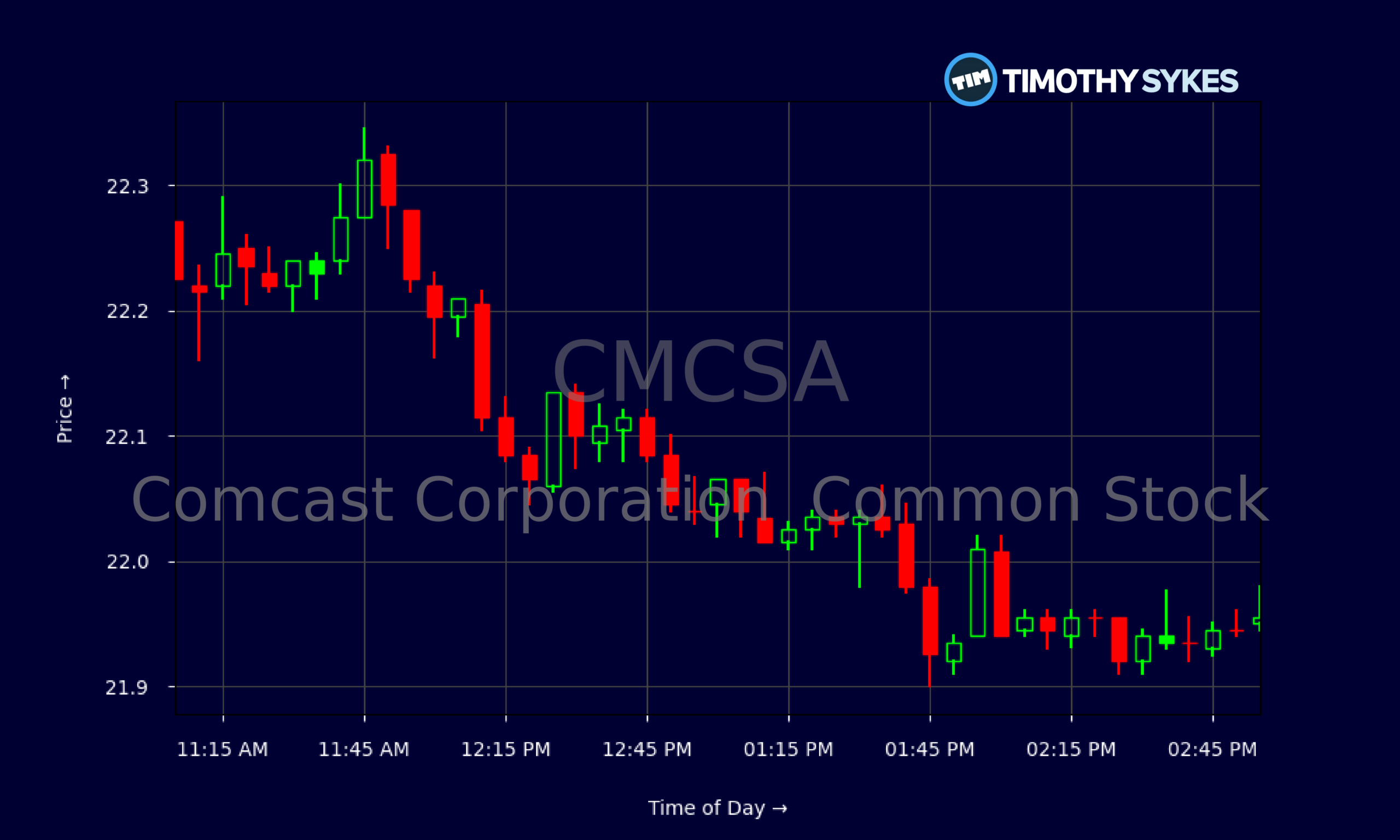
Live Update At 15:02:13 EDT: On Monday, October 26, 2026 Comcast Corporation Common Stock stock [NASDAQ: CMCSA] is trending down by -3.2%! Discover the key drivers behind this movement as well as our expert analysis in the detailed breakdown below.
Quick Financial Overview
CMCSA has been trading like a slow bleed rather than a crash. Over the past few weeks, Comcast Corporation Common Stock has slipped from the low‑$22s to around $21.97, a modest but steady drift lower. The daily chart shows multiple rejections near $22.50–$23, telling traders that sellers are active every time CMCSA tries to bounce.
Intraday, the 5‑minute tape shows a classic grind down. CMCSA gapped down from pre‑market levels near $22.70 and spent the regular session making lower highs, fading from above $22.40 in the morning to sub‑$22 and closing under $22. That’s controlled selling, not panic — the kind of action swing traders watch for short‑biased setups and failed breakouts.
More Breaking News
Fundamentally, CMCSA still throws off serious cash. Quarterly revenue sits near $29.3B, with EBITDA around $9.1B and operating cash flow at roughly $7.9B. Free cash flow of about $4.2B against a market that prices CMCSA at roughly 0.6x sales and a P/E near 6–7 screens as cheap. But leverage is real, with debt roughly matching equity and current ratios below 1, so the market is discounting the structural headwinds more than the headline cash flow.
Why Traders Are Watching CMCSA Now
For active traders, CMCSA has shifted from a quiet cable giant to a slow‑motion battleground. The real story here is not one headline, but a drumbeat of pressure. Morgan Stanley cut its CMCSA target from $29 to $27, pointing at AI agents that automatically hunt for cheaper bills and nudge customers from cable to wireless. That’s a direct hit to Comcast’s pricing power, and the stock is trading like the market believes it.
Barclays followed with a trim from $26 to $24, saying upside to earnings is only incremental while the downside from disruptive telecom trends is much larger. Then Bernstein went further, slicing its CMCSA target from $28 to $23 as SpaceX’s broadband and wireless offerings ramp and pricing across the industry turns aggressive. That kind of stair‑step target compression tells traders big funds are resetting their models, not just reacting to noise.
The tape backed this up when SpaceX announced a major 800 MHz spectrum acquisition. CMCSA dropped roughly 2% as traders digested what nationwide phone coverage plus satellite broadband means for a traditional cable and mobile bundle. Oppenheimer’s latest note piled on: mixed Q3, accelerating broadband net losses forecast all the way through 2030, and declining ARPU even as margins improve and Peacock posts its second profitable quarter.
Add in weak Orlando theme park attendance versus Disney and a year‑over‑year EPS decline after last year’s Hulu sale boost, and the diversification story for CMCSA looks less protective. Even NBC’s loss of Emmy rotation to Amazon’s Prime Video is a symbolic blow — prestige eyeballs are following the streamers. For short‑term traders, this combination of heavy news, lowered expectations, and a still‑liquid large cap often creates repeatable trend and fade setups.
Conclusion
CMCSA now sits in that tricky zone where fundamentals look cheap, but the narrative is heavy. Comcast Corporation Common Stock posts nearly $29.3B in quarterly revenue, solid EBITDA margins, and billions in free cash flow. Yet the street largely sits at Hold, with clustered price targets in the high‑$20s and several firms — Morgan Stanley, Barclays, Bernstein, TD Cowen, Evercore, New Street — all walking those targets down.
For traders, that means CMCSA is more of a “show me” name than a clear value play. The chart confirms it: repeated failures near resistance, controlled selling on news of SpaceX’s spectrum move, and ongoing concern about shrinking broadband, weaker Orlando theme park trends, and broadcast relevance slipping toward Amazon and Netflix. The business is not collapsing, but the growth engines that once powered CMCSA are under attack from every angle — fiber, fixed wireless, satellite, and streaming.
This is exactly the type of backdrop the Sykes and StocksToTrade crowd studies. As Tim Sykes likes to hammer home, “The market doesn’t care about your opinions, only your preparation and your risk management.” As millionaire penny stock trader and teacher Tim Sykes, says, “Small gains add up over time; focus on building wealth gradually, not chasing jackpots.”. Applied to CMCSA, that mindset means traders should avoid swinging for home runs in a choppy, narrative‑heavy name and instead think in terms of disciplined, incremental trading edges. With CMCSA, that means respecting the downtrend, mapping key support and resistance, and treating every bounce or breakdown as a potential trade — not a prediction. This article is for educational and research purposes only and is not investment advice.
This is stock news, not investment advice. Timothy Sykes News delivers real-time stock market news focused on key catalysts driving short-term price movements. Our content is tailored for active traders and investors seeking to capitalize on rapid price fluctuations, particularly in volatile sectors like penny stocks. Readers come to us for detailed coverage on earnings reports, mergers, FDA approvals, new contracts, and unusual trading volumes that can trigger significant short-term price action. Some users utilize our news to explain sudden stock movements, while others rely on it for diligent research into potential investment opportunities.
Dive deeper into the world of trading with Timothy Sykes, renowned for his expertise in penny stocks. Explore his top picks and discover the strategies that have propelled him to success with these articles:
- Penny Stocks Trading Guide
- Best Penny Stocks Under $1 to Buy Today
- Top 8 Penny Stocks to Watch on Robinhood
Once you’ve got some stocks on watch, elevate your trading game with StocksToTrade the ultimate platform for traders. With specialized tools for swing and day trading, StocksToTrade will guide you through the market’s twists and turns.
Dig into StocksToTrade’s watchlists here:





Leave a reply