
CoreWeave Inc. stocks have been trading up by 4.05 percent following bullish sentiment around its expanding AI cloud infrastructure.
Key Takeaways
- Goldman Sachs upgraded CoreWeave to Buy from Neutral after last week’s sharp selloff tied to debt and credit-risk worries, helping drive a roughly 7% rebound in the stock.
- Nvidia’s CEO described CoreWeave as financially stronger with a falling cost of capital, and said Nvidia, a roughly 10% shareholder, does not anticipate needing to provide financial support.
- CoreWeave launched a Zero Trust AI security framework that keeps customer data isolated and introduced pre-built Physical AI Launchables templates for robotics and self-driving workloads, driving a 3% premarket share gain.
- CoreWeave is entering India via a collaboration with AdaniConneX, planning to deploy 240MW of AI cloud data center capacity in Navi Mumbai across three 80MW buildings to tap into India’s growing AI ecosystem.
- CoreWeave has integrated Perplexity’s open-sourced SPACE software on its cloud platform to help defend against rogue AI agents, expanding its AI security offering for customers.
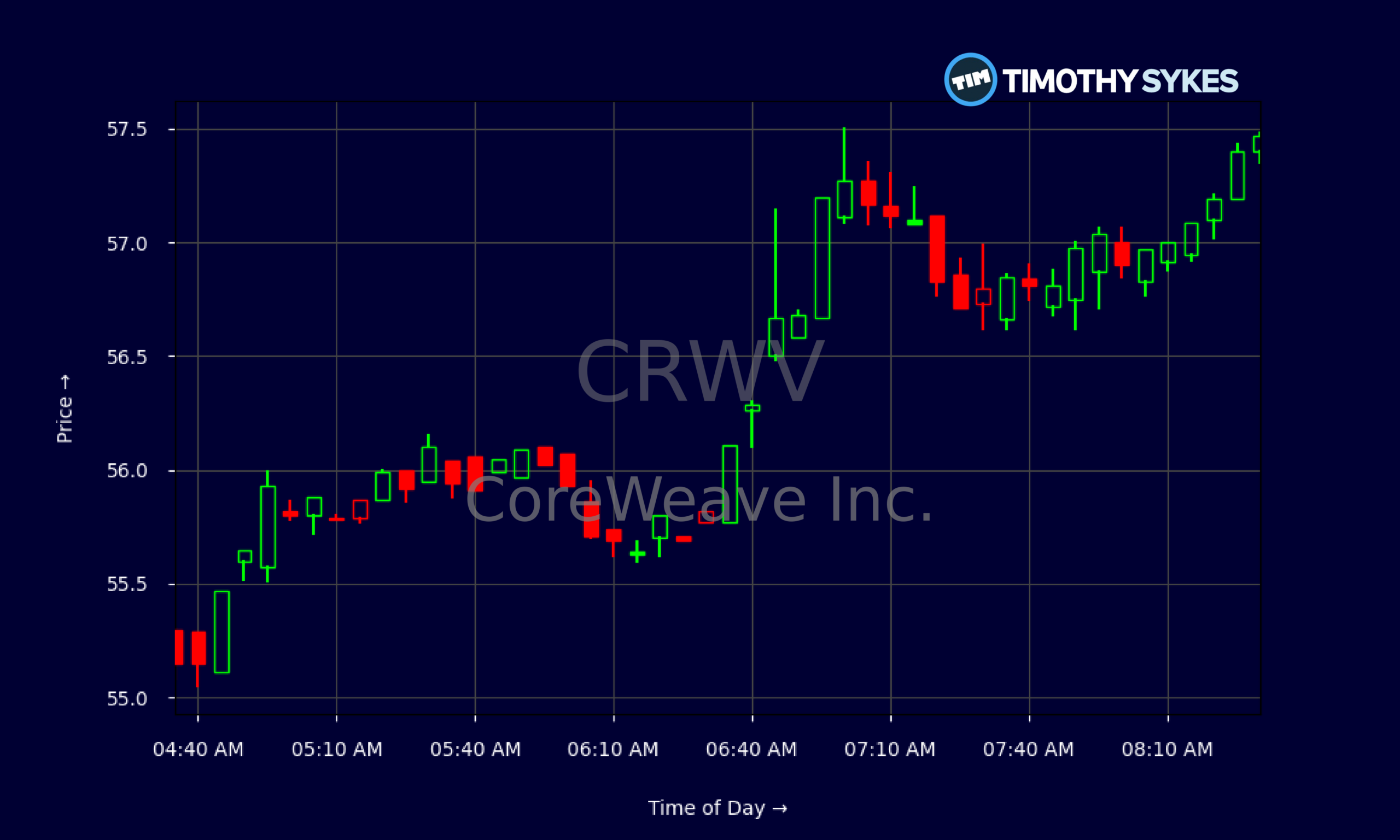
Live Update At 08:32:43 EDT: On Tuesday, October 27, 2026 CoreWeave Inc. stock [NASDAQ: CRWV] is trending up by 4.05%! Discover the key drivers behind this movement as well as our expert analysis in the detailed breakdown below.
Quick Financial Overview
CRWV has been on a wild ride. In early 2026/10 it traded around the low $90s, then slid steadily, closing near $55 on 2026/10/26. That’s a deep pullback, and it tells traders sentiment flipped hard before the recent rebound headlines.
Under the hood, CoreWeave is classic high-growth, high-burn AI infrastructure. Revenue sits around $5.13B, with a massive 90.6% gross margin, showing the core AI cloud services are very high value. But bottom-line margins are sharply negative and CRWV is not yet profitable, with profit margins in the mid‑minus‑20% range.
Leverage is heavy. Total debt to equity of 3.29 and a leverageratio above 15 mean CRWV is aggressively financed. A current ratio of 0.5 and quick ratio of 0.4 flag tight liquidity, which explains why debt and credit risk worries hit CRWV stock so hard before the Goldman Sachs upgrade.
More Breaking News
Cash flow tells the same story. CoreWeave posted about $679M in operating cash flow but burned through roughly $6.42B in capital expenditure, leading to around -$5.74B in free cash flow for the quarter. Traders in CRWV are betting that big AI data center spending today will translate into much larger revenue and, eventually, real earnings.
Why Traders Are Watching CRWV Momentum
CRWV is back on radar screens because the narrative shifted fast from “debt panic” to “AI execution story.” After a sharp AI-driven selloff that hit the whole Nasdaq and knocked CoreWeave, Micron, and Nvidia, CRWV found its footing as tech rebounded and fresh catalysts hit the tape.
The biggest trigger was Goldman Sachs moving CoreWeave from Neutral to Buy. That call landed right after a steep, debt‑fear selloff and powered about a 7% bounce in CRWV. When a major bank steps in like that, it often signals to traders that downside from the last scare may be largely priced in, at least for the near term.
At almost the same time, Nvidia’s CEO publicly backed CoreWeave, calling it financially stronger and highlighting a falling cost of capital. For a company with levered numbers like CRWV, that matters. Nvidia holds roughly 10% of CoreWeave and said it doesn’t expect to provide financial support. That message helps calm worst‑case solvency chatter that had been swirling around CRWV trading.
On the product side, CoreWeave launched a Zero Trust AI security framework and “Physical AI Launchables” templates for robotics and self‑driving workloads. The market rewarded that with a roughly 3% premarket pop in CRWV. This told momentum traders that headlines about differentiated AI security and vertical tools still move the stock fast.
Add in the Perplexity SPACE integration for defending against rogue AI agents and you get a clearer picture: CRWV is leaning hard into AI safety and specialized workloads. For short‑term traders, that mix of sector‑wide AI enthusiasm, Wallstreetbets chatter, and real product catalysts is exactly what fuels volatile intraday opportunities in CRWV.
Conclusion
For active traders, CRWV is a textbook high‑beta AI cloud name: big revenue growth, massive capex, heavy leverage, and nonstop headlines. The India expansion with AdaniConneX — 240MW of AI data center capacity planned in Navi Mumbai — shows CoreWeave is not playing small ball. It’s scaling globally, and that kind of build‑out can reshape expectations for future demand, even as it keeps pressure on cash flow and balance sheet metrics.
Short term, the tape matters. CRWV’s slide from the $80s–$90s into the mid‑$50s shook out weak hands, and the subsequent 7% rebound after the Goldman Sachs upgrade highlights how quickly sentiment can flip. Intraday, the 5‑minute chart around $55–$57 shows tight, liquid ranges where day traders can work with defined risk, especially when news hits.
But none of this is a guarantee. CRWV still carries negative earnings, thin liquidity ratios, and a large debt stack. Nvidia’s show of confidence and CoreWeave’s AI security push help, yet any new macro risk‑off move in AI could hit CRWV hard again.
For traders who follow Tim Sykes’ style, the playbook is straightforward: treat CRWV as a momentum vehicle, not a long‑term promise. As Tim likes to say, “Trade the ticker, not the story — the chart always tells the truth faster than the hype.” As millionaire penny stock trader and teacher Tim Sykes, says, “Be patient, don’t force trades, and let the perfect setups come to you.”. This article is for educational and research purposes only and is not advice; use CRWV’s volatility as a tool, and always cut losses quickly.
This is stock news, not investment advice. Timothy Sykes News delivers real-time stock market news focused on key catalysts driving short-term price movements. Our content is tailored for active traders and investors seeking to capitalize on rapid price fluctuations, particularly in volatile sectors like penny stocks. Readers come to us for detailed coverage on earnings reports, mergers, FDA approvals, new contracts, and unusual trading volumes that can trigger significant short-term price action. Some users utilize our news to explain sudden stock movements, while others rely on it for diligent research into potential investment opportunities.
Dive deeper into the world of trading with Timothy Sykes, renowned for his expertise in penny stocks. Explore his top picks and discover the strategies that have propelled him to success with these articles:
- Penny Stocks Trading Guide
- Best Penny Stocks Under $1 to Buy Today
- Top 8 Penny Stocks to Watch on Robinhood
Once you’ve got some stocks on watch, elevate your trading game with StocksToTrade the ultimate platform for traders. With specialized tools for swing and day trading, StocksToTrade will guide you through the market’s twists and turns.
Dig into StocksToTrade’s watchlists here:





Leave a reply