
Tower Semiconductor Ltd. stocks have been trading up by 8.33 percent amid upbeat sentiment on strengthening semiconductor demand.
Key Takeaways
- Expanded multi-year deal with Semtech locks in dedicated silicon germanium (SiGe) capacity across U.S., Israel, and Japan fabs, tying TSEM directly to AI data-center interconnect growth.
- Long-running 20-year Tower–Semtech relationship deepens, signaling durable demand visibility for TSEM around high-speed optical and copper connectivity hardware.
- Upcoming Q3 2026 earnings date and call logistics set, with TSEM planning to offer Q4 2026 guidance but no preliminary results or changes to its broader outlook yet.
Live Update At 12:32:04 EDT: On Monday, October 26, 2026 Tower Semiconductor Ltd. stock [NASDAQ: TSEM] is trending up by 8.33%! Discover the key drivers behind this movement as well as our expert analysis in the detailed breakdown below.
Quick Financial Overview
TSEM has been in a sharp pullback on the daily chart, then showed a strong bounce. The stock dropped from the 260s earlier in the month down to the mid‑160s, then reclaimed the 180 zone on 2026/10/26. That swing tells traders this name can move fast when headlines hit.
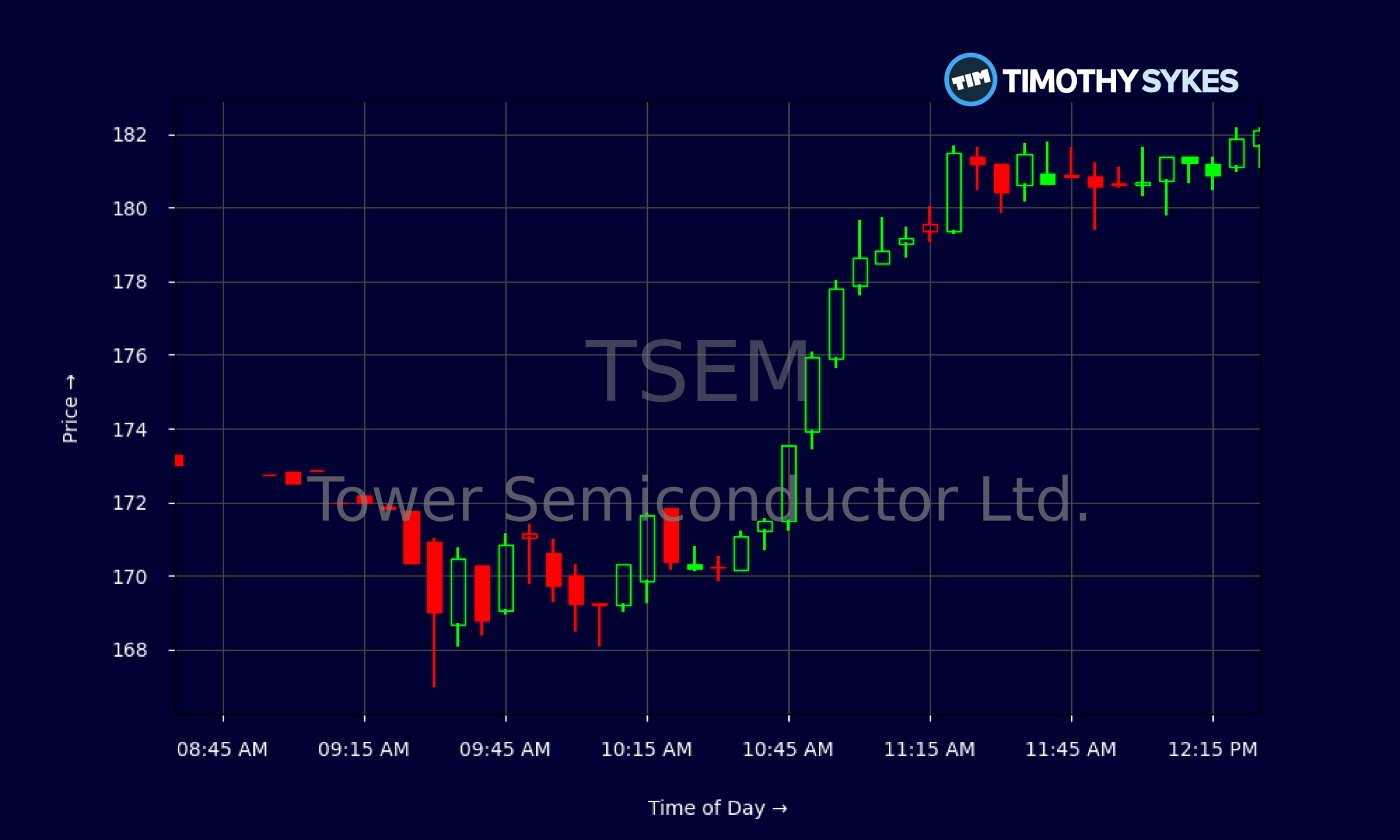
On the intraday 5‑minute chart, TSEM spent the morning grinding higher from around 169 to above 181, with controlled dips and steady higher lows. That intraday trend shows real buying interest instead of a one‑and‑done spike. For active trading, that kind of staircase pattern often supports dip‑buy setups with tight risk.
More Breaking News
Fundamentally, Tower Semiconductor reports about $1.57B in annual revenue and carries a rich price‑to‑sales ratio around 16.5. That tells traders the market already prices in solid growth. Return on assets near 1.7% and a leverageratio of 1.1 show TSEM is not a distressed balance sheet story; it’s a premium‑valued analog and specialty foundry. With over $1.15B in cash and short‑term investments on $3.32B in assets, TSEM has the dry powder to keep scaling capacity. The upcoming Q3 2026 earnings and Q4 guidance will show whether that growth premium stays justified.
Why Traders Are Watching TSEM After The Semtech Deal
TSEM just did something the market cares about: it tightened its grip on AI data‑center demand. Tower Semiconductor expanded a multi‑year manufacturing agreement with Semtech, and Semtech is committing capital to secure dedicated SiGe capacity across TSEM fabs in the U.S., Israel, and Japan. For traders, that means one thing — visibility.
AI data centers live or die on bandwidth. Semtech’s gear connects GPUs, switches, and racks at high speed using optical and copper interconnects. TSEM, through this expanded SiGe capacity deal, becomes an even more critical supplier into that plumbing. This isn’t a one‑off order; this is a multi‑year capacity reservation layered on top of a 20‑year Tower–Semtech relationship.
That history matters. When a customer sticks with a foundry like Tower Semiconductor for two decades, counterparty risk drops. The new TSEM–Semtech deal signals recurring wafers, not speculative AI hype. For a high‑multiple name like TSEM, recurring capacity at healthy utilization can help smooth earnings and support the rich price‑to‑sales ratio traders see today.
The geographic spread is another angle traders should track. With fabs in the U.S., Israel, and Japan tied into this Semtech agreement, TSEM diversifies geopolitical and supply‑chain risk. The more AI data‑center build‑out accelerates, the more this diversified footprint can matter when others hit bottlenecks. Add in the neutral but important Q3 2026 earnings date and guidance announcement, and Tower Semiconductor now has a clear upcoming catalyst where management can tie this Semtech expansion to its forward demand outlook.
Conclusion
For active traders, TSEM is now a clean AI‑infrastructure sympathy play with a real contract behind it, not just buzzwords. The expanded Semtech agreement locks in dedicated SiGe capacity for AI data‑center optical and copper interconnects and builds on a 20‑year collaboration. That reinforces Tower Semiconductor’s role as a go‑to analog and specialty foundry rather than a commodity chip shop.
At the same time, the chart is telling its own story. TSEM has bounced hard off recent lows, with intraday action showing accumulation rather than random churn. That’s exactly the kind of behavior momentum traders on timothysykes.com and StocksToTrade scan for — strong news, clear trend, defined levels to trade against. The premium valuation means expectations are high, but the Semtech deal gives some fundamental backing to the recent strength. As millionaire penny stock trader and teacher Tim Sykes, says, “Consistency is key in trading; don’t let emotions dictate your trades.”, so even when a ticker like TSEM is running on real news, the edge still comes from sticking to a rules‑based trading plan rather than chasing moves.
With Q3 2026 earnings and Q4 guidance on deck, the next major move in Tower Semiconductor will likely hinge on how management frames AI‑driven demand and fab utilization. As Tim Sykes always says, “Trade like a sniper — wait for the best setups, then strike fast and keep your risk small.” For TSEM, that means planning your levels now, watching how the stock reacts into and after the earnings call, and staying disciplined. This is educational trading research, not a buy or sell call — the edge comes from preparation, not prediction.
This is stock news, not investment advice. Timothy Sykes News delivers real-time stock market news focused on key catalysts driving short-term price movements. Our content is tailored for active traders and investors seeking to capitalize on rapid price fluctuations, particularly in volatile sectors like penny stocks. Readers come to us for detailed coverage on earnings reports, mergers, FDA approvals, new contracts, and unusual trading volumes that can trigger significant short-term price action. Some users utilize our news to explain sudden stock movements, while others rely on it for diligent research into potential investment opportunities.
Dive deeper into the world of trading with Timothy Sykes, renowned for his expertise in penny stocks. Explore his top picks and discover the strategies that have propelled him to success with these articles:
- Penny Stocks Trading Guide
- Best Penny Stocks Under $1 to Buy Today
- Top 8 Penny Stocks to Watch on Robinhood
Once you’ve got some stocks on watch, elevate your trading game with StocksToTrade the ultimate platform for traders. With specialized tools for swing and day trading, StocksToTrade will guide you through the market’s twists and turns.
Dig into StocksToTrade’s watchlists here:





Leave a reply