

Aardvark Therapeutics Inc. stocks have been trading down by -26.08 percent amid heightened concern over its latest clinical trial setbacks.
Key Takeaways For AARD Traders
- Aardvark Therapeutics faces a securities class action alleging it overstated the safety and commercial prospects of lead drug ARD-101, making earlier public statements misleading.
- Law firm probes claim Aardvark misled markets on ARD-101, now under a full FDA clinical hold after cardiac safety signals and a reported share price decline of more than 70%.
- Governance investigations into AARD focus on disclosures around ARD-101’s safety and outlook, adding another layer of uncertainty for traders.
- AARD paused enrollment in its Phase 3 HERO trial before the FDA hold on ARD-101, and those clinical setbacks have driven steep recent stock price drops.
Live Update At 09:18:50 EDT: On Friday, October 23, 2026 Aardvark Therapeutics Inc. stock [NASDAQ: AARD] is trending down by -26.08%! Discover the key drivers behind this movement as well as our expert analysis in the detailed breakdown below.
Quick Financial Overview
Aardvark Therapeutics Inc. (AARD) is trading like a classic troubled biotech: cash-rich, revenue-light, and now headline-driven. The daily chart shows AARD slipping from the mid‑$5s on 2026/09/28–2026/10/02 to sub‑$4 by 2026/10/22. That is a sharp downtrend in less than a month, with failed bounces near $5 turning into lower highs and lower lows.
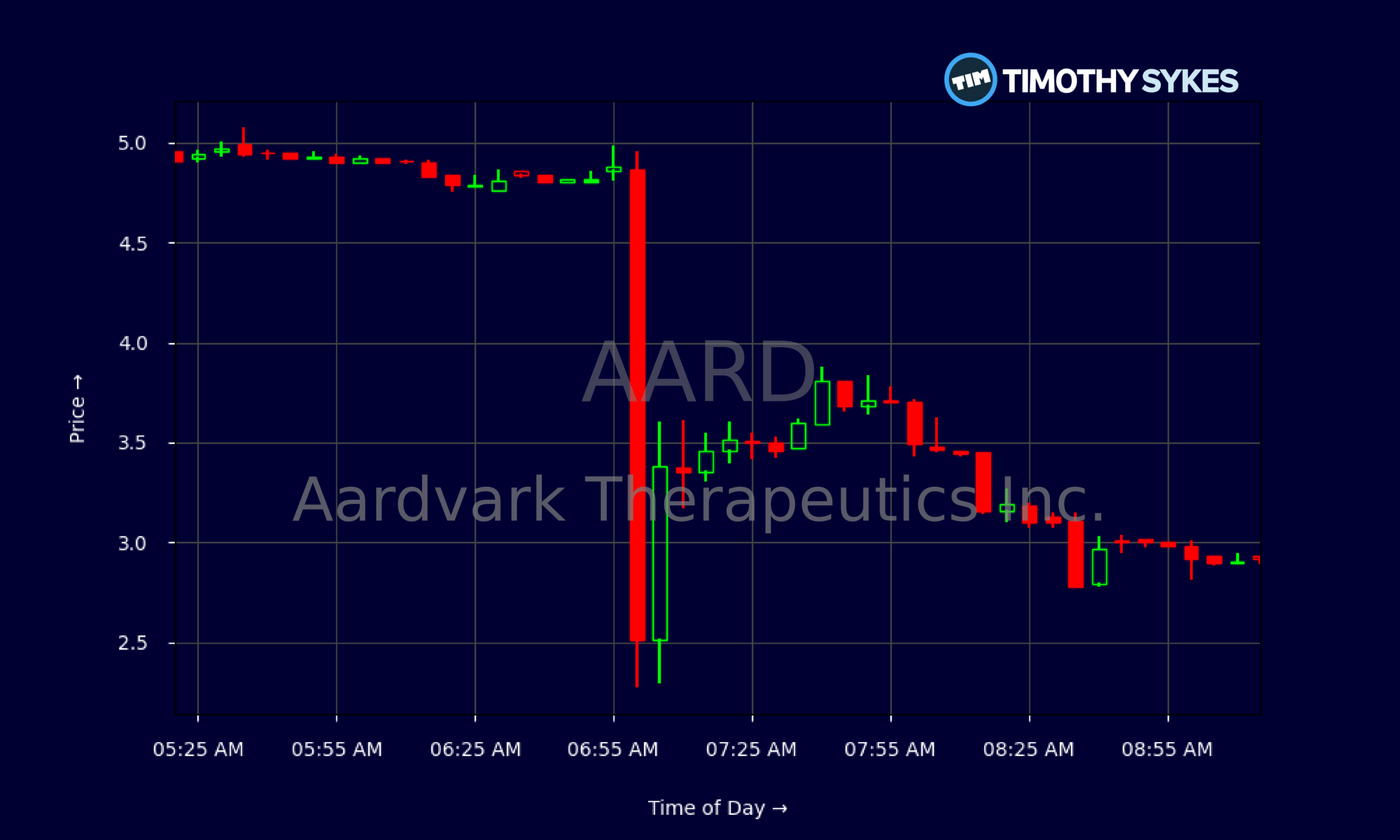
Intraday, AARD has been a volatility machine. On the latest 5‑minute tape, the stock cracked from around $4.85 just after 06:55 down to the low $2s by 07:05–07:10 before grinding back into the low $3s. That kind of range tells traders one thing: emotion is in control.
More Breaking News
Fundamentally, Aardvark Therapeutics is burning cash. Operating cash flow was about -$17.6M for the recent quarter, with free cash flow matching that negative figure. Yet AARD still held roughly $73.8M in cash and cash equivalents at period end, and its current ratio above 12 shows plenty of short‑term liquidity. Returns on equity and assets are deeply negative, as you’d expect from a clinical‑stage name without approved products. For traders, that means AARD’s chart will move more on headlines about ARD‑101 and the FDA than on earnings metrics for now.
Why Traders Are Watching AARD’s Legal And FDA Storm
Aardvark Therapeutics and ticker AARD have become a real‑time lesson in headline risk. The core of the story is ARD‑101, the company’s lead obesity drug candidate. Multiple class actions now allege Aardvark overstated the safety and the clinical, regulatory, and commercial prospects of ARD‑101. In plain English, plaintiffs say the bullish story AARD told the market about its main drug did not match the actual risk profile.
Things escalated fast. AARD paused enrollment in its Phase 3 HERO trial after cardiac safety findings, then the FDA slapped a full clinical hold on ARD‑101. A full clinical hold means no new or ongoing dosing until regulators are satisfied with the safety data. That is not a minor speed bump; it freezes the main value driver for Aardvark Therapeutics and rips out the near‑term catalyst that many momentum traders were betting on.
At the same time, law firms launched securities class actions and governance investigations. These target AARD’s disclosures around ARD‑101’s safety and path to market. That combination — an FDA full clinical hold plus lawsuits — is what reportedly drove a cumulative share price collapse of more than 70%. Traders watching AARD now are not just reading a biotech story; they are reading a credibility story. Every new filing, every small update on ARD‑101, becomes a potential trigger for sharp intraday moves. For day traders and swing traders, AARD is a pure event‑driven setup, but with serious downside risk if the narrative worsens.
Conclusion
For Aardvark Therapeutics and ticker AARD, everything revolves around ARD‑101. The company has cash, low balance‑sheet debt, and the typical negative earnings profile of a development‑stage biotech. None of that is what is driving the tape. The chart shows how quickly sentiment flipped once AARD paused Phase 3 enrollment, the FDA imposed a full clinical hold on ARD‑101, and securities class actions plus governance probes hit the newswires.
Until regulators lift that hold or provide clearer feedback, traders should assume AARD remains a high‑risk, headline‑sensitive biotech. Spikes can be violent, like the intraday snap from the $4s to the low $2s and back into the $3s, but those moves cut both ways. The legal claims that Aardvark Therapeutics overstated ARD‑101’s safety and commercial outlook hang over every bounce attempt.
This is where trading discipline matters. As Tim Sykes often says, “The market doesn’t care about your hopes, it cares about your risk management.” That focus on process over emotion aligns with another key Sykes principle: As millionaire penny stock trader and teacher Tim Sykes, says, “Small gains add up over time; focus on building wealth gradually, not chasing jackpots.”. For anyone studying AARD, the lesson is to respect both the volatility and the binary nature of FDA and courtroom outcomes. Use the chart, size smart, and remember you are trading uncertainty itself, not a finished success story.
This is stock news, not investment advice. Timothy Sykes News delivers real-time stock market news focused on key catalysts driving short-term price movements. Our content is tailored for active traders and investors seeking to capitalize on rapid price fluctuations, particularly in volatile sectors like penny stocks. Readers come to us for detailed coverage on earnings reports, mergers, FDA approvals, new contracts, and unusual trading volumes that can trigger significant short-term price action. Some users utilize our news to explain sudden stock movements, while others rely on it for diligent research into potential investment opportunities.
Dive deeper into the world of trading with Timothy Sykes, renowned for his expertise in penny stocks. Explore his top picks and discover the strategies that have propelled him to success with these articles:
- Penny Stocks Trading Guide
- Best Penny Stocks Under $1 to Buy Today
- Top 8 Penny Stocks to Watch on Robinhood
Once you’ve got some stocks on watch, elevate your trading game with StocksToTrade the ultimate platform for traders. With specialized tools for swing and day trading, StocksToTrade will guide you through the market’s twists and turns.
Dig into StocksToTrade’s watchlists here:




Leave a reply