
Riot Platforms Inc. stocks have been trading up by 11.31 percent amid bullish sentiment on Bitcoin-driven mining revenue growth.
Key Takeaways
- Wall Street firms have cut Riot Platforms price targets across the board, but most still carry Buy or Overweight ratings on RIOT.
- Analysts cite rising construction and financing costs for data centers as major overhangs on RIOT’s AI colocation and mining build-out plans.
- Several brokers argue the recent pullback leaves RIOT trading at attractive levels relative to its future high‑performance computing capacity.
- Sector-wide weakness in AI data center and bitcoin mining names is hitting RIOT even as its long‑term growth roadmap remains intact.
- A proposed CFTC federal crypto framework could tighten rules but also further legitimize the core market RIOT depends on.
Live Update At 14:02:33 EST: On Wednesday, November 04, 2026 Riot Platforms Inc. stock [NASDAQ: RIOT] is trending up by 11.31%! Discover the key drivers behind this movement as well as our expert analysis in the detailed breakdown below.
Quick Financial Overview
RIOT has been trading like a volatility machine. Over the last couple of weeks, Riot Platforms stock slid from the mid‑$16s to an intraday low near $11.63, then ripped back to close around $15.60 on 2026/11/04. That’s a sharp rebound off the lows, but still below recent highs, telling traders this is a battleground name.
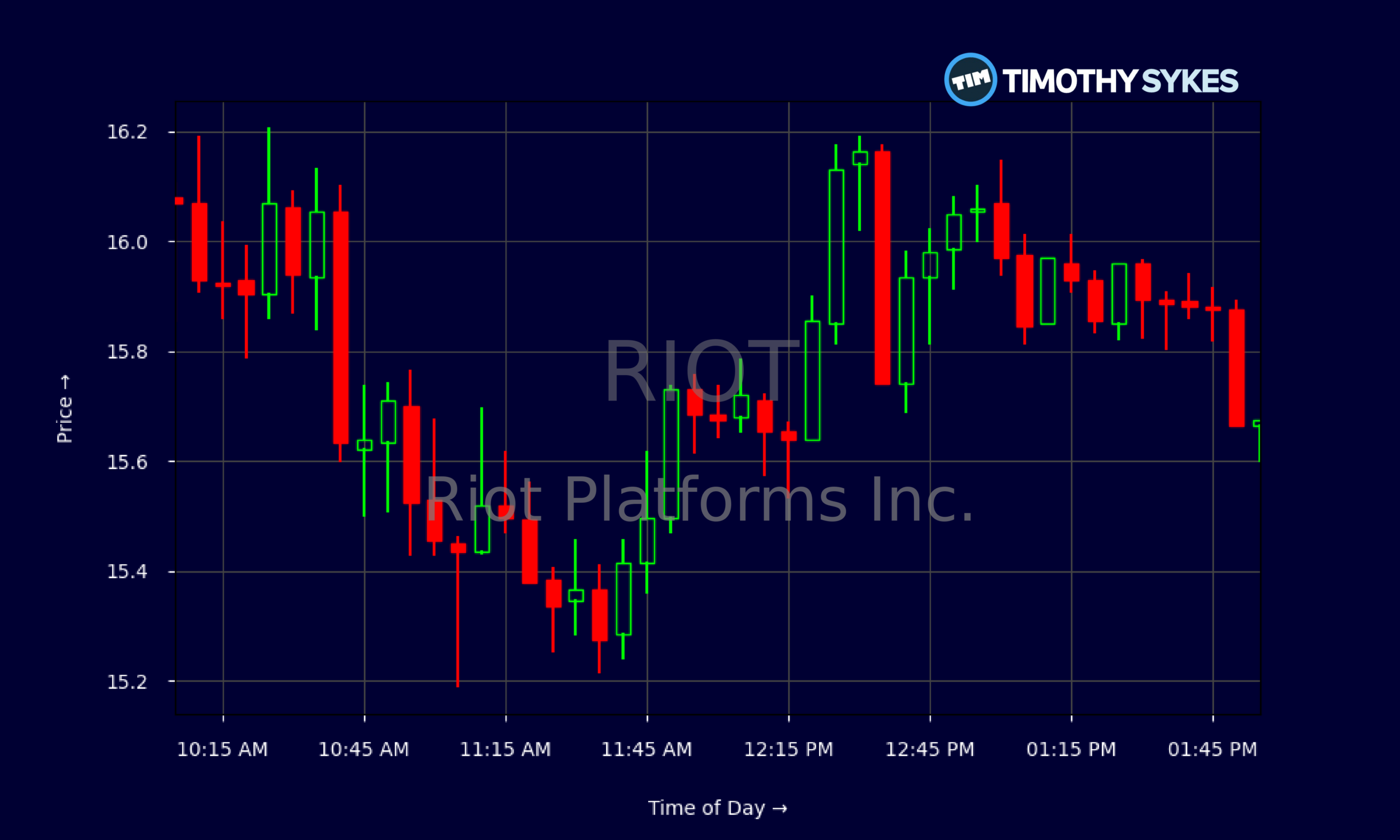
The 5‑minute chart shows RIOT grinding higher through the day, with tight intraday ranges between roughly $15.50 and $16.20. That intraday stair‑step pattern screams active trading flows and short‑term momentum players pushing price around key levels.
More Breaking News
Under the hood, RIOT’s fundamentals are still early‑stage, high‑risk. Revenue over the last year is about $647.4M with a strong 48% gross margin, but operating margins are deeply negative and the latest quarter showed a net loss of roughly $237.2M. Riot Platforms is spending heavily on growth: capital expenditures of about $85.9M and negative free cash flow of about $176.1M highlight that this is a build‑out story, not a steady cash generator. Debt looks manageable with total debt‑to‑equity at 0.4 and current ratio at 1.6, but cash burn keeps RIOT firmly in “trade the swings, don’t fall in love” territory.
Why Traders Are Watching RIOT After Target Cuts
RIOT is sitting in the crosshairs of crypto, AI data centers, and a changing credit market. That mix is exactly why Wall Street is busy cutting price targets while still telling clients the long‑term story has legs.
The latest move came from Keefe Bruyette, which slashed its Riot Platforms target from $35 to $20 while keeping an Outperform rating. The firm still likes RIOT’s AI colocation setup, but warns on heavy construction costs, financing execution risk, and even Texas regulatory risk. That’s a clear signal: the core thesis is alive, but the path just got rougher and longer, with fewer lease catalysts likely before early 2027.
B. Riley also trimmed its RIOT target to $25 from $33 yet stuck with a Buy, arguing the market is undervaluing Riot Platforms’ future mining and high‑performance computing capacity. In their view, the recent selloff is a chance for traders who understand how cyclical sentiment can disconnect from long‑term capacity growth.
Piper Sandler cut its RIOT target to $19 from $25, still at Overweight, pointing to a sector hit by the reversal in the AI trade and tighter data center financing. Cantor Fitzgerald moved to $24 from $30 with an Overweight call, while Morgan Stanley dropped to $35.50 from $43 but stayed Overweight as well.
Put it together and RIOT is caught in a macro downdraft—AI data centers and bitcoin miners out of favor—but not abandoned. The overall Street stance is still Buy, with a mean target around $29.55, well above where Riot Platforms trades today. That gap is exactly what keeps momentum traders glued to the RIOT tape.
Conclusion
For active traders, RIOT sits at the intersection of opportunity and risk. The tape shows strong volatility, big intraday ranges, and heavy participation from short‑term momentum players. The fundamentals show a company in full build‑out mode—high revenue growth, solid gross margins, but steep losses and negative free cash flow as Riot Platforms pours cash into new mining and AI‑related infrastructure.
Wall Street’s message is consistent: targets are coming down, but the rating on RIOT remains mostly Buy or Overweight. Keefe Bruyette, B. Riley, Piper Sandler, Cantor Fitzgerald, and Morgan Stanley all trimmed their price targets, yet none walked away from the name. They point to higher construction and financing costs, a tougher credit backdrop, and sector‑wide AI data center weakness as the drag, not a broken core thesis at Riot Platforms.
On top of that, the CFTC’s move toward a unified federal framework for retail crypto commodities adds another layer. More rules can raise compliance costs for RIOT, but clearer national standards can also legitimize and stabilize the ecosystem that underpins its mining and colocation business.
For those studying RIOT’s chart, this is a classic “hot sector, cold sentiment” setup. As Tim Sykes always says, “Patterns repeat because human nature doesn’t change—your job is to recognize them and manage your risk.” As millionaire penny stock trader and teacher Tim Sykes, says, “Consistency is key in trading; don’t let emotions dictate your trades.” Use RIOT’s volatility as a classroom, not a lottery ticket. This analysis is for educational and research purposes only, not investment advice.
This is stock news, not investment advice. Timothy Sykes News delivers real-time stock market news focused on key catalysts driving short-term price movements. Our content is tailored for active traders and investors seeking to capitalize on rapid price fluctuations, particularly in volatile sectors like penny stocks. Readers come to us for detailed coverage on earnings reports, mergers, FDA approvals, new contracts, and unusual trading volumes that can trigger significant short-term price action. Some users utilize our news to explain sudden stock movements, while others rely on it for diligent research into potential investment opportunities.
Dive deeper into the world of trading with Timothy Sykes, renowned for his expertise in penny stocks. Explore his top picks and discover the strategies that have propelled him to success with these articles:
- Penny Stocks Trading Guide
- Best Penny Stocks Under $1 to Buy Today
- Top 8 Penny Stocks to Watch on Robinhood
Once you’ve got some stocks on watch, elevate your trading game with StocksToTrade the ultimate platform for traders. With specialized tools for swing and day trading, StocksToTrade will guide you through the market’s twists and turns.
Dig into StocksToTrade’s watchlists here:





Leave a reply