

Procore Technologies Inc. stocks have been trading up by 19.23 percent following strong demand signals for its construction software platform.
Key Takeaways For PCOR Traders
- Q3 from PCOR beat across the board, with $402.3M revenue and $0.51 EPS topping expectations and pushing management to raise full-year guidance.
- Management guided Q4 revenue to $420M–$422M with a 15.5%–16.0% non-GAAP operating margin, signaling confidence in near-term momentum.
- PCOR laid out 2026 revenue of $1.557B–$1.559B and 19.0%–19.5% non-GAAP margins, anchoring a longer-term profitability story.
- Analysts at Citizens and TD Cowen raised price targets, pointing to PCOR’s execution, digital transformation tailwinds, and DroneDeploy expansion.
- New AI partnerships with NVIDIA, Meta, and IBM position Procore Technologies as a potential “system of intelligence” across construction and asset management.
Live Update At 14:02:40 EST: On Wednesday, November 04, 2026 Procore Technologies Inc. stock [NYSE: PCOR] is trending up by 19.23%! Discover the key drivers behind this movement as well as our expert analysis in the detailed breakdown below.
Quick Financial Overview
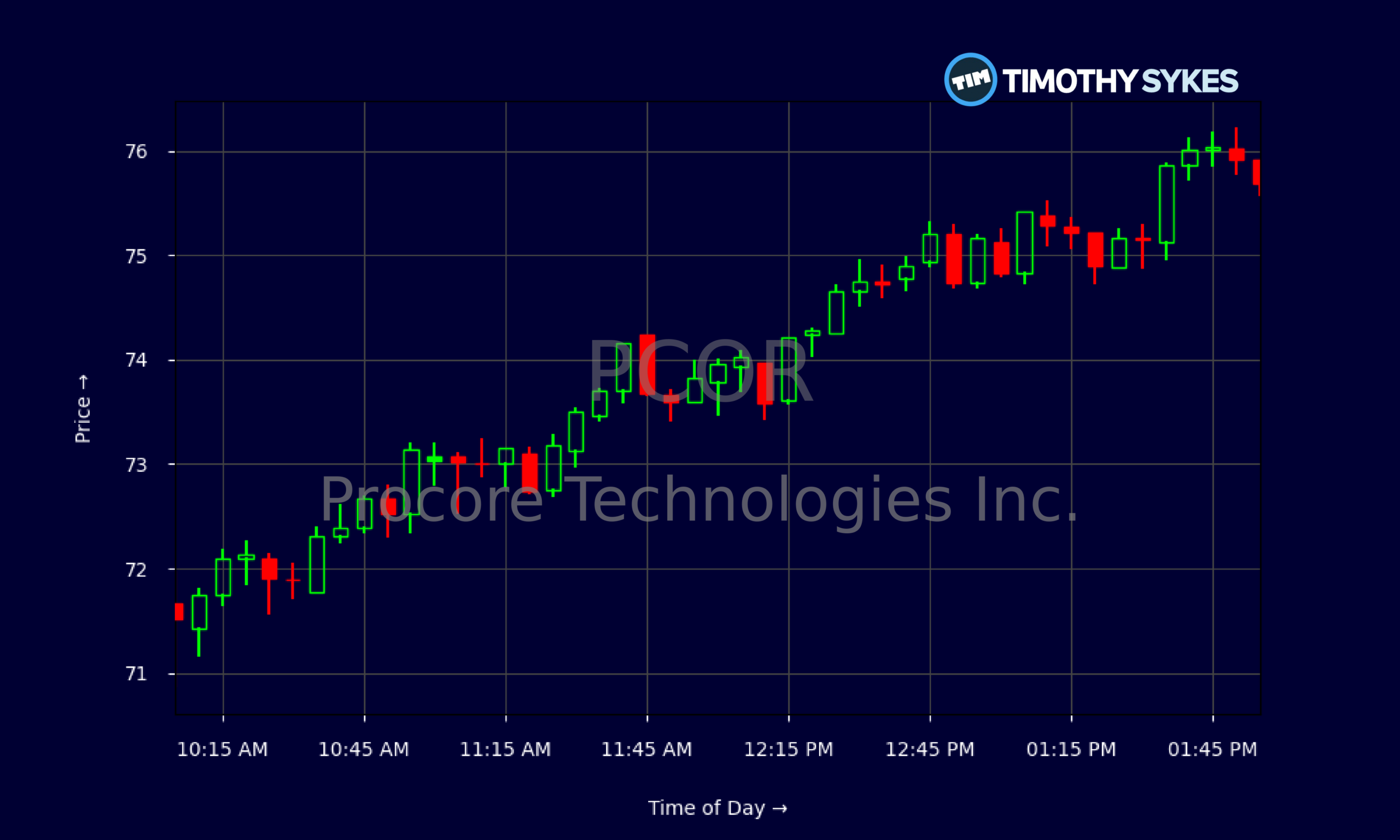
PCOR just delivered the kind of quarter momentum traders look for. On 2026/11/03, Procore Technologies ripped from a prior close of $63.17 to finish at $75.325 the next day, after spiking as high as $76.21. That is a sharp, high-volume repricing on fresh info, not a slow grind.
Zooming out, PCOR spent most of the prior weeks chopping between roughly $56 and $63. The stock broke that range only when the Q3 beat-and-raise story hit the tape. That tells traders the new fundamental data reset expectations. This is exactly the kind of range break that trend-followers track.
Intraday, the 5‑minute chart shows PCOR opening at $66.93, immediately surging above $70, then stair‑stepping higher through the day with higher lows and a close near the top of the range. That intraday pattern reflects steady demand, not a one‑and‑done spike.
More Breaking News
Fundamentally, Procore’s latest annualized revenue run rate sits north of $1.3B, with roughly 19% year‑over‑year growth. Gross margin near 80% shows classic high‑quality SaaS economics. While GAAP profitability metrics are still thin, cash flow is improving: Procore generated about $87.9M in operating cash flow and $64.5M in free cash flow last quarter. For PCOR traders, the story is shifting from “growth at all costs” toward growth with real leverage.
Why Traders Are Watching PCOR Right Now
The market is rewarding clear execution, and PCOR is putting numbers behind its narrative. Procore Technologies beat Q3 expectations with revenue of $402.3M versus $384.0M consensus and EPS of $0.51 versus $0.45. Revenue grew 19% year over year, helped by about two points from the DroneDeploy acquisition, while margins landed above the high end of guidance. Management then raised full‑year revenue and margin targets. That combination — beat and raise — is catnip for active traders.
PCOR followed that up with strong forward guidance. For Q4, Procore is calling for $420M–$422M in revenue against roughly $396.1M expected and a non‑GAAP operating margin of 15.5%–16.0%. That tells traders the Q3 upside was not a one‑off surprise. The company also laid down 2026 revenue guidance of $1.557B–$1.559B, comfortably ahead of about $1.51B on the Street, paired with a 19.0%–19.5% margin outlook. Management is effectively saying they see a path to scaled, profitable SaaS, not just a niche vertical name.
PCOR added another key signal: a $300M share repurchase plan. For a growth platform, committing real cash to buybacks usually means management believes in both the durability of free cash flow and the current valuation. That can offer a floor on big dips and support per‑share earnings growth.
Layer in the AI and partnership story, and the narrative tightens. Procore Technologies is expanding its collaboration with NVIDIA, using Omniverse to power real‑time digital twins and “Realism Mode” 3D visualization for complex projects. That taps directly into the AI, data center, and infrastructure build‑out theme traders love.
At the jobsite level, Procore AI Go — a voice‑first app that runs on phones and Meta’s AI glasses — pushes PCOR beyond back‑office software into the field. Workers can query live project data hands‑free. Tie that to IBM Maximo integration for full asset lifecycle management, and PCOR is chasing a broader role from build phase through operations. Analysts are noticing: Citizens bumped its target to $77 with an Outperform, while TD Cowen went to $70 with a Buy, both citing Procore’s improving execution and expanding moat.
Conclusion
For active traders, PCOR now sits at the intersection of three strong narratives: accelerating fundamentals, improving margins, and an aggressive AI push. Procore Technologies just put up a clean beat on Q3 revenue and EPS, raised its full‑year view, and guided both Q4 and 2026 above consensus on revenue and profitability. The stock’s breakout from the low‑$60s into the mid‑$70s is the chart’s way of confirming that story.
At the same time, Procore Technologies is working to turn AI buzz into real product edge. NVIDIA‑powered digital twins, Meta‑enabled voice AI in the field, and IBM Maximo integration all point to PCOR aiming to be the digital backbone of modern construction and asset management. Even more cautious voices, like Oppenheimer’s Perform rating, acknowledge healthy AI demand and enthusiasm for the DroneDeploy tie‑in.
For traders studying PCOR, the setup now is about discipline. Earnings gaps can run, but they can also retrace hard. As Tim Sykes always reminds his students, “The pattern is only part of the trade — the real edge comes from cutting losses quickly and never falling in love with a story.” As millionaire penny stock trader and teacher Tim Sykes says, “You must adapt to the market; the market will not adapt to you.”. Procore Technologies has the kind of numbers and momentum that attract attention. The job for traders is to respect the volatility, map their levels, and let risk rules — not hype — drive every trading decision.
This is stock news, not investment advice. Timothy Sykes News delivers real-time stock market news focused on key catalysts driving short-term price movements. Our content is tailored for active traders and investors seeking to capitalize on rapid price fluctuations, particularly in volatile sectors like penny stocks. Readers come to us for detailed coverage on earnings reports, mergers, FDA approvals, new contracts, and unusual trading volumes that can trigger significant short-term price action. Some users utilize our news to explain sudden stock movements, while others rely on it for diligent research into potential investment opportunities.
Dive deeper into the world of trading with Timothy Sykes, renowned for his expertise in penny stocks. Explore his top picks and discover the strategies that have propelled him to success with these articles:
- Penny Stocks Trading Guide
- Best Penny Stocks Under $1 to Buy Today
- Top 8 Penny Stocks to Watch on Robinhood
Once you’ve got some stocks on watch, elevate your trading game with StocksToTrade the ultimate platform for traders. With specialized tools for swing and day trading, StocksToTrade will guide you through the market’s twists and turns.
Dig into StocksToTrade’s watchlists here:




Leave a reply