
NVIDIA Corporation stocks have been trading up by 2.02 percent amid bullish sentiment on accelerating AI chip demand.
Key Takeaways For NVDA Traders
- SpaceX has discussed a roughly $40B financing package with lenders to fund a massive purchase of Nvidia AI chips, underscoring continued, outsized demand for Nvidia’s GPUs from private companies building AI infrastructure.
- Amazon’s AWS has committed to receive roughly $5B of Nvidia GB300 GPU server racks upfront and expects about $3B more per month “for the foreseeable future,” even if many systems sit idle due to data center power shortages.
- Chinese tech giants ByteDance, Alibaba, and Tencent have jointly ordered over $35B of Nvidia RTX PRO 5500 chips (3M+ units), though Nvidia has warned it may not fully meet this demand due to capacity limits and U.S. export rules.
- Nvidia underscored the payoff from its early CUDA bet, reporting Q2 FY2027 revenue of $96.2B (up 106% year over year) with data center revenue of $89.0B.
- Nvidia and Siemens launched their first AI-based autonomous manufacturing solutions and Nvidia is reportedly leaning toward TSMC’s 3 nm process for the base die of its planned NVHBM memory chip, signaling deeper moves into industrial AI and advanced memory.
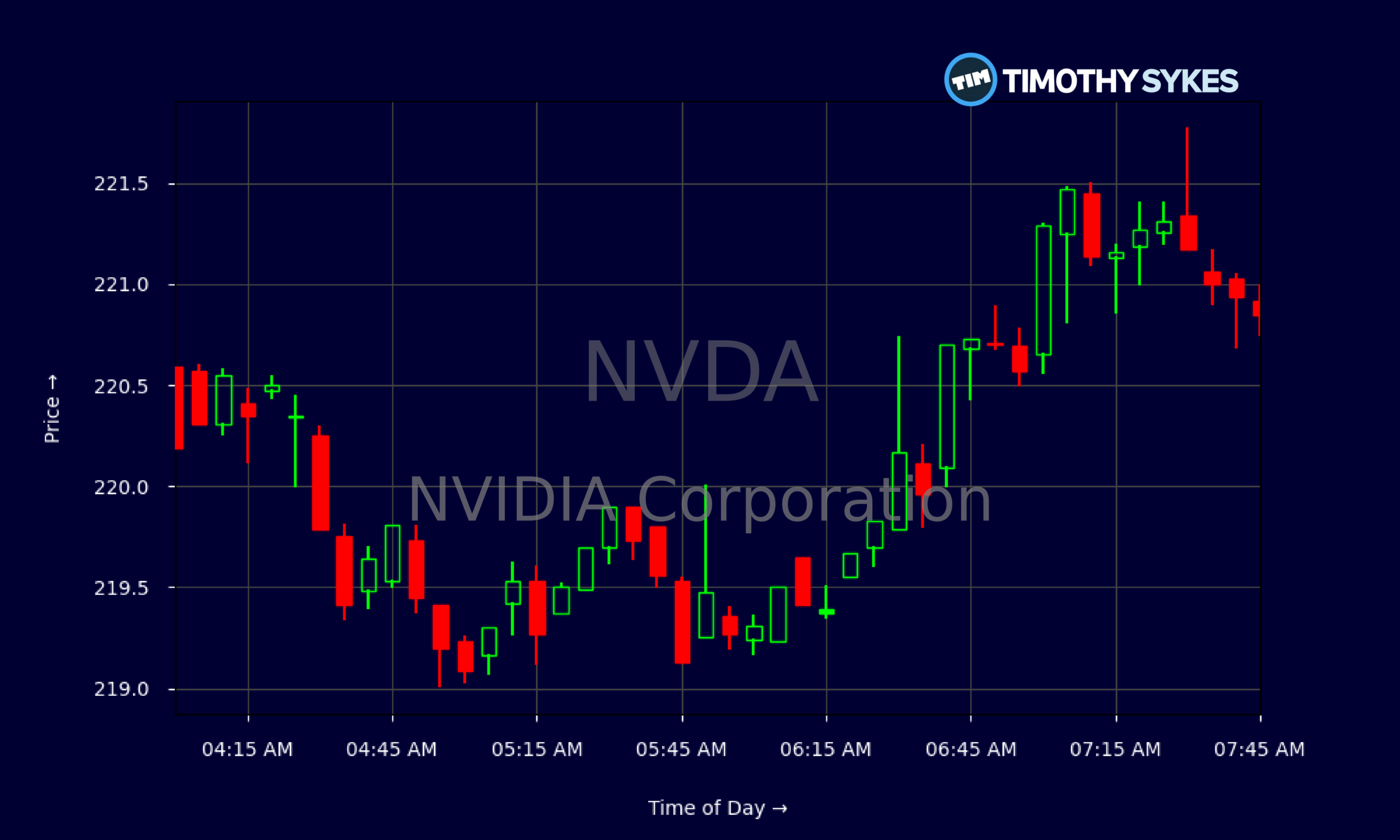
Live Update At 07:49:44 EDT: On Wednesday, October 21, 2026 NVIDIA Corporation stock [NASDAQ: NVDA] is trending up by 2.02%! Discover the key drivers behind this movement as well as our expert analysis in the detailed breakdown below.
Quick Financial Overview
For NVDA, the numbers right now look like a textbook case of a runaway leader. Nvidia reported Q2 FY2027 revenue of $96.2B, up 106% year over year, with data center revenue at $89.0B. Profitability is extreme: gross margin sits near 74.7%, EBIT margin about 68%, and return on equity above 79%. Those figures tell traders this is not a low‑margin hardware story; it is a high‑moat platform.
On the balance sheet, NVDA has total debt to equity of just 0.17 and a current ratio of 4.6, so liquidity risk is low. Free cash flow of roughly $21.4B and high interest coverage (over 450 times) back that up.
Valuation is rich. A P/E near 29 and price‑to‑sales above 18 mean traders are paying up for growth. But revenue has grown more than 110% over three years, which explains why the market still rewards NVDA.
More Breaking News
On the chart, NVDA has pulled back from recent highs near the mid‑240s to close around $216–$217 on 2026/10/20. That’s a controlled pullback, not a collapse. Intraday, the 5‑minute tape around $219–$221 shows tight ranges and steady bids, a sign of consolidation rather than panic. Active traders should see NVDA in a digestion phase after a massive run, with the fundamental engine still firmly on.
Why Traders Are Watching NVDA’s AI Demand Wave
What stands out in this NVDA tape is how demand stories keep stacking up. SpaceX discussing roughly $40B in financing specifically to buy Nvidia AI chips turns GPUs into a capital‑markets event. That tells traders something important: the AI build‑out is so large that balance sheets are being structured around getting Nvidia capacity.
Amazon’s AWS committing about $5B upfront for NVDA GB300 GPU racks, plus around $3B per month “for the foreseeable future,” pushes the same message. Cloud majors are basically hoarding Nvidia hardware. Even with some systems expected to sit idle because of power constraints, AWS is choosing guaranteed NVDA supply over perfect utilization. For traders, that screams pricing power and backlog visibility.
Then there is China. ByteDance, Alibaba, and Tencent have reportedly placed more than $35B in orders for RTX PRO 5500 chips, over 3M units, with total Chinese demand above 6M units against Nvidia’s planned 3M units in 2027. NVDA has warned that capacity limits and U.S. export rules mean not all orders will be filled. That mix of overwhelming demand and policy risk is exactly what creates volatility spikes traders can work with.
Underneath, NVDA keeps expanding its footprint. The company launched its RTX Spark laptop line globally, combining Blackwell RTX GPUs and Grace CPUs to target local AI workloads and creative work. RTX Spark chips also power Microsoft’s Surface Laptop Ultra, aiming at high‑performance mobile AI. Add Nvidia’s broader collaboration with Adobe around RTX Spark acceleration and Nemotron‑powered Adobe Brand Concierge, and you see a push to lock in creators and developers on Nvidia‑centric workflows.
On the industrial side, NVDA and Siemens have launched their first AI‑based autonomous manufacturing solutions, while Nvidia is reportedly leaning toward TSMC’s 3 nm process for its planned NVHBM memory chip. Germany’s government‑backed industrial AI initiative with Nvidia and the nearly $10B Europe‑focused plan that includes German startups all point to a deliberate move into factory floors and robotics, not just data centers. For momentum traders, that diversification lengthens the story and supports sustained interest in NVDA.
Conclusion
For active traders, NVDA sits at the center of several powerful currents at once. The financials show a company turning $96.2B in quarterly revenue into fat margins and $21.4B in free cash flow. The news flow shows hyperscalers like AWS, private giants like SpaceX, and Chinese platforms such as ByteDance, Alibaba, and Tencent lining up with tens of billions of dollars in chip orders.
At the same time, Nvidia is working with Siemens on autonomous manufacturing solutions, expanding its RTX Spark laptop push with major OEMs, and deepening ties with Adobe and Microsoft in creative and PC ecosystems. Government‑backed initiatives in Germany and U.K. AI safety funding commitments add another layer of strategic positioning around NVDA’s platform.
The stock’s recent pullback into the low‑220s, after trading higher earlier in October 2026, looks more like a pause in a strong uptrend than a broken story. Valuation is demanding, which means any disappointment on supply, export rules, or AI capex could trigger fast air‑pockets on the chart that short‑term traders may try to exploit.
The educational lesson from NVDA right now is clear: study the news, map it to the chart, and do not fall in love with any ticker. As Tim Sykes likes to say, “The market doesn’t care about your opinion, only your discipline.” As millionaire penny stock trader and teacher Tim Sykes, says, “You must adapt to the market; the market will not adapt to you.”. For NVDA, the discipline is watching demand headlines, supply constraints, and technical levels in real time—and being ready to cut losses fast if the story or the price action shifts.
This is stock news, not investment advice. Timothy Sykes News delivers real-time stock market news focused on key catalysts driving short-term price movements. Our content is tailored for active traders and investors seeking to capitalize on rapid price fluctuations, particularly in volatile sectors like penny stocks. Readers come to us for detailed coverage on earnings reports, mergers, FDA approvals, new contracts, and unusual trading volumes that can trigger significant short-term price action. Some users utilize our news to explain sudden stock movements, while others rely on it for diligent research into potential investment opportunities.
Dive deeper into the world of trading with Timothy Sykes, renowned for his expertise in penny stocks. Explore his top picks and discover the strategies that have propelled him to success with these articles:
- Penny Stocks Trading Guide
- Best Penny Stocks Under $1 to Buy Today
- Top 8 Penny Stocks to Watch on Robinhood
Once you’ve got some stocks on watch, elevate your trading game with StocksToTrade the ultimate platform for traders. With specialized tools for swing and day trading, StocksToTrade will guide you through the market’s twists and turns.
Dig into StocksToTrade’s watchlists here:





Leave a reply