

Sprouts Farmers Market Inc. stocks have been trading up by 11.02 percent amid upbeat sentiment over robust earnings growth.
Key Takeaways Traders Need To Know
- Q3 2026 brought 5% net sales growth for Sprouts but slightly negative comps and flat EPS as management flagged a tougher consumer backdrop and cyclospora disruption.
- Q3 EPS of $1.21 on $2.3B revenue landed just under consensus, pressuring SFM as traders focused on margins and guidance.
- Management is ramping price and loyalty investments, accepting a Q4 sales and margin reset that pushes the earnings story out toward 2027.
- Major firms cut SFM price targets yet still sit at Buy/Outperform/Overweight, pointing to balance sheet strength and solid new-store performance.
- Fiscal 2026 guidance from Sprouts calls for EPS of $4.80, 4.3% net sales growth, and 42 net new stores, plus a one-time boost from a 53rd week.
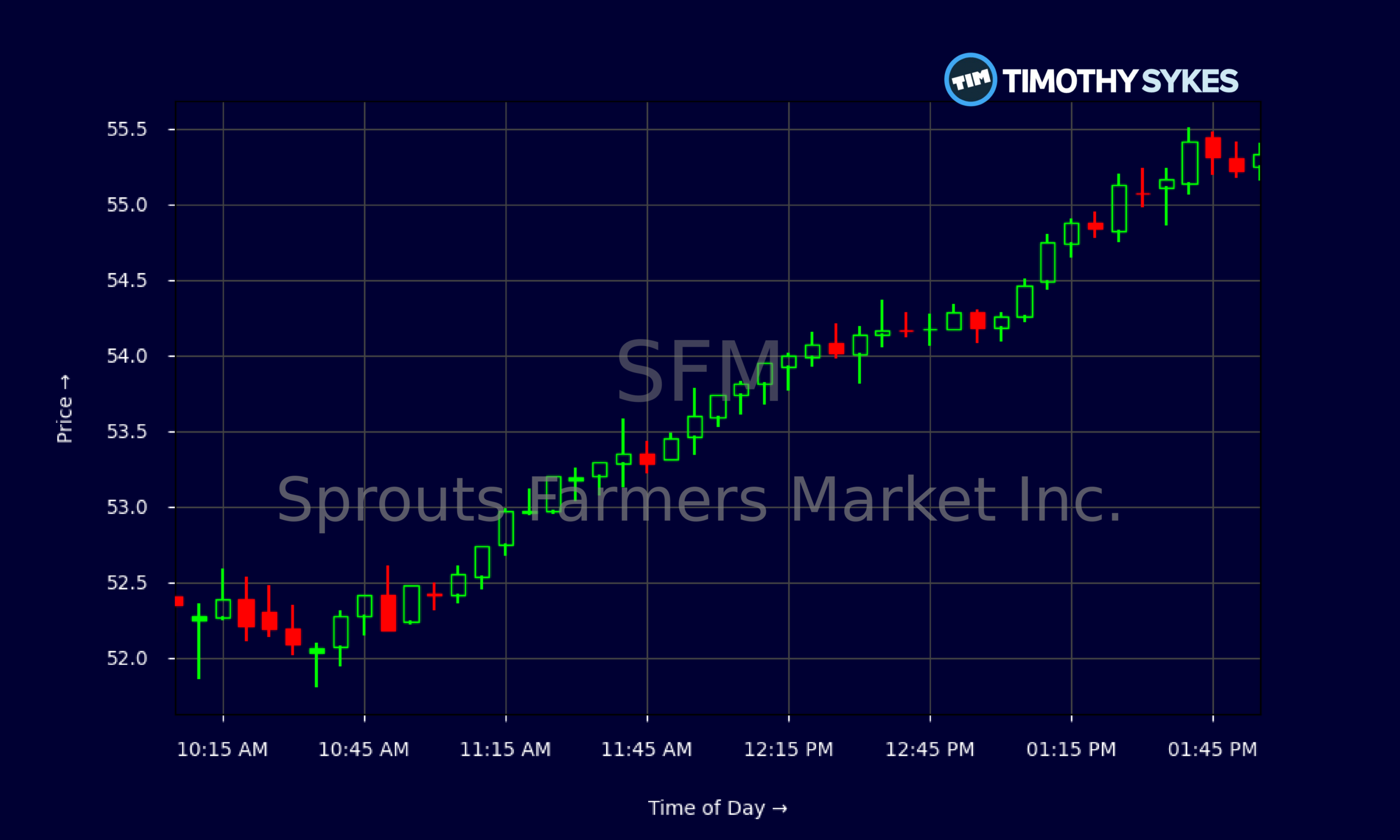
Live Update At 14:02:07 EST: On Monday, November 02, 2026 Sprouts Farmers Market Inc. stock [NASDAQ: SFM] is trending up by 11.02%! Discover the key drivers behind this movement as well as our expert analysis in the detailed breakdown below.
Quick Financial Overview
Sprouts Farmers Market, ticker SFM, is trading like a high-beta grocery name right now, not a sleepy supermarket. The daily chart shows SFM closing at $55.18 after bouncing from a sharp post-earnings selloff that took the stock down into the high $40s. Just days earlier, SFM changed hands around the mid‑$60s, so this is a meaningful re-rating.
On the fundamentals, SFM posted Q3 revenue of about $2.30B versus roughly $2.33B expected and EPS of $1.21 versus $1.23 consensus. That is a small miss, but traders hate when a strong trend stalls, especially after a long run. Net sales rose 5%, yet comparable sales slipped slightly and EPS was flat year over year, telling you operating leverage is fading as management leans into costs.
Key ratios still paint SFM as a profitable, efficient operator. A gross margin near 38.7% and EBIT margin around 6.4% stand out in food retail. Return on equity above 29% and asset turnover at 2.2 show the chain squeezes a lot out of its store base. But leverage is real, with total debt‑to‑equity around 1.33 and a quick ratio of just 0.3, so the market is quick to punish any hint of slowing growth.
More Breaking News
For active traders, that mix of solid profitability and guidance risk is exactly what fuels volatility.
Why Traders Are Watching SFM After The 22% Drop
SFM has turned into a case study in how fast sentiment can flip when expectations are rich. Sprouts Farmers Market delivered Q3 2026 results with 5% net sales growth, slightly negative comps, and flat EPS, then layered on a reset to Q4 sales and margins. The next day, SFM shares dropped 22.5% to $48.05 in a single session. That kind of air pocket is where disciplined traders live.
The core issue is not the size of the earnings miss. A $0.02 EPS shortfall and a roughly $30M revenue miss are small on a $2.30B base. What shook SFM traders was management’s choice to push harder on price cuts and customer engagement, effectively telling the Street that margins need to step back so traffic and value perception can be rebuilt.
Goldman Sachs reacted by slashing its SFM price target from $94 to $58 while keeping a Buy rating, tying the cut directly to slowing same-store sales and a margin reset. Wells Fargo followed, cutting from $100 to $60 but keeping an Overweight stance as Sprouts Farmers Market rolled out an aggressive price‑investment strategy that will reshape earnings expectations into 2027.
At the same time, not all coverage turned bearish. RBC Capital only trimmed its SFM target from $114 to $111 and still calls the name Outperform. Across the Street, the average stance stays in Overweight territory with mean targets far above the mid‑$50s print. That tells traders the market reaction has swung harder than the long‑term models.
Add the company’s own 2026 guidance — EPS of $4.80, 4.3% net sales growth, and 42 net new stores plus a 53rd week — and SFM becomes a battleground: short‑term margin pain against a steady expansion story.
Conclusion
For active traders, SFM now sits at the crossroads of fear and opportunity. Sprouts Farmers Market has reminded the market that grocery is still a knife‑edge volume game. Management is willingly giving up some margin in Q4 and beyond to chase affordability and loyalty, betting that traffic and share gains will matter more by 2027. The 22.5% plunge to $48.05 shows how violently the market re-prices when that kind of reset hits without much warning.
Yet underneath the volatility, SFM still throws off solid cash. Free cash flow near $91.8M this quarter, an EBIT margin in the mid‑single digits, and strong new‑store performance give Sprouts Farmers Market room to play offense with pricing and store growth. Guidance for 42 net new stores and 4.3% sales growth, plus that one‑time 53rd week boost, keeps the growth narrative alive, just pushed further out on the calendar.
For chart watchers, SFM’s snap back toward the mid‑$50s after the dump shows dip‑buying interest is there, but the tape is fragile. This is where rule‑based discipline matters. As Tim Sykes likes to say, “I don’t trade the companies, I trade the patterns — and I always cut losses quickly.” That kind of rule‑driven trading mindset is critical in a name this volatile. As millionaire penny stock trader and teacher Tim Sykes, says, “The goal is not to win every trade but to protect your capital and keep moving forward.”. With SFM, that means respecting the volatility, tracking how comps and margins react to the new pricing playbook, and letting the price action confirm whether this reset is a dead‑cat bounce or the start of a new base.
This is stock news, not investment advice. Timothy Sykes News delivers real-time stock market news focused on key catalysts driving short-term price movements. Our content is tailored for active traders and investors seeking to capitalize on rapid price fluctuations, particularly in volatile sectors like penny stocks. Readers come to us for detailed coverage on earnings reports, mergers, FDA approvals, new contracts, and unusual trading volumes that can trigger significant short-term price action. Some users utilize our news to explain sudden stock movements, while others rely on it for diligent research into potential investment opportunities.
Dive deeper into the world of trading with Timothy Sykes, renowned for his expertise in penny stocks. Explore his top picks and discover the strategies that have propelled him to success with these articles:
- Penny Stocks Trading Guide
- Best Penny Stocks Under $1 to Buy Today
- Top 8 Penny Stocks to Watch on Robinhood
Once you’ve got some stocks on watch, elevate your trading game with StocksToTrade the ultimate platform for traders. With specialized tools for swing and day trading, StocksToTrade will guide you through the market’s twists and turns.
Dig into StocksToTrade’s watchlists here:




Leave a reply