

SLB Limited stocks have been trading up by 7.49 percent after upbeat drilling demand forecasts bolstered investor confidence.
Key Takeaways For SLB Traders
- Shares of SLB ticked higher after four multi‑year Aramco well construction contracts added more than 450 Saudi wells to its backlog over three years, plus an optional extension.
- A major OneSubsea win with ExxonMobil’s Area 4 partners in Mozambique deepens SLB’s subsea role in the Rovuma LNG megaproject and builds a new regional services base.
- The Bisat‑B expansion contract in Oman gives SLB integrated design‑build‑operate exposure and four years of operations and maintenance revenue at a 548,000‑barrel‑per‑day facility.
- A 15‑year DrillPlan agreement with TotalEnergies embeds SLB’s digital well‑planning platform across a global upstream portfolio, boosting long‑duration software revenue.
- Citi, Barclays, BofA and Piper Sandler trimmed SLB price targets modestly but kept Buy or Overweight ratings, flagging Middle East project delays as the key near‑term risk.
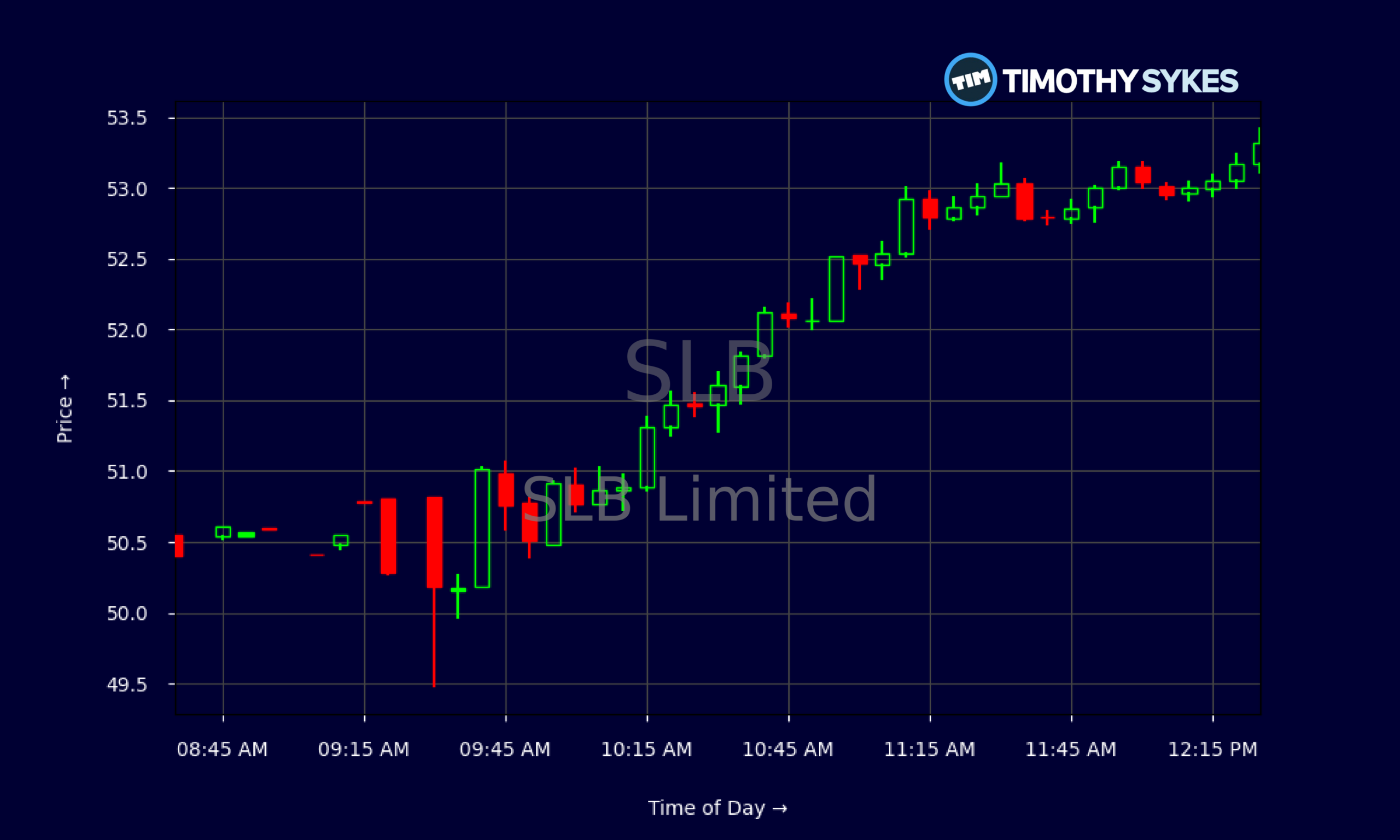
Live Update At 12:32:32 EDT: On Friday, October 23, 2026 SLB Limited stock [NYSE: SLB] is trending up by 7.49%! Discover the key drivers behind this movement as well as our expert analysis in the detailed breakdown below.
Quick Financial Overview
SLB is acting like a steady grinder on the chart. Over the last couple of weeks, the stock has pushed from the high‑$40s to a recent close around $53.26, breaking above the short‑term range that capped it near $50. This move comes after several contract announcements, and traders are clearly rewarding the news with higher prices and strong closes.
Intraday, the 5‑minute tape shows a classic trend‑day character. SLB opened near $50.82, briefly flushed to $49.48, then turned and climbed in a fairly orderly stair‑step to the low‑$53s. Dips toward VWAP around mid‑day were bought, and the stock finished near session highs. For momentum traders, that combination—range expansion plus a close near the top of the day’s range—often signals that dip buyers are in control for now.
More Breaking News
Under the hood, the fundamentals back up the tape. SLB generated quarterly revenue of about $8.97B with an EBIT margin above 10% and EBITDA margin near 18%. Return on equity sits in the mid‑teens, and leverage looks manageable with total debt‑to‑equity around 0.43 and interest coverage at 12.6 times. A roughly 2.4% dividend yield adds a cash‑return layer. Together, the numbers support why traders are willing to pay roughly 24 times earnings for SLB today.
Why Traders Are Watching SLB Momentum
The story driving SLB right now is contract flow and digital lock‑in. The biggest headline for traders is the cluster of long‑dated wins that expand backlog and visibility, especially outside North America. When SLB landed four integrated well construction contracts from Aramco to deliver more than 450 wells in Saudi Arabia over three years, the market reacted fast—shares jumped more than 1% as energy names rallied. That tells traders one thing: big, integrated wins in Saudi Arabia still move the needle.
These Aramco deals are not small “one‑rig, one‑pad” jobs. SLB is delivering full‑stack solutions, leaning on digital and automated drilling technologies. That integrated setup usually means deeper margins and stickier client relationships. For short‑term traders, every Aramco headline has become a potential catalyst; for swing traders, the three‑year term plus optional extensions speaks to sustained revenue visibility out of a key region.
SLB is also extending its reach in Oman, where OQ Exploration & Production awarded it an integrated contract to design, build and operate the Bisat‑B expansion. That project lifts facility capacity to 548,000 barrels per day and comes with four years of operations and maintenance. Traders should read that as multi‑year service cash flow, not just one‑off EPC revenue. The stock’s move higher on the Oman news shows the market is paying attention to these international builds.
Then there’s Mozambique. Through its OneSubsea joint venture, SLB secured a major contract for subsea systems in ExxonMobil’s Rovuma LNG project, including a new regional services base. That’s deepwater LNG, long‑cycle, and service‑heavy—exactly the kind of work that can underpin earnings through commodity swings. Layer on the 15‑year DrillPlan digital agreement with TotalEnergies, and SLB is locking in software‑like, recurring revenue. The stock traded about 1.4% higher pre‑market on that TotalEnergies news alone, a clear signal that traders respect the digital leg of the story.
Yes, there is noise. Citi, Barclays, BofA and Piper Sandler all trimmed SLB price targets a touch, citing Saudi project suspensions, Middle East delays, and a softer Q4 setup. But they all stayed in the Buy or Overweight camp. For active traders, that combination—slightly lowered bars with still‑bullish ratings—often sets up “beat the reset bar” types of earnings trades.
Conclusion
Put it all together and SLB is trading like a name with real tailwinds but live headline risk. On one side of the scale you have four Aramco well construction contracts, the Bisat‑B expansion in Oman, and the Rovuma LNG subsea award in Mozambique—each one adding size, duration, and geographic diversification. On the other side you have analyst chatter about Saudi rig suspensions and Middle East delays, which explains why price targets nudged down even as SLB stock has pushed higher.
For traders, the key is to respect both the chart and the calendar. The company has scheduled its Q3 2026 earnings release and call, which will be the first real look at how these new awards feed into orders, margins, and cash flow. With SLB changing hands at about 2 times sales and close to the top of its five‑year P/E range, expectations are not low. Any stumble on guidance around Middle East activity or 2027 capex could spark fast downside.
At the same time, SLB’s blend of hard‑asset service work and rising digital revenue makes it a textbook momentum and catalyst name. As Tim Sykes likes to say, “The market rewards preparation, not prediction—have a plan for every trade before you click the button.” As millionaire penny stock trader and teacher Tim Sykes says, “Embrace the journey, the ups and downs; each mistake is a lesson to improve your strategy.”. For anyone trading SLB, that means knowing your levels, knowing the news, and being ready to cut losses quickly if the story shifts. This article is for educational and research purposes only and is not investment advice.
This is stock news, not investment advice. Timothy Sykes News delivers real-time stock market news focused on key catalysts driving short-term price movements. Our content is tailored for active traders and investors seeking to capitalize on rapid price fluctuations, particularly in volatile sectors like penny stocks. Readers come to us for detailed coverage on earnings reports, mergers, FDA approvals, new contracts, and unusual trading volumes that can trigger significant short-term price action. Some users utilize our news to explain sudden stock movements, while others rely on it for diligent research into potential investment opportunities.
Dive deeper into the world of trading with Timothy Sykes, renowned for his expertise in penny stocks. Explore his top picks and discover the strategies that have propelled him to success with these articles:
- Penny Stocks Trading Guide
- Best Penny Stocks Under $1 to Buy Today
- Top 8 Penny Stocks to Watch on Robinhood
Once you’ve got some stocks on watch, elevate your trading game with StocksToTrade the ultimate platform for traders. With specialized tools for swing and day trading, StocksToTrade will guide you through the market’s twists and turns.
Dig into StocksToTrade’s watchlists here:





Leave a reply