

MARA Holdings Inc. stocks have been trading up by 10.11 percent following upbeat coverage of its strategic growth prospects.
Key Takeaways
- Piper Sandler cut its price target on Mara Holdings from $13 to $11 but kept an Overweight rating, saying bitcoin miners in its AI/HPC data center universe still look attractive after a macro-driven selloff.
- Q3 2026 earnings webcast is set, with Mara Holdings spotlighting its 1.9 GW energized capacity and plans to ramp to roughly 4.8 GW.
- The company is leaning on Bitcoin mining as a core while pushing into higher-value AI, HPC, cloud, and enterprise digital infrastructure.
- Management said it has no relationship with Binance and that operations are unchanged by the Binance headlines, pushing back on recent selling pressure.
- A new CFTC rulemaking effort for retail crypto commodities points to a tighter but more legitimate U.S. regulatory backdrop for crypto-linked names such as MARA.
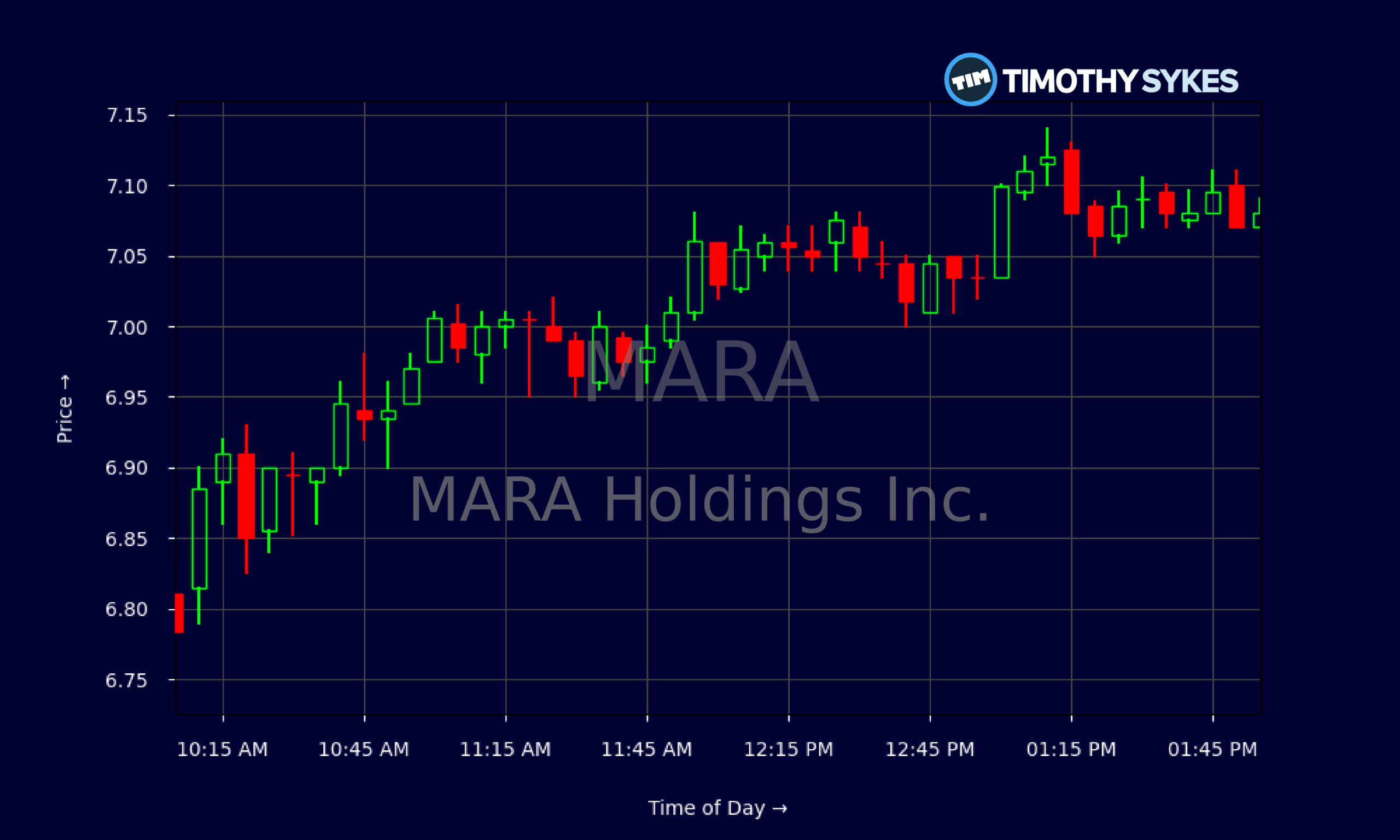
Live Update At 14:02:26 EST: On Tuesday, November 03, 2026 MARA Holdings Inc. stock [NASDAQ: MARA] is trending up by 10.11%! Discover the key drivers behind this movement as well as our expert analysis in the detailed breakdown below.
Quick Financial Overview
MARA has been trading like a classic high‑beta crypto proxy, but the recent tape shows a controlled grind rather than a meltdown. From 2026/10/09, when shares closed near $9.65, MARA has slid into the mid‑$7s, with a recent close around $7.08. That’s a sizable drawdown, yet the daily chart now shows tighter ranges and attempts to base between $6.80 and $7.50.
Intraday, MARA’s 5‑minute action around the $7 line shows steady two‑sided trading instead of panic. Dips toward $6.90–$6.95 keep getting bought, while spikes above $7.10 meet quick selling. For active traders, that’s a well‑defined battleground.
More Breaking News
Fundamentally, the story is still high‑risk. Recent quarterly numbers show about $174.9M in revenue but a deep net loss of roughly $609.7M, with EBIT margins heavily negative. MARA is spending aggressively, which shows up in negative free cash flow near $238.5M and a current ratio below 1. Debt sits high versus equity, and returns on capital are firmly in the red. For traders, MARA remains a volatility vehicle tied to bitcoin, execution on its build‑out, and sentiment in high‑growth infrastructure names.
Why Traders Are Watching MARA Now
Traders are zeroed in on MARA because the narrative is shifting from “just another miner” to “scaled digital infrastructure with AI upside.” In its Q3 2026 earnings webcast announcement, MARA highlighted 1.9 GW of energized capacity already online and a roadmap to roughly 4.8 GW. That is serious power, enough to support not only Bitcoin mining but also dense AI, HPC, and cloud workloads.
MARA is telling the market that Bitcoin mining is the foundation, not the whole house. The plan is to leverage that power footprint into higher‑value AI and enterprise digital infrastructure. For traders, that matters. In hot AI tapes, anything with genuine power capacity and data‑center positioning can catch momentum fast.
The Piper Sandler call backs that up. Yes, the firm cut its price target on Mara Holdings from $13 to $11, but it kept an Overweight rating and said bitcoin miners in its AI/HPC data center coverage look attractive after the latest macro and AI‑trade washout. That reads as “reset expectations, but the story isn’t broken.”
Volatility around the Binance headlines also handed agile traders a clear mispricing. MARA had to state plainly that it has no relationship with Binance and that its operations are unaffected. Once that clarification sunk in, the case for a relief bounce strengthened, especially with the chart already oversold.
Over all of this sits the CFTC’s Advanced Notice of Proposed Rulemaking on retail crypto commodities. More rules mean more compliance headaches for MARA‑style names, but also more legitimacy over time as crypto trading moves into a cleaner national framework. That combination of regulatory overhang, structural AI pivot, and misunderstood headlines is exactly the mix momentum traders look for.
Conclusion
MARA is not for conservative traders. The financials are ugly today: big losses, heavy capex, negative free cash flow, and leverage that demands real execution on the 4.8 GW build‑out plan. But this is why traders still crowd into MARA — the stock lives at the intersection of bitcoin cycles, AI data‑center demand, and regulatory headlines.
The upcoming Q3 2026 earnings webcast gives MARA a clear catalyst window. Management will need to prove that 1.9 GW of energized capacity is translating into revenue progress and that the pipeline to nearly 4.8 GW is funded, de‑risked, and on schedule. Any evidence that AI, HPC, and cloud deals are scaling on top of legacy mining will matter more than backward‑looking losses for short‑term trading.
At the same time, the Piper Sandler Overweight call on Mara Holdings, even with a lower $11 target, signals there is still perceived upside from current levels if sentiment stabilizes. Insider activity flagged in a recent Form 4 adds noise but not a clear signal, given the lack of detail.
For active traders, this all comes back to process. As Tim Sykes loves to remind traders, “You’re not here to predict the future — you’re here to react to patterns and protect your downside.” As millionaire penny stock trader and teacher Tim Sykes, says, “It’s not about how much money you make; it’s about how much money you keep.” With MARA, that means respecting the volatility, trading the levels, and letting the AI‑plus‑bitcoin narrative work for you, not against you. This article is for educational and research purposes only and is not investment advice.
This is stock news, not investment advice. Timothy Sykes News delivers real-time stock market news focused on key catalysts driving short-term price movements. Our content is tailored for active traders and investors seeking to capitalize on rapid price fluctuations, particularly in volatile sectors like penny stocks. Readers come to us for detailed coverage on earnings reports, mergers, FDA approvals, new contracts, and unusual trading volumes that can trigger significant short-term price action. Some users utilize our news to explain sudden stock movements, while others rely on it for diligent research into potential investment opportunities.
Dive deeper into the world of trading with Timothy Sykes, renowned for his expertise in penny stocks. Explore his top picks and discover the strategies that have propelled him to success with these articles:
- Penny Stocks Trading Guide
- Best Penny Stocks Under $1 to Buy Today
- Top 8 Penny Stocks to Watch on Robinhood
Once you’ve got some stocks on watch, elevate your trading game with StocksToTrade the ultimate platform for traders. With specialized tools for swing and day trading, StocksToTrade will guide you through the market’s twists and turns.
Dig into StocksToTrade’s watchlists here:





Leave a reply