

TeraWulf Inc. stocks have been trading up by 13.67 percent amid bullish sentiment on its expanding bitcoin mining capacity
Key Takeaways Traders Need To Know
- Morgan Stanley reaffirmed its Overweight call on TeraWulf, flagging the recent pullback as out of line with contract value and pointing to nearly 392% upside to a $65 target.
- Cantor Fitzgerald trimmed its target to $30 from $37 but kept an Overweight view, calling WULF a potential “generational buy” once AI funding fears and data center headwinds cool.
- A new Kentucky Power deal doubles Muskie Data Campus contracted demand from 500 MW to 1 GW and accelerates the second 500 MW phase to 2029, pending regulators.
- TD Cowen launched coverage with a Buy and $21 target, arguing WULF’s 9% cap rate on its AI-linked data center leases looks too conservative given Google-backed Fluidstack support.
- B. Riley cut its target to $26 from $40 on financing costs but still rates WULF a Buy, calling recent weakness a chance to buy future capacity on sale.
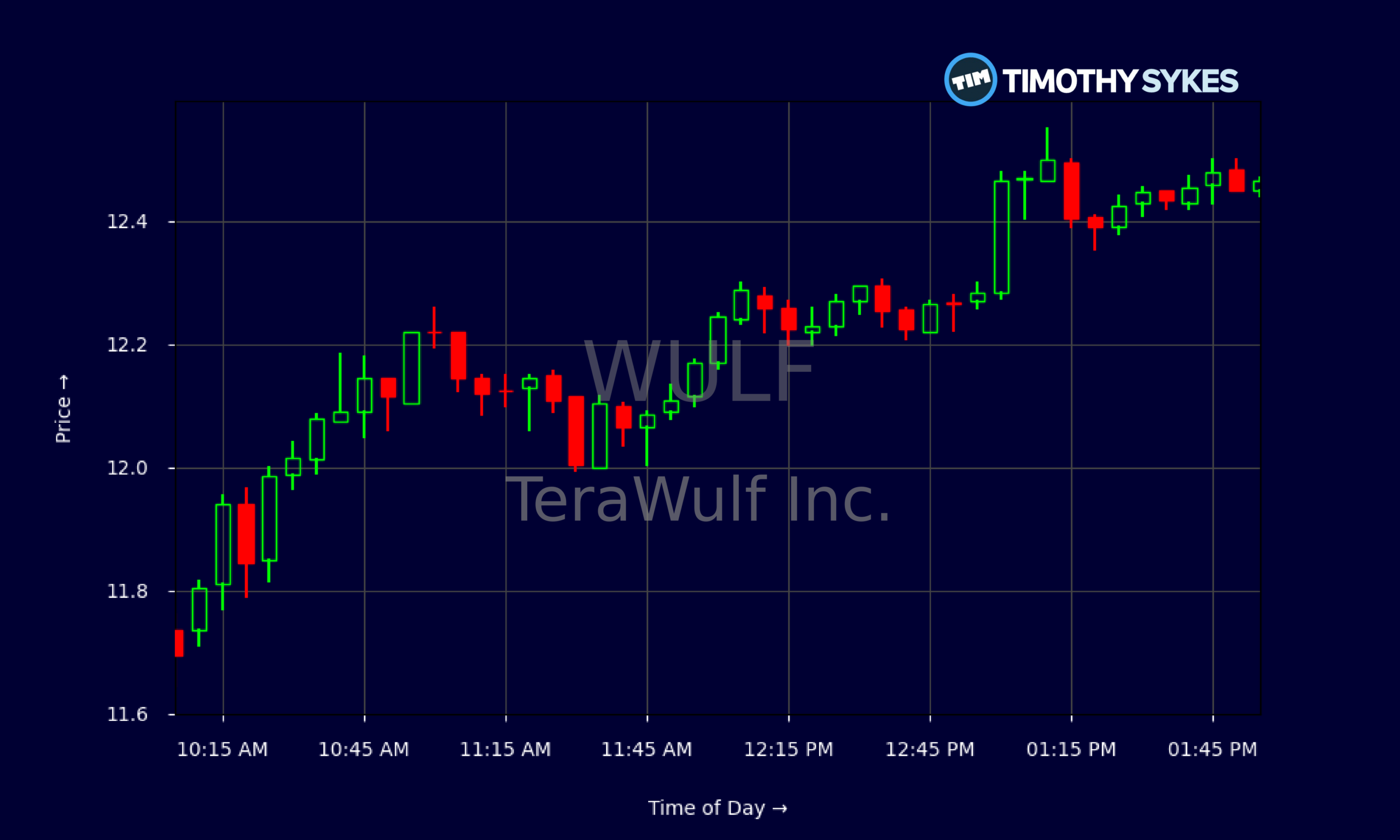
Live Update At 14:02:23 EST: On Tuesday, November 03, 2026 TeraWulf Inc. stock [NASDAQ: WULF] is trending up by 13.67%! Discover the key drivers behind this movement as well as our expert analysis in the detailed breakdown below.
Quick Financial Overview
TeraWulf Inc. is trading like a high‑beta AI power play, not a sleepy utility. WULF closed at $12.435 on 2026/11/03, finishing near the high of the day and extending a short-term rebound from the $10.94 close on 2026/11/02. Over the last couple of weeks, WULF has mostly chopped between $11 and $13.50, with multiple failed pushes above $13.50, showing clear resistance where short‑term traders keep locking in gains.
Intraday, the 5‑minute chart shows a steady grind higher from the low $11s into the mid‑$12s, with tight candles and shallow pullbacks. That tells traders dip buyers are in control for now, not panic sellers. For momentum traders, WULF is acting like a consolidation breakout candidate, not a broken chart.
More Breaking News
Fundamentals are a different story. WULF posted about $168.5M in revenue over the last year but is still deeply unprofitable, with EBITDA around -$861.3M and net income near -$939.9M in the latest quarter. Gross margin is huge at 84.3%, which matters for future scalability, yet operating margins are sharply negative as WULF spends heavily building out AI and high‑performance computing (HPC) infrastructure. Cash on hand is strong at roughly $2.62B, but the current ratio of 0.8 and heavy capital spending remind traders this is a capital‑intensive ramp story, not a cash‑cow dividend play.
Why Traders Are Watching WULF Right Now
The real fuel behind WULF’s story is not last quarter’s loss. It is the power and AI pipeline Wall Street is suddenly lining up behind.
First, TeraWulf’s amended agreement with Kentucky Power is a big deal for traders who care about real capacity, not just buzzwords. The Muskie Data Campus jumps from 500 MW to 1 GW of contracted electric demand, with the second 500 MW phase pulled forward to 2029 from 2030, subject to regulators and utility construction. That contract scale effectively locks in a long runway for AI and HPC workloads. It also positions Muskie as a potential 2‑GW hub over time, which is the kind of size that gets hyperscalers and big cloud names to pick up the phone.
This power, though, is not free. WULF agreed to fund $100M in winter bill credits for local customers and cover estimated financing costs for Kentucky Power’s planned 760‑MW combined‑cycle plant at Big Sandy. Traders should read that as leverage: TeraWulf is buying influence and priority access in exchange for real cash commitments. Execution and regulatory risk stay on the table, but the optionality is huge if AI demand continues to ramp.
At the same time, Street sentiment on WULF has turned into a coordinated chorus. Morgan Stanley boosted its price target to $65 and still calls the stock Overweight, arguing the recent pullback does not match TeraWulf’s contract value or its growth catalysts. Cantor Fitzgerald cut its target to $30 yet still labels WULF a possible “generational buy” with triple‑digit upside once funding fears and sector‑wide data center jitters ease.
TD Cowen came in with a fresh Buy and a $21 target, saying the 9% cap rate on WULF’s leased AI data center portfolio looks too conservative given Google‑backed Fluidstack support. FactSet data shows the broader analyst pack sits around a $31.72–$33.79 average target, still well above current trading levels. Even B. Riley, after slashing its target to $26 on rate and financing pressure, kept a Buy and framed the selloff as a chance to grab future pipeline capacity at a discount. For active traders, that kind of aligned bullish backdrop can be gasoline if the chart confirms.
Conclusion
For all the hype, WULF is not a simple AI ticker. TeraWulf is shifting from pure build‑out to scaled execution, with a long‑dated AI lease book backed by expected investment‑grade tenants and Google‑linked support. That offers clearer future cash‑flow potential, but it also raises the stakes. The company burned roughly $992.3M in free cash flow in the latest period as it poured money into data centers and power infrastructure. With a current ratio under 1 and significant debt, financing and timing will matter.
That is why upcoming milestones, like WULF’s Q3 2026 earnings call, are so important for traders. Management has to show how Muskie ramps, how the 1‑GW deal translates into lease revenue, and how capital costs stay under control. The recent Form 8‑K filing is a reminder that regulatory and disclosure headlines can pop up at any time, so diligent traders will keep an eye on filings, not just the tape.
Analyst targets from $21 to $65 highlight how wide the possible path is. If execution goes well, TeraWulf’s high gross margins and locked‑in power could justify the bullish AI‑infrastructure narrative. If delays or funding issues stack up, WULF’s high valuation ratios and heavy losses become a problem fast.
As Tim Sykes likes to say, “Patterns repeat because human nature doesn’t change — study the past so you’re ready when the next runner shows up.” As millionaire penny stock trader and teacher Tim Sykes says, “Preparation plus patience leads to big profits.” WULF is shaping up as one of those potential runners. The job for traders is to respect the risk, track the catalysts, and let the price action confirm the story before sizing up.
This is stock news, not investment advice. Timothy Sykes News delivers real-time stock market news focused on key catalysts driving short-term price movements. Our content is tailored for active traders and investors seeking to capitalize on rapid price fluctuations, particularly in volatile sectors like penny stocks. Readers come to us for detailed coverage on earnings reports, mergers, FDA approvals, new contracts, and unusual trading volumes that can trigger significant short-term price action. Some users utilize our news to explain sudden stock movements, while others rely on it for diligent research into potential investment opportunities.
Dive deeper into the world of trading with Timothy Sykes, renowned for his expertise in penny stocks. Explore his top picks and discover the strategies that have propelled him to success with these articles:
- Penny Stocks Trading Guide
- Best Penny Stocks Under $1 to Buy Today
- Top 8 Penny Stocks to Watch on Robinhood
Once you’ve got some stocks on watch, elevate your trading game with StocksToTrade the ultimate platform for traders. With specialized tools for swing and day trading, StocksToTrade will guide you through the market’s twists and turns.
Dig into StocksToTrade’s watchlists here:





Leave a reply