

Leverage Shares 2X Short SPCX Daily ETF jumped as underlying SPAC-related sentiment improved, and stocks have been trading up by 10.63 percent.
Key Takeaways
- SSPC has pulled back from recent highs near $9.90, closing around the mid‑$8s on the latest daily candle.
- Recent trading in Leverage Shares 2X Short SPCX Daily ETF shows wide intraday ranges, signaling active, momentum‑driven markets.
- The SSPC intraday tape around $9.80–$9.88 suggests short‑term consolidation after a sharp multi‑day run.
- Lack of traditional earnings metrics for SSPC reminds traders this leveraged ETF is a pure trading vehicle, not a fundamentals play.
- Active traders are watching the $8.50–$9.00 zone as a key battleground for SSPC trend direction.
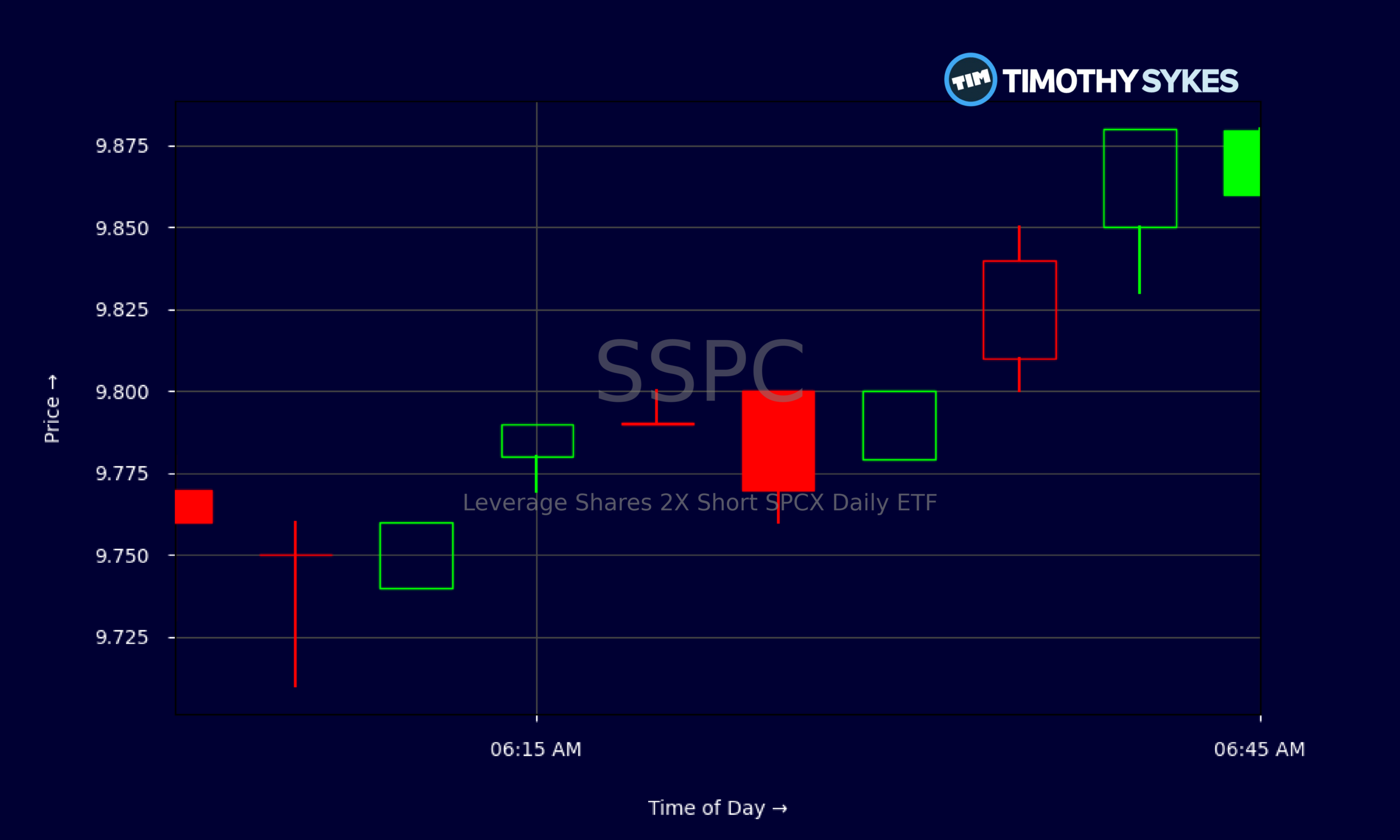
Live Update At 06:48:27 EST: On Wednesday, November 04, 2026 Leverage Shares 2X Short SPCX Daily ETF stock [BATS Global Markets: SSPC] is trending up by 10.63%! Discover the key drivers behind this movement as well as our expert analysis in the detailed breakdown below.
Quick Financial Overview
Leverage Shares 2X Short SPCX Daily ETF, trading under ticker SSPC, is not a typical operating company. It is a leveraged product designed to move roughly twice the inverse of its underlying benchmark on a daily basis. That structure alone tells traders one thing: SSPC is built for short‑term trading, not long‑term holding.
The recent daily chart shows SSPC climbing from near $7.00 on 2026/10/12 to a high close around $9.88 on 2026/10/30. That’s a big percentage move in a short window, highlighting the torque traders expect from a 2X product. From there, SSPC has started to fade, with closes slipping back toward the high‑$8s and low‑$9s and most recently around $8.93.
More Breaking News
Because SSPC is an ETF tracking a strategy, traditional fundamentals like revenue, profit margin, and debt ratios are effectively blank. The key “financial” metric here is price behavior itself. For traders, that means focusing on liquidity, daily range, and how cleanly SSPC respects technical levels. This is a chart‑driven product, and the numbers on the tape are the real income statement.
Why Traders Are Watching SSPC Price Action
SSPC has put on the kind of move that always wakes up active traders. On the daily chart, Leverage Shares 2X Short SPCX Daily ETF ripped from roughly $7.07 on 2026/10/12 to intraday highs near $9.90 by 2026/10/30. That’s a steep, two‑week climb, and it lines up with the leveraged, short exposure SSPC provides. When the underlying theme SSPC tracks comes under pressure, this ETF tends to spike hard.
Since tagging those highs, SSPC has shifted into a choppier phase. Closes have bounced between about $8.20 and $9.88, with multiple days showing long wicks both ways. That tells traders there’s real battle between late chasers and short‑term profit takers. The $8.50–$9.00 band has acted as a magnet, with SSPC repeatedly snapping back to that zone after both pushes higher and dips lower.
Drilling down into the intraday five‑minute chart, SSPC trading around $9.75–$9.88 shows a tight consolidation range. You see repeated prints right under $9.88 but no decisive break through. That’s classic “coiling” behavior. When leveraged vehicles like SSPC coil near the top of a multi‑day move, traders start planning for the next expansion in range — either a breakout squeeze or a rug‑pull back toward support.
Because SSPC is a 2X short ETF, many day traders use it as a tactical hedge or a pure momentum scalp. They watch the underlying benchmark’s direction, then use SSPC for amplified exposure. That layered structure is why volume and volatility tend to cluster around macro headlines or big sector moves, even when SSPC itself doesn’t report earnings or corporate news. For this ETF, the chart is the story.
Conclusion
Right now, SSPC sits at an interesting crossroads. Leverage Shares 2X Short SPCX Daily ETF has already delivered a strong push from the low‑$7s to the high‑$9s, then backed off into the mid‑$8s. That retrace is normal after a sharp run, but traders know these leveraged products rarely stay quiet for long. A clean break over the recent $9.88 zone would signal that SSPC still has gas in the tank. A strong rejection there, with a close under roughly $8.50, would suggest the move is tired and a deeper fade is in play.
Because SSPC lacks traditional earnings and balance‑sheet data, disciplined traders lean on risk management and price levels. Clear entries, tighter stops, and realistic targets matter even more when you’re dealing with 2X daily leverage. The ETF’s recent wide ranges are both an opportunity and a warning.
This is where the mindset of Tim Sykes’ community comes in. As Tim says, “The market doesn’t owe you anything; it just rewards the traders who prepare the most and cut losses the fastest.” As millionaire penny stock trader and teacher Tim Sykes, says, “Embrace the journey, the ups and downs; each mistake is a lesson to improve your strategy.”. Taken together, these ideas reinforce that SSPC’s volatility can be a training ground for disciplined, process‑driven trading. For anyone trading SSPC, that means treating Leverage Shares 2X Short SPCX Daily ETF as what it is — a fast vehicle for educated, short‑term trading, not a set‑and‑forget holding. All analysis here is for educational and research purposes only, and each trader must decide how, or whether, SSPC fits their personal strategy.
This is stock news, not investment advice. Timothy Sykes News delivers real-time stock market news focused on key catalysts driving short-term price movements. Our content is tailored for active traders and investors seeking to capitalize on rapid price fluctuations, particularly in volatile sectors like penny stocks. Readers come to us for detailed coverage on earnings reports, mergers, FDA approvals, new contracts, and unusual trading volumes that can trigger significant short-term price action. Some users utilize our news to explain sudden stock movements, while others rely on it for diligent research into potential investment opportunities.
Dive deeper into the world of trading with Timothy Sykes, renowned for his expertise in penny stocks. Explore his top picks and discover the strategies that have propelled him to success with these articles:
- Penny Stocks Trading Guide
- Best Penny Stocks Under $1 to Buy Today
- Top 8 Penny Stocks to Watch on Robinhood
Once you’ve got some stocks on watch, elevate your trading game with StocksToTrade the ultimate platform for traders. With specialized tools for swing and day trading, StocksToTrade will guide you through the market’s twists and turns.
Dig into StocksToTrade’s watchlists here:





Leave a reply