
Riot Platforms Inc. stocks have been trading up by 13.77 percent amid surging Bitcoin prices boosting miner profitability.
Key Takeaways For RIOT Traders
- Wall Street has slashed Riot Platforms price targets across the board but mostly kept bullish ratings, signaling tempered expectations rather than a full‑blown exit.
- Several banks argue RIOT’s AI colocation and high‑performance computing capacity remain attractive despite rising construction and financing costs.
- Sector‑wide pressure on bitcoin miners and AI data‑center names is weighing on RIOT trading, not just company‑specific problems.
- A new CFTC rulemaking push on retail crypto trading could reshape the regulatory backdrop for RIOT and other crypto‑linked stocks.
- Consensus still sits at a Buy on RIOT, with a mean price target well above recent trading levels.
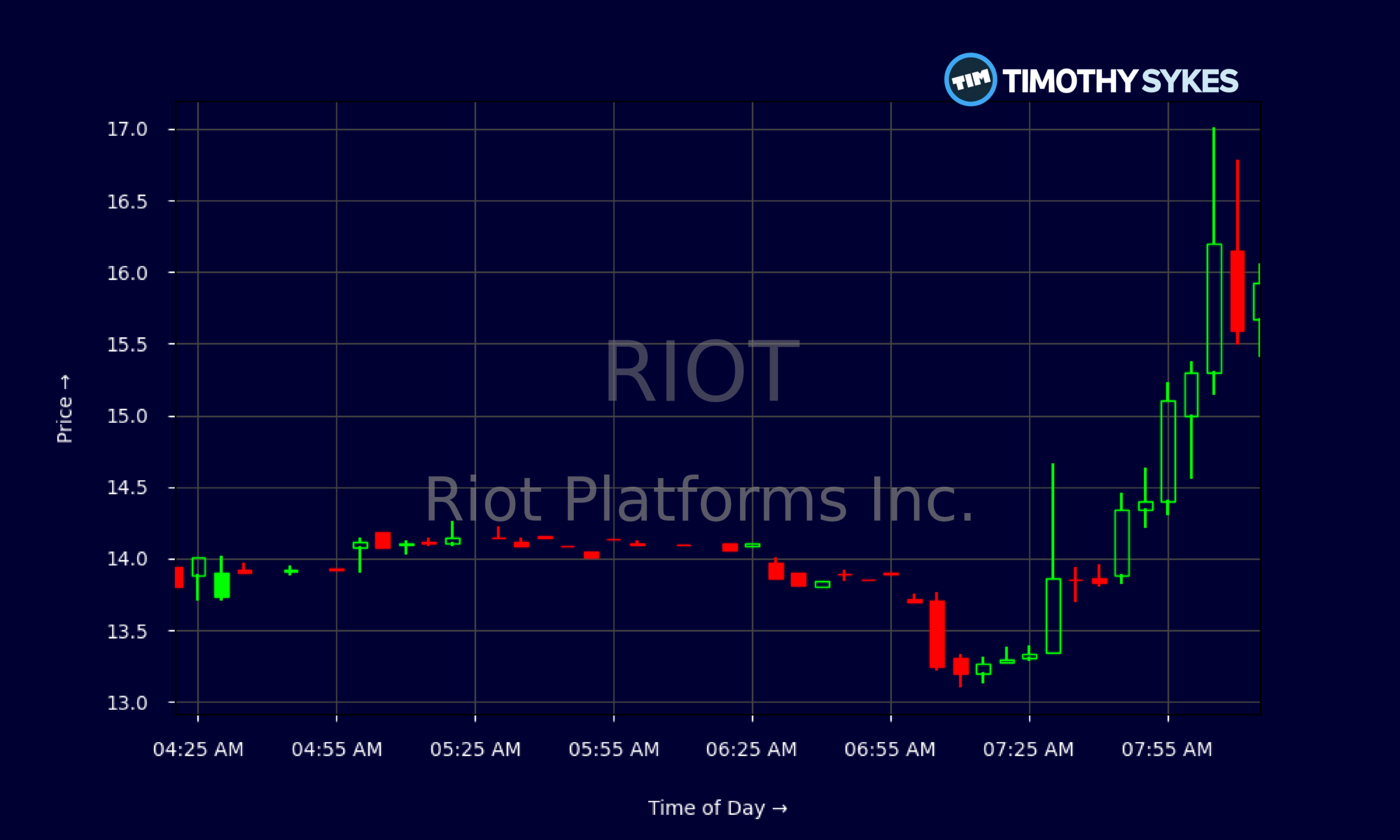
Live Update At 08:18:42 EST: On Wednesday, November 04, 2026 Riot Platforms Inc. stock [NASDAQ: RIOT] is trending up by 13.77%! Discover the key drivers behind this movement as well as our expert analysis in the detailed breakdown below.
Quick Financial Overview
Riot Platforms Inc. is trading like a leveraged bet on two volatile themes at once: bitcoin and AI‑driven infrastructure. The daily chart shows RIOT dropping from the mid‑$16s in mid‑October 2026 to the low‑teens by late October, before ripping back to close near $14.02 on 2026/11/03. That’s classic high‑beta action — big drawdown, then a sharp relief bounce.
Intraday, RIOT has been a day trader’s playground. The 5‑minute tape shows a move from around $13.9 in early pre‑market up toward $16.7 at the highs, with multiple fake‑outs and deep dips along the way. You can see liquidity and range, which is exactly what active traders look for.
Fundamentally, RIOT is still burning cash. Latest quarterly numbers show about $174.2M in revenue but a net loss of roughly $237.2M and a brutal EBIT margin near ‑195%. Gross margin around 48% says the core operations can produce value, but heavy research, build‑out, and overhead costs are crushing the bottom line.
More Breaking News
On the balance sheet, RIOT holds roughly $471.4M in cash and short‑term investments, with a current ratio of 1.6. That gives the company some breathing room to keep building data centers and mining capacity, but the negative cash flow and high capital spending mean traders should expect ongoing dilution and financing headlines to keep moving the stock.
Why Traders Are Watching RIOT So Closely
RIOT sits right at the intersection of crypto mining and AI data‑center infrastructure, and Wall Street is re‑pricing that entire story. Over the last few weeks, a wave of analysts has cut price targets on Riot Platforms Inc., yet almost all of them kept bullish ratings. That mix of lowered targets and persistent Buy/Overweight calls is exactly the kind of tension active traders love to trade around.
The latest move came on 2026/11/02, when Keefe Bruyette slashed its RIOT price target from $35 to $20 but maintained an Outperform rating. They still like RIOT’s AI colocation fundamentals, but they’re flagging rising construction costs, tricky financing execution, limited new lease catalysts until early 2027, and regulatory risk tied to Texas. For RIOT traders, that reads as: long‑term runway is there, but the road is bumpier and slower than the earlier hype implied.
B. Riley also cut its Riot Platforms target to $25 from $33, yet called the recent pullback a buying opportunity. Their angle is that the market is undervaluing RIOT’s future mining and high‑performance computing (HPC) capacity, even with higher financing costs. Piper Sandler trimmed its target to $19 from $25 but stayed Overweight, saying the whole bitcoin‑miner complex is under pressure after the AI trade cooled and data‑center financing got tighter — while RIOT’s valuation now looks more attractive after the selloff.
Add in Morgan Stanley cutting its target to $35.50 from $43 and Cantor Fitzgerald dropping to $24 from $30, both still Overweight, and you get the message: big money desks still see upside for RIOT, but they are no longer paying peak‑AI multiples for speculative pipeline sites and future capacity.
In the background, the CFTC’s push toward a comprehensive federal framework for retail crypto commodity transactions adds another wild card. For Riot Platforms Inc., clearer national rules could eventually support institutional confidence and user adoption, but they may also raise compliance costs and scrutiny. Traders should assume regulatory headlines will keep acting as catalysts for RIOT spikes and fades.
Conclusion
For active traders, RIOT is a classic story of shrinking expectations but not broken faith. The company is still posting steep losses — a negative return on equity north of ‑40% and ugly EBIT margins show that Riot Platforms Inc. is paying heavily today to build tomorrow’s infrastructure. Yet RIOT also controls more than $471M in cash, has meaningful gross margins, and remains tied to two powerful themes: bitcoin and AI‑grade data centers.
That’s why, even after cutting numbers, Keefe Bruyette, B. Riley, Piper Sandler, Morgan Stanley, and Cantor Fitzgerald all stayed positive on the stock. B. Riley’s reduced $25 target still feeds into a consensus Buy rating on RIOT, with an average target around $29.55 — notably above where the shares have been trading recently in the low‑ to mid‑teens. The Street is telling traders, “We still like the story, just not at fantasy valuations.”
For short‑term RIOT trading, that usually means big swings around support and resistance as each new macro, bitcoin, or regulatory headline hits. For swing traders, the key is respecting risk. As Tim Sykes loves to say, “Cut losses quickly and never marry a stock — the market doesn’t care about your feelings, only your discipline.” As millionaire penny stock trader and teacher Tim Sykes, says, “Consistency is key in trading; don’t let emotions dictate your trades.” Keeping that mindset can help traders navigate RIOT’s volatility with a rules‑based approach rather than emotional reactions.
This article is for educational and research purposes only and is not investment advice.
This is stock news, not investment advice. Timothy Sykes News delivers real-time stock market news focused on key catalysts driving short-term price movements. Our content is tailored for active traders and investors seeking to capitalize on rapid price fluctuations, particularly in volatile sectors like penny stocks. Readers come to us for detailed coverage on earnings reports, mergers, FDA approvals, new contracts, and unusual trading volumes that can trigger significant short-term price action. Some users utilize our news to explain sudden stock movements, while others rely on it for diligent research into potential investment opportunities.
Dive deeper into the world of trading with Timothy Sykes, renowned for his expertise in penny stocks. Explore his top picks and discover the strategies that have propelled him to success with these articles:
- Penny Stocks Trading Guide
- Best Penny Stocks Under $1 to Buy Today
- Top 8 Penny Stocks to Watch on Robinhood
Once you’ve got some stocks on watch, elevate your trading game with StocksToTrade the ultimate platform for traders. With specialized tools for swing and day trading, StocksToTrade will guide you through the market’s twists and turns.
Dig into StocksToTrade’s watchlists here:





Leave a reply