
Advanced Micro Devices Inc. stocks have been trading up by 5.29 percent amid bullish sentiment on accelerating AI chip demand.
Key Takeaways For AMD Traders
- Q4 revenue guidance around $17B, well above the $16.14B consensus, points to roughly 66% year-over-year growth and about 27% sequential acceleration for AMD.
- Recent Q3 results beat on both EPS and revenue, powered by nearly doubling data center sales and strong demand for AMD Instinct and EPYC products.
- Management now expects data center revenue to drive the story, targeting over 80% of total AMD revenue by FY27 and projecting server revenue to double year-over-year that year.
- A long-term supply move secured most output from Samsung’s Taylor, Texas plant for high-bandwidth memory base dies, supporting AMD’s AI and data center roadmap.
- Major Wall Street firms, including Susquehanna and Goldman Sachs, boosted or reaffirmed bullish AMD targets, with price objectives running as high as $700.
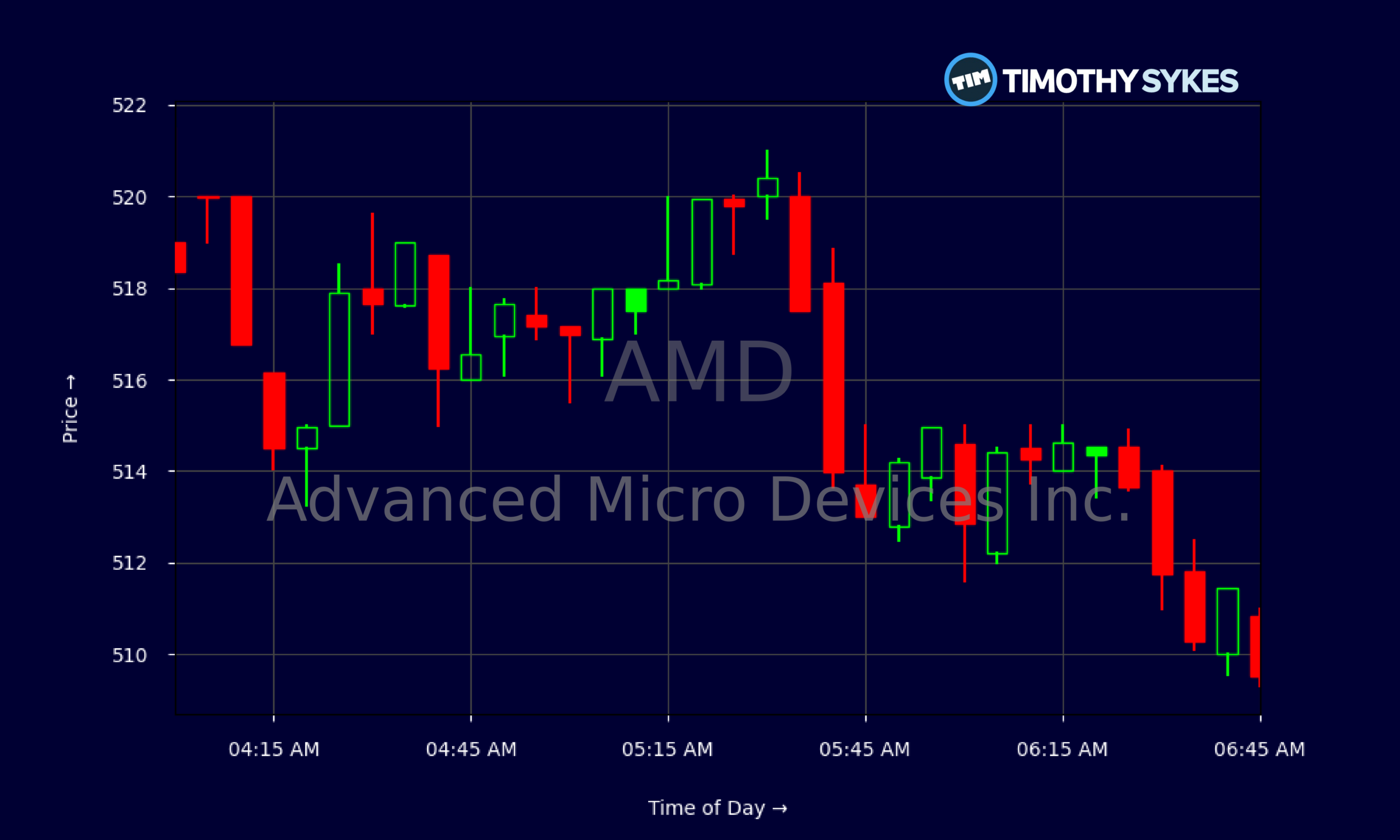
Live Update At 06:48:59 EST: On Wednesday, November 04, 2026 Advanced Micro Devices Inc. stock [NASDAQ: AMD] is trending up by 5.29%! Discover the key drivers behind this movement as well as our expert analysis in the detailed breakdown below.
Quick Financial Overview
Advanced Micro Devices is trading like a pure AI momentum name, and the numbers back up why traders are glued to this chart. On the fundamental side, AMD booked about $34.64B in revenue over the last year, while sporting a hefty price-to-sales ratio near 24. That tells you the market is already paying up for growth.
Margins are strong for a chip designer focused on high-end data center gear. AMD’s gross margin around 53% and EBIT margin near 19% show the core business throws off solid profit once the chips ship. Net margins in the mid-teens confirm that earnings power is real, not just a revenue story.
At the same time, AMD trades at a rich P/E above 150, and cash-flow multiples are triple digits. That kind of valuation demands continued fast growth and clean execution. The balance sheet helps: debt-to-equity close to 0.06 and a current ratio of 2.6 give AMD room to keep spending on AI and data center expansion without stressing liquidity.
More Breaking News
On the chart, AMD recently whipped from the high $500s down into the mid‑$460s before bouncing back near $480. Daily candles show wide intraday ranges, telling traders this is a high‑beta playground where momentum strategies can thrive — if risk is managed carefully.
Why Traders Are Locked In On AMD Right Now
What changed the tone around AMD is not hype; it is guidance. On 2026/11/03 the company told the Street to expect about $17B in Q4 revenue, plus or minus 3%. Consensus was sitting near $16.14B. That gap is big. It signals roughly 66% year-over-year growth and about 27% sequential growth, with non‑GAAP gross margin around 55%. For traders, that is classic “beat and raise” fuel.
AMD also beat Q3 expectations on both EPS and revenue. Data center revenue reached $8.55B, topping the $8.23B estimate, even as the client segment came in slightly light at $2.95B versus $3.05B. The message is clear: the PC cycle matters less; the data center and AI cycle is the core driver. Nearly doubling data center sales, powered by Instinct AI GPUs and EPYC CPUs, confirms that shift.
On the call, AMD framed an aggressive multi‑year path. Management guided to sharply accelerating data center growth, targeting data center to exceed 80% of total company revenue by FY27. They expect server revenue to double year-over-year in FY27, with AI data center revenue growing even faster than they forecast just 90 days earlier. AMD also guided to more than 80% total revenue growth by FY27 versus current levels, with consensus revenue near $89.9B, even as it expects the PC market to shrink by double digits in 2027.
Layer on top the strategic supply and customer wins. AMD has secured most of the output from Samsung’s Taylor, Texas plant for base dies used in high-bandwidth memory chips, a key ingredient for AI accelerators. It deepened a multi‑year partnership with Meta, with Helios rack‑scale systems, EPYC CPUs, and Instinct GPUs powering Meta’s frontier AI “superintelligence” infrastructure, and Meta acting as a lead customer for current and next‑gen EPYC and Instinct products, including custom GPUs. AMD is also working with Vultr, which will deploy Instinct MI355X GPUs in a 20MW AI supercluster in Chennai, India, then expand in 2027 using MI455X GPUs and Helios rack‑scale architecture. For active traders, this stack of data center demand stories explains why AMD shares jumped about 6% in after‑hours trading after the Q3 release and why dips have been getting bought.
Conclusion
For traders studying AMD, the story now revolves around execution against a very bold AI and data center roadmap. The company is guiding Q4 revenue to levels well ahead of prior expectations, with margins that suggest pricing power in high‑end compute. Multi‑year targets point to more than 80% total revenue growth by FY27 and a business dominated by data center and AI workloads, while PC exposure shrinks in importance.
At the same time, AMD carries a premium valuation and the stock trades with big intraday swings. That combination rewards disciplined planning and punishes complacency. The Meta and Vultr deals, the Samsung supply lock‑in, and the strong analyst support — including targets up to $700 — create a powerful narrative backdrop, but narratives can unwind fast if the numbers stumble.
This is where the Tim Sykes playbook matters. As Tim likes to hammer home, “The market doesn’t care about your opinion, only price action and risk management.” As millionaire penny stock trader and teacher Tim Sykes, says, “Cut losses quickly, let profits ride, and don’t overtrade.”. For anyone trading AMD, that means respecting the volatility, tracking how each new quarter lines up with this aggressive AI roadmap, and staying ready to cut losses quickly when the chart no longer matches the story. This content is for educational and research purposes only and is not investment advice.
This is stock news, not investment advice. Timothy Sykes News delivers real-time stock market news focused on key catalysts driving short-term price movements. Our content is tailored for active traders and investors seeking to capitalize on rapid price fluctuations, particularly in volatile sectors like penny stocks. Readers come to us for detailed coverage on earnings reports, mergers, FDA approvals, new contracts, and unusual trading volumes that can trigger significant short-term price action. Some users utilize our news to explain sudden stock movements, while others rely on it for diligent research into potential investment opportunities.
Dive deeper into the world of trading with Timothy Sykes, renowned for his expertise in penny stocks. Explore his top picks and discover the strategies that have propelled him to success with these articles:
- Penny Stocks Trading Guide
- Best Penny Stocks Under $1 to Buy Today
- Top 8 Penny Stocks to Watch on Robinhood
Once you’ve got some stocks on watch, elevate your trading game with StocksToTrade the ultimate platform for traders. With specialized tools for swing and day trading, StocksToTrade will guide you through the market’s twists and turns.
Dig into StocksToTrade’s watchlists here:





Leave a reply