
Comcast Corporation Common Stock rallied as bullish earnings and broadband growth optimism drove shares, which have been trading up by 3.61 percent.
Key Takeaways CMCSA Traders Need Now
- Q3 for Comcast (CMCSA) topped expectations with adjusted EPS at $1.07 versus $0.99 consensus and revenue at $29.3B, backed by strong free cash flow and solid media and streaming performance.
- Management expects a Q4 restructuring and transformation charge above $1B, alongside significant organizational changes across cable TV, broadband, and wireless operations.
- A regular $0.33 per‑share quarterly cash dividend payable on 2027/01/27 signals confidence in CMCSA cash generation and ongoing capital returns.
- Street research on CMCSA remains cautious but constructive, with Citi, TD Cowen, and Goldman trimming price targets while highlighting both segment strength and broadband headwinds.
- Comcast continues expanding Xfinity and Comcast Business multi‑gig broadband across Texas, New Hampshire, Virginia, Indiana, rural California, and the Cobbs Creek tech partnership in Philadelphia.
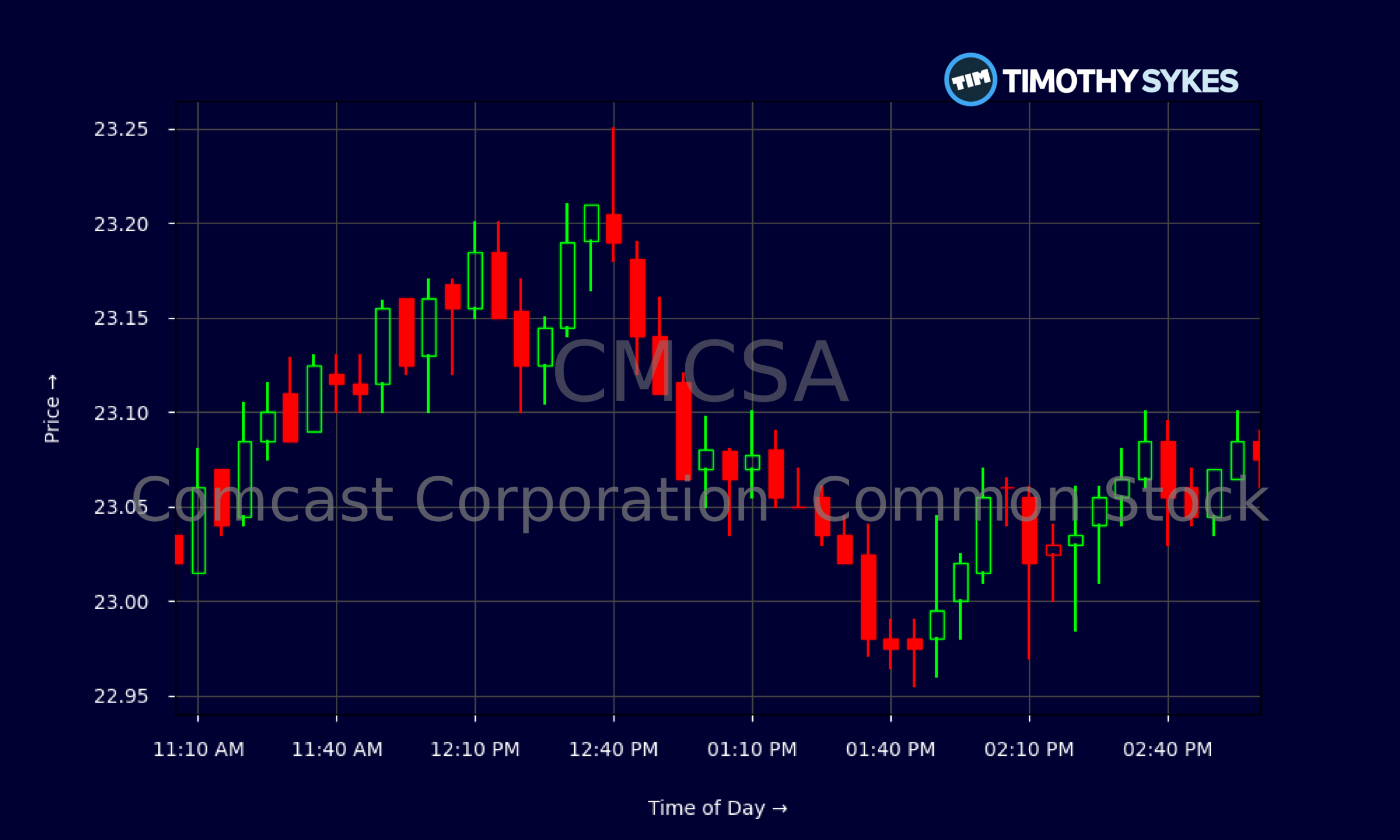
Live Update At 15:04:45 EDT: On Friday, October 30, 2026 Comcast Corporation Common Stock stock [NASDAQ: CMCSA] is trending up by 3.61%! Discover the key drivers behind this movement as well as our expert analysis in the detailed breakdown below.
Quick Financial Overview
CMCSA has been grinding higher through October. On 2026/10/05 it closed near $21.57; by 2026/10/30 Comcast finished around $23.08. That’s a steady climb of about 7% in a few weeks, not a face‑ripper, but clear upside momentum for active trading.
Intraday, the 5‑minute tape shows CMCSA holding above $22.80 for most of the session and repeatedly defending the $23 area. Dips toward $22.95–$23.00 were bought, and the stock tightened into a narrow band around $23.05–$23.10 late in the day. That kind of grind suggests accumulation rather than panic selling.
More Breaking News
Fundamentally, Comcast throws off real cash. Q3 operating cash flow was $7.9B with free cash flow of $4.2B. CMCSA trades at a price‑to‑earnings ratio near 6.6 and a price‑to‑sales ratio around 0.6, with an enterprise value near $158.9B. Profitability is solid: EBITDA margin sits around 27%, and return on equity is roughly 12%. For traders, that combination—low multiples, strong cash flow, and a near 6% dividend yield—sets up a classic value‑meets‑restructuring story where headlines and levels both matter.
Why Traders Are Watching CMCSA Right Now
Comcast gave traders a clear catalyst with its Q3 beat. Adjusted EPS of $1.07 versus $0.99 consensus and revenue of $29.3B versus $29.22B tell you CMCSA is still executing. The quality of those earnings matters more: strong free cash flow, ongoing momentum in wireless and enterprise business services, a second straight profitable quarter at Peacock, and a record global box office for Universal. That’s multiple engines pulling the same train.
But the story is not clean. Comcast has told the market to expect a restructuring and transformation charge above $1B in Q4, and separate reports point to substantial job cuts and a major reorganization in cable TV, broadband, and wireless. For short‑term CMCSA trading, that’s classic “good numbers, messy narrative.” Near‑term earnings prints may look noisy as those charges flow through.
Analyst reactions reflect the tension. Citi trimmed its CMCSA target to $27 but kept a Buy call, flagging uncertainty around the company’s transformation activities heading toward 2027. TD Cowen cut its target to $36 and still rated Comcast a Buy after in‑line revenue and better Media EBITDA, but noted weaker mobile subscriber additions. Goldman Sachs lowered its CMCSA target to $23 with a Neutral view, pointing to improving Connectivity & Platforms EBITDA and rising broadband ARPU while warning on continued broadband subscriber losses.
At the same time, Comcast is clearly on offense in broadband. Xfinity expansions now reach more than 16,000 homes and businesses in Willis, Texas, and roughly 7,000 in Forest, Virginia. CMCSA is also rolling out multi‑gig service to around 4,300 locations in Franklin, New Hampshire, over 4,000 in Barrington, New Hampshire, about 1,100 across Northeast Indiana, and nearly 7,000 unserved homes and businesses in rural Tulare County, California. For traders, this is the other side of the broadband debate: while legacy subs drift, CMCSA is pushing into new geographies and higher‑speed tiers to protect ARPU and build a fresh growth base.
On the media and ad‑tech front, Comcast’s Universal Ads unit launched a new Campaign Management category, letting third‑party media‑buying and retail‑media platforms embed TV and CTV buying right alongside search and social. That gives CMCSA more ways to monetize attention across NBCUniversal and Peacock. The company is also aligning itself with future tech talent as the exclusive Founding Partner for technology and innovation at Philadelphia’s Cobbs Creek Foundation campus, backing AI and emerging tech education while supplying connectivity and services.
Layer all of this on top of a regular $0.33 quarterly dividend payable 2027/01/27, and traders get a picture of CMCSA as a cash‑rich incumbent trying to reshape itself without losing its payout profile.
Conclusion
For active traders, Comcast right now is all about balancing the strong tape against the transformation noise. CMCSA has climbed from the low‑$21s to the low‑$23s this month, supported by a solid Q3 beat, powerful free cash flow, and improving trends in streaming and film. The balance sheet carries real debt, but margins and returns on capital are healthy. A roughly 6% dividend yield and a $0.33 per‑share payout locked in for 2027/01/27 show Comcast is not acting like a company under cash stress.
The risk side is just as clear. CMCSA has told the market to brace for more than $1B in Q4 restructuring and transformation charges, tied to a major rework of its cable TV, broadband, and wireless operations. Analyst target cuts from Citi, TD Cowen, Goldman, and others underline the uncertainty, especially around broadband subscriber losses even as CMCSA pushes multi‑gig builds into Texas, New Hampshire, Virginia, Indiana, and rural California.
For day and swing traders, that mix can mean volatility around every new headline—earnings updates, job‑cut details, broadband metrics, and progress reports on the broader company transformation. As Tim Sykes likes to remind traders, “Patterns repeat, but only if you’re prepared.” That preparation includes discipline: as millionaire penny stock trader and teacher Tim Sykes says, “Be patient, don’t force trades, and let the perfect setups come to you.” With CMCSA, the pattern right now is simple: strong fundamentals, heavy restructuring, and a market still deciding what that’s worth. This article is for educational and research purposes only and is not advice; use it as a starting point, then do the work, study the chart, and trade your own plan.
This is stock news, not investment advice. Timothy Sykes News delivers real-time stock market news focused on key catalysts driving short-term price movements. Our content is tailored for active traders and investors seeking to capitalize on rapid price fluctuations, particularly in volatile sectors like penny stocks. Readers come to us for detailed coverage on earnings reports, mergers, FDA approvals, new contracts, and unusual trading volumes that can trigger significant short-term price action. Some users utilize our news to explain sudden stock movements, while others rely on it for diligent research into potential investment opportunities.
Dive deeper into the world of trading with Timothy Sykes, renowned for his expertise in penny stocks. Explore his top picks and discover the strategies that have propelled him to success with these articles:
- Penny Stocks Trading Guide
- Best Penny Stocks Under $1 to Buy Today
- Top 8 Penny Stocks to Watch on Robinhood
Once you’ve got some stocks on watch, elevate your trading game with StocksToTrade the ultimate platform for traders. With specialized tools for swing and day trading, StocksToTrade will guide you through the market’s twists and turns.
Dig into StocksToTrade’s watchlists here:





Leave a reply