

Alphabet Inc. stocks have been trading down by -10.87 percent amid mounting regulatory scrutiny of its core advertising business.
Key Takeaways
- Alphabet reported Q3 Search & Other revenue of $63.4B vs consensus $65B and YouTube Ads revenue of $11.2B vs $11.4B, missing analyst expectations on its key advertising lines.
- Alphabet reported Q3 EPS of $2.12, significantly below the FactSet consensus estimate of $3.02, indicating a substantial earnings miss for the quarter.
- The DOJ ad-tech case remedies and a shift to truly neutral auctions could materially reduce Google Ad Exchange’s win rate and redirect ad spend to rivals like Magnite, pressuring Google’s ad-tech economics despite the company’s broader business diversification.
- Truist projects that Microsoft’s major AI and cloud peers will run negative free cash flow under heavy AI infrastructure spending, implicitly positioning them as financially weaker than Microsoft in the current AI investment cycle.
- A securities class action has been filed against Alphabet alleging materially false and misleading statements about its business operations, growth prospects, and financial stability for investors who bought shares between May 19, 2026 and July 16, 2026.
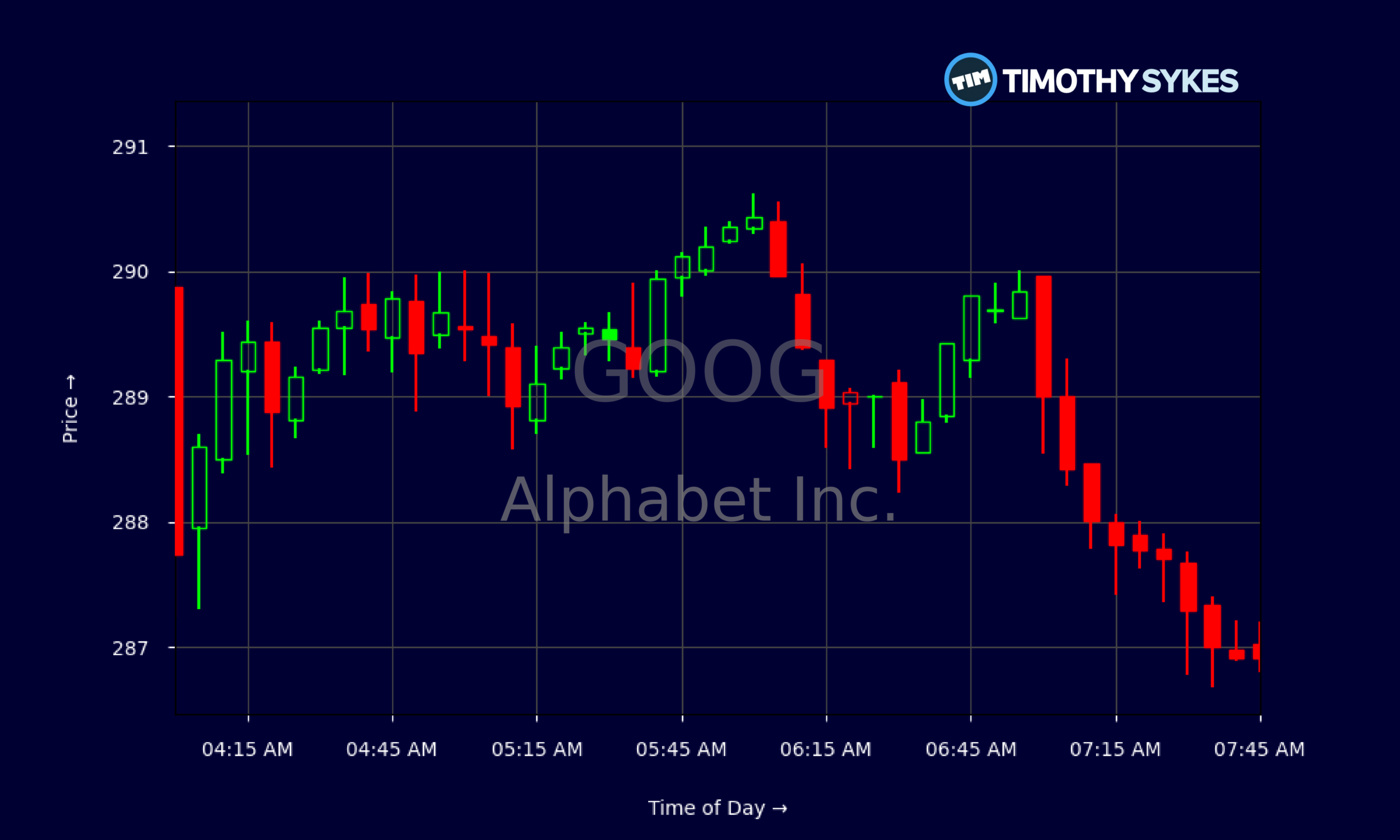
Live Update At 07:47:41 EDT: On Thursday, October 29, 2026 Alphabet Inc. stock [NASDAQ: GOOG] is trending down by -10.87%! Discover the key drivers behind this movement as well as our expert analysis in the detailed breakdown below.
Quick Financial Overview
GOOG is flashing mixed signals on the tape. The recent daily chart shows GOOG rolling over from the mid-$340s to the low $320s, with the latest close around $321.89 after multiple failed pushes above $350. That’s a clear lower-high pattern, telling traders that supply is winning near the top of the recent range.
Intraday, the 5‑minute data around $287–$291 shows tight, choppy trading with lower peaks through the morning. That kind of action usually signals indecision and dip‑buyers getting less aggressive. For short‑term traders, GOOG looks like a “sell the rip” name until it can reclaim and hold prior resistance.
Fundamentally, Alphabet is still a profit machine. Revenue runs around $402.8B annually with fat profitability — EBIT margin above 55% and profit margins north of 50%. The balance sheet is strong, with low debt (total debt‑to‑equity about 0.18) and a current ratio of 2.7, so liquidity is not the story.
More Breaking News
Valuation on GOOG, with a P/E near 17.5 and price‑to‑sales around 9.5, prices in quality, but not perfection. After a Q3 miss and looming regulatory pressure, traders are reassessing how much premium they want to pay for this cash‑rich, but suddenly less bulletproof, giant.
Why Traders Are Watching GOOG After Q3
GOOG is in the penalty box with momentum traders right now. Alphabet’s Q3 report hit where it hurts: core ads and earnings. Search & Other revenue landed at $63.4B versus a $65B consensus, while YouTube Ads printed $11.2B versus $11.4B expected. When your main cash engines stumble together, the market listens.
The bigger shock was earnings. Q3 EPS came in at $2.12 versus a $3.02 FactSet estimate. That is not a mild miss; it is a wake‑up call. For GOOG traders, a gap that wide screams questions about cost discipline, ad pricing, and how efficiently Alphabet is monetizing all those eyeballs across Search, YouTube, and its broader ecosystem.
Layer on the regulatory cloud. The DOJ ad‑tech case and potential remedies around “neutral” auctions threaten to cut into Google Ad Exchange’s win rate. If auctions tilt away from GOOG toward rivals like Magnite, a high‑margin slice of Alphabet’s ad‑tech economics comes under pressure. Traders hate structural headwinds because they don’t fade in a quarter or two.
At the same time, Truist’s take on the AI cycle adds more weight. By lumping Alphabet with Microsoft’s major AI and cloud peers expected to run negative free cash flow because of heavy AI infrastructure spending, the note frames GOOG as heading into a period of intense capital drain just as earnings wobble. That combination — rising capex, softer ads, and legal heat — is exactly why GOOG is suddenly a high‑alert trading name instead of a quiet mega‑cap hold.
Conclusion
For active traders, GOOG has shifted from steady compounder to event‑driven battleground. Alphabet still throws off huge operating income — over $40B in the latest reported quarter — and commands gross margins above 80%. But the Q3 EPS shock, from $2.12 against a $3.02 consensus, broke the illusion that earnings are on autopilot. When a name this big misses that badly, big funds recalibrate models, and that can mean sustained volatility.
The backdrop isn’t getting easier. The DOJ ad‑tech case threatens Google Ad Exchange economics, while the securities class action over alleged false and misleading statements adds another overhang. Traders in GOOG now have to watch headlines as closely as charts. Every filing, leak, or court update can flip sentiment intraday.
At the same time, the AI capex narrative — with Truist warning Microsoft’s AI peers may run negative free cash flow — hangs over Alphabet’s long‑term cash profile. GOOG still has a fortress balance sheet, but the market is no longer giving it a free pass on spending or execution.
For the Tim Sykes and StocksToTrade crowd, this is exactly the type of setup where discipline matters most. As Tim likes to say, “Cut losses quickly, because holding and hoping is not a strategy.” As millionaire penny stock trader and teacher Tim Sykes, says, “There is always another play around the corner; don’t chase just because you feel FOMO.”. For GOOG, that means treating it like any other ticker: map the key levels, respect the trend, react to the news, and remember this is trading education and research — not a guarantee of where the stock goes next.
This is stock news, not investment advice. Timothy Sykes News delivers real-time stock market news focused on key catalysts driving short-term price movements. Our content is tailored for active traders and investors seeking to capitalize on rapid price fluctuations, particularly in volatile sectors like penny stocks. Readers come to us for detailed coverage on earnings reports, mergers, FDA approvals, new contracts, and unusual trading volumes that can trigger significant short-term price action. Some users utilize our news to explain sudden stock movements, while others rely on it for diligent research into potential investment opportunities.
Dive deeper into the world of trading with Timothy Sykes, renowned for his expertise in penny stocks. Explore his top picks and discover the strategies that have propelled him to success with these articles:
- Penny Stocks Trading Guide
- Best Penny Stocks Under $1 to Buy Today
- Top 8 Penny Stocks to Watch on Robinhood
Once you’ve got some stocks on watch, elevate your trading game with StocksToTrade the ultimate platform for traders. With specialized tools for swing and day trading, StocksToTrade will guide you through the market’s twists and turns.
Dig into StocksToTrade’s watchlists here:





Leave a reply