

Nu Holdings Ltd. stocks have been trading down by -3.87 percent amid heightened concern over profitability and regional regulatory risks.
Key Takeaways
- Nu Holdings drops 19.8% in premarket, erasing a recent 2.9% gain and shocking short-term traders.
- The move signals a sharp negative shock and a sudden reset in market sentiment toward NU.
- Heavy Wallstreetbets chatter points to retail traders crowding into NU, amplifying volatility.
- Recent NU trading shows a slide from the mid-$15s to around $12, now breaking lower.
Live Update At 16:46:43 EDT: On Wednesday, October 28, 2026 Nu Holdings Ltd. stock [NYSE: NU] is trending down by -3.87%! Discover the key drivers behind this movement as well as our expert analysis in the detailed breakdown below.
Quick Financial Overview
Nu Holdings Ltd. has gone from a smooth uptrend to a full-blown air pocket on the chart. NU closed recently near $11.97 after trading as high as about $16 earlier in the month, a drop of roughly 25% from that short-term peak. Now traders are staring at news of another 19.8% hit in premarket, which would push NU into a fresh breakdown zone.
On the fundamentals, NU is still a high-growth-style fintech name with big scale. Revenue sits near $10.16B, but the company runs a pretax profit margin around -5.6%. Translation: Nu Holdings Ltd. is still losing money, using growth and customer expansion as the main story. With a price-to-sales ratio around 7.7 and price-to-book near 6.93, NU trades rich compared with many traditional banks.
More Breaking News
The balance sheet is sizable. Total assets are about $74.89B, equity about $11.29B, and cash roughly $16.14B, giving NU some liquidity cushion. But a leverage ratio of 6.6 means Nu Holdings Ltd. is geared up like a typical financial operator. For traders, that mix — rich valuation, thin margins, leverage, and now a steep price drop — sets up a classic sentiment swing environment.
Why Traders Are Watching NU’s Premarket Meltdown
The headline for NU today is simple and ugly: Nu Holdings drops 19.8% in premarket, sharply reversing a 2.9% gain from Friday, and the move is under heavy discussion on Wallstreetbets. When a widely followed fintech like Nu Holdings Ltd. loses nearly a fifth of its value before the opening bell, that is a volatility event traders cannot ignore.
NU had already been weakening. Daily data show Nu Holdings Ltd. sliding from the $15–$16 area down toward $12, breaking a multi-week support band in the mid-$14s. Friday’s bounce of 2.9% gave bulls a little hope that NU might hold the low-$12s and build a base. This premarket dump rips that script in half and tells you sentiment turned sharply overnight.
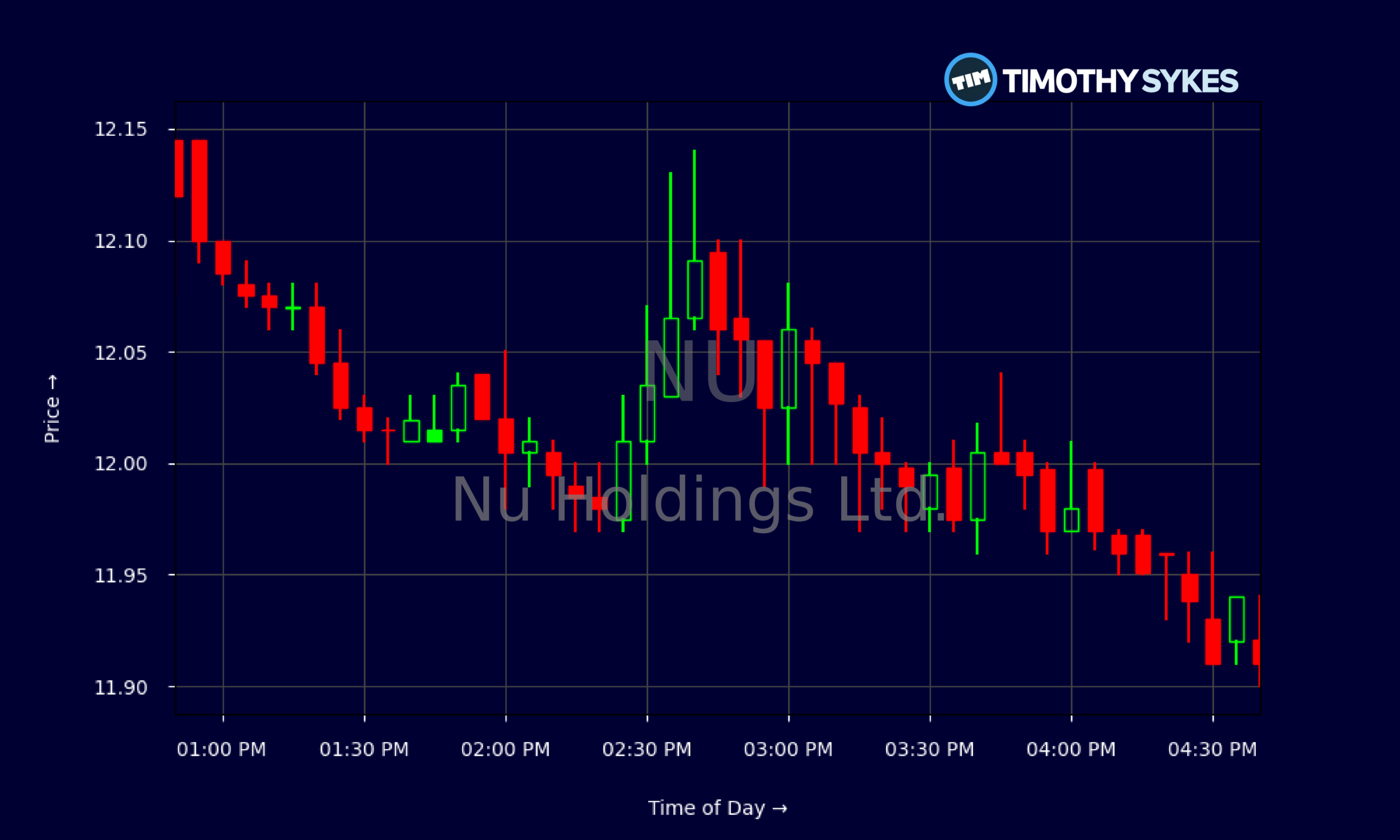
Intraday tape from the last regular session shows NU grinding in a tight band around $12, with lots of small candles and narrow ranges. That kind of calm action sometimes acts like the coiling of a spring. The new premarket gap suggests the spring just released — to the downside.
The Wallstreetbets angle matters. When NU and Nu Holdings Ltd. show up in heavy meme-style chatter, order flow can become crowded and emotional. That often means oversized gaps, sharp short squeezes, and equally brutal flushes. Right now, the data point traders must respect is this: a nearly 20% premarket dump on NU usually signals margin calls, forced selling, and stop-loss cascades at the open.
Conclusion
For active traders, NU is shifting from a steady swing name to a pure volatility play. Nu Holdings Ltd. is still a large, well-capitalized fintech with more than $16.14B in cash and over $74.89B in assets, but the market is clearly repricing the risk. A rich price-to-sales multiple near 7.7 combined with negative margins becomes a problem when sentiment breaks, and NU is feeling that break now.
Technically, Nu Holdings Ltd. is threatening to slice below recent lows around $12 after already losing altitude from the mid-$15s. If the 19.8% premarket drop holds, NU opens deep into a new price pocket with little recent support. That is where disciplined traders either step aside or execute cold-blooded plans — no guessing.
This type of NU move is exactly why rule-based trading matters. As Tim Sykes likes to remind traders, “Cut losses quickly; small losses are manageable, but big losses can end your trading career.” As millionaire penny stock trader and teacher Tim Sykes, says, “The goal is not to win every trade but to protect your capital and keep moving forward.”. Nu Holdings Ltd. is offering a live case study in that lesson today. NU will likely stay on every momentum trader’s screen, but the ones who last will treat this as a textbook risk-management test, not a lottery ticket.
This is stock news, not investment advice. Timothy Sykes News delivers real-time stock market news focused on key catalysts driving short-term price movements. Our content is tailored for active traders and investors seeking to capitalize on rapid price fluctuations, particularly in volatile sectors like penny stocks. Readers come to us for detailed coverage on earnings reports, mergers, FDA approvals, new contracts, and unusual trading volumes that can trigger significant short-term price action. Some users utilize our news to explain sudden stock movements, while others rely on it for diligent research into potential investment opportunities.
Dive deeper into the world of trading with Timothy Sykes, renowned for his expertise in penny stocks. Explore his top picks and discover the strategies that have propelled him to success with these articles:
- Penny Stocks Trading Guide
- Best Penny Stocks Under $1 to Buy Today
- Top 8 Penny Stocks to Watch on Robinhood
Once you’ve got some stocks on watch, elevate your trading game with StocksToTrade the ultimate platform for traders. With specialized tools for swing and day trading, StocksToTrade will guide you through the market’s twists and turns.
Dig into StocksToTrade’s watchlists here:





Leave a reply