
Alaunos Therapeutics Inc. stocks have been trading up by 36.5 percent amid heightened optimism over its oncology pipeline developments.
Key Takeaways
- Alaunos Therapeutics completed the Velaris Therapeutics acquisition, bringing in ActRII‑Fc ligand traps and biologics for pulmonary arterial hypertension and related cardiopulmonary diseases.
- Alongside the Velaris deal, the company raised about $350M in a private placement of Series C non‑voting convertible preferred stock, extending its cash runway into 2029.
- On the back of the acquisition and financing, TCRT shares spiked roughly 126%–225% on extremely heavy trading volume, signaling intense momentum trading interest.
- Later SEC filings showed Fairmount Funds took a 19.99% stake in Alaunos Therapeutics and aims to secure four of five board seats, pending shareholder approval.
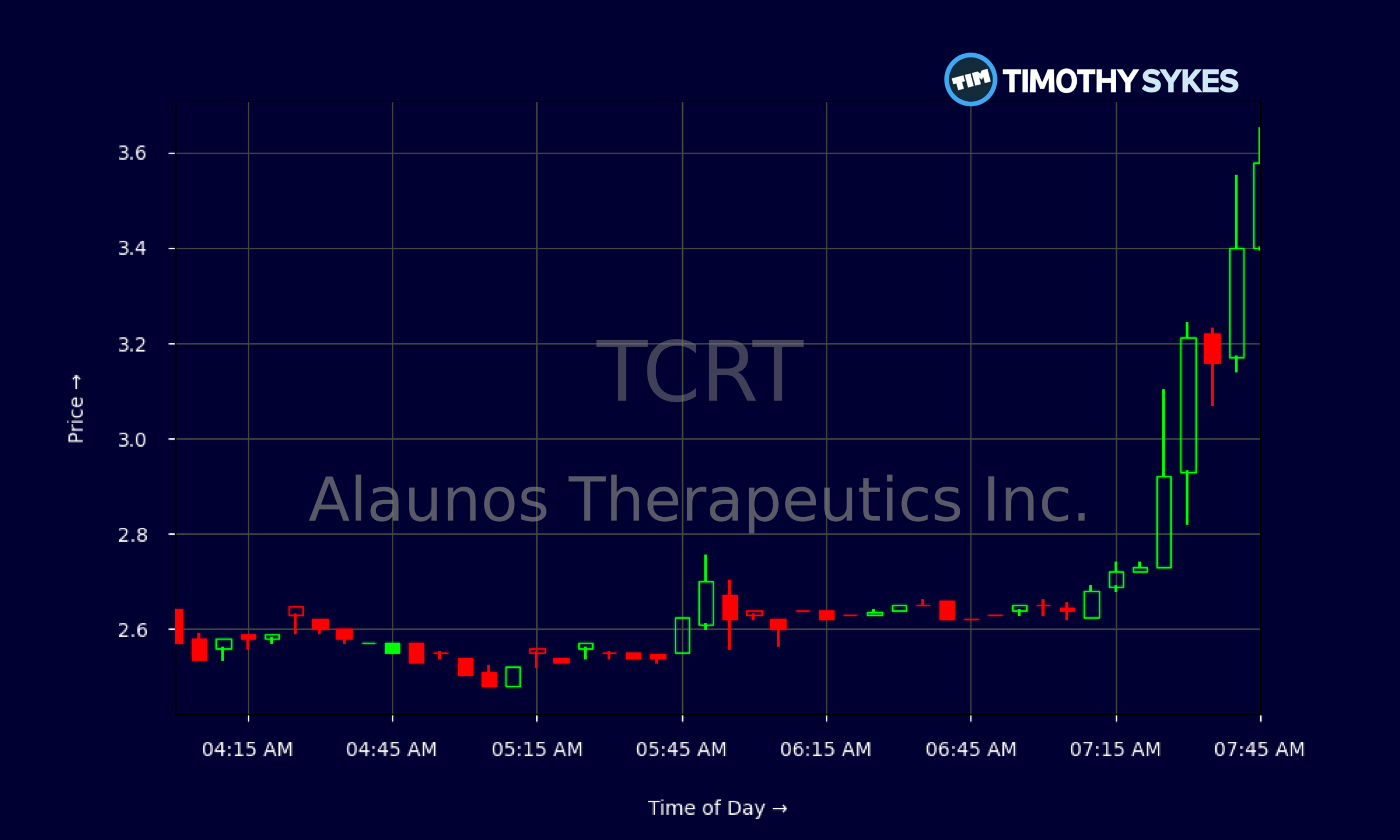
Live Update At 07:47:41 EDT: On Monday, October 19, 2026 Alaunos Therapeutics Inc. stock [NASDAQ: TCRT] is trending up by 36.5%! Discover the key drivers behind this movement as well as our expert analysis in the detailed breakdown below.
Quick Financial Overview
TCRT has been trading like a bio-tech rocket ship. In late September, Alaunos Therapeutics was grinding under $1, closing near $0.89 on 2026/09/30. That looked like a classic low‑priced biotech stuck in a long downtrend. Then October hit, and the chart completely flipped.
By 2026/10/12, TCRT closed at $1.05. On 2026/10/13 — the day of the Velaris and $350M financing headlines — the stock exploded intraday from $1.73 to a $4.32 high before settling at $3.03. That’s massive range and tells traders one thing: aggressive momentum money showed up.
The follow‑through has been choppy but elevated. TCRT pulled back to the low $2s yet is still trading multiple times higher than the pre‑deal base, closing at $2.63 on 2026/10/16. Intraday five‑minute data shows tight consolidation around $2.60 early, then a sharp push toward $3.60, a pattern short‑term traders watch for secondary squeezes.
More Breaking News
Fundamentally, Alaunos Therapeutics is still a tiny revenue story, with just $5,000 in quarterly revenue and a pretax loss of about $952,000. Margins are deeply negative, current ratio sits at 0.8, and working capital is negative. That means TCRT historically depended on external funding — which makes the new $350M capital raise and extended 2029 runway a critical pivot for the trading narrative.
Why Traders Are Watching TCRT
TCRT has morphed from a struggling micro‑cap into a high‑profile speculative biotech in a matter of days. Alaunos Therapeutics didn’t just announce another early‑stage study. It closed the acquisition of Velaris Therapeutics, instantly loading its pipeline with ActRII‑Fc ligand traps and biologics aimed at pulmonary arterial hypertension and related cardiopulmonary diseases. That’s the kind of focused, disease‑area story that can attract biotech‑specialist traders.
The Velaris deal alone would have turned heads, but TCRT stacked a major financing on top. Alaunos Therapeutics raised about $350M through a private placement of Series C non‑voting convertible preferred stock. Management signaled that this cash should fund operations into 2029 and carry several candidates through proof‑of‑concept and even initial regulatory filings. For trading purposes, that dramatically cuts near‑term dilution and bankruptcy fears, which often cap low‑priced biotech runs.
The market reaction tells the story clearly. TCRT shares ripped between about 126% and 225% on extremely heavy volume right after the news. When a stock like Alaunos Therapeutics gaps up multiple times and trades huge volume, it tends to become a magnet for day traders, swing traders, and algorithmic momentum programs.
The Fairmount Funds angle adds another twist. SEC filings showed Fairmount bought a 19.99% stake in TCRT and is seeking four of five board seats, effectively taking control if shareholders agree. Alaunos Therapeutics popped another 35% on that disclosure. Traders read that as an activist‑style move: a serious capital player stepping in to drive strategy, pipeline focus, or even future deal‑making. Whether Fairmount’s push creates long‑term value is a separate question — but in the near term, it adds fuel to the volatility and keeps TCRT squarely on watchlists.
Conclusion
For active traders, TCRT is a textbook example of how fast a beaten‑down biotech can reprice when the story changes overnight. Alaunos Therapeutics combined three powerful catalysts: a transformative acquisition in Velaris Therapeutics, a massive $350M capital raise that extends its runway into 2029, and a near‑control stake by Fairmount Funds aiming for four of five board seats. That is a complete reset of the Alaunos Therapeutics narrative.
The fundamentals still reflect an early‑stage, loss‑making biotech. Revenue is tiny, losses are large relative to sales, and historical returns on equity and assets are deeply negative. But markets trade forward. With a new cardiopulmonary pipeline, a long cash runway, and an activist‑style shareholder stepping up, TCRT has shifted from “will it survive?” to “can it execute?” That’s a very different trading setup.
Traders studying TCRT need to respect both sides of this coin. The recent spike from under $1 to intraday highs above $4 shows what happens when momentum, news, and volume align. The sharp intraday swings and pullbacks highlight how quickly those gains can unwind if sentiment shifts. In this kind of fast‑moving environment, chasing strength purely out of fear of missing out can be dangerous, especially for short‑term traders trying to manage risk in real time.
As Tim Sykes likes to remind his students, “Volatility is opportunity, but only if you stay disciplined and cut losses quickly.” As millionaire penny stock trader and teacher Tim Sykes, says, “There is always another play around the corner; don’t chase just because you feel FOMO.”. Alaunos Therapeutics now sits in that volatile sweet spot. For traders, the key is not predicting the future of pulmonary arterial hypertension drugs, but planning entries, exits, and risk around a stock where the story — and the price — can change in a single headline.
This is stock news, not investment advice. Timothy Sykes News delivers real-time stock market news focused on key catalysts driving short-term price movements. Our content is tailored for active traders and investors seeking to capitalize on rapid price fluctuations, particularly in volatile sectors like penny stocks. Readers come to us for detailed coverage on earnings reports, mergers, FDA approvals, new contracts, and unusual trading volumes that can trigger significant short-term price action. Some users utilize our news to explain sudden stock movements, while others rely on it for diligent research into potential investment opportunities.
Dive deeper into the world of trading with Timothy Sykes, renowned for his expertise in penny stocks. Explore his top picks and discover the strategies that have propelled him to success with these articles:
- Penny Stocks Trading Guide
- Best Penny Stocks Under $1 to Buy Today
- Top 8 Penny Stocks to Watch on Robinhood
Once you’ve got some stocks on watch, elevate your trading game with StocksToTrade the ultimate platform for traders. With specialized tools for swing and day trading, StocksToTrade will guide you through the market’s twists and turns.
Dig into StocksToTrade’s watchlists here:





Leave a reply