

Cleveland-Cliffs Inc. stocks have been trading up by 11.39 percent following upbeat steel-demand outlook and expansion-driven optimism.
Key Takeaways Traders Need To Know
- A $200M Grain Oriented Electrical Steel expansion at Butler Works, backed by a $75M DOE award, aims to lift specialized transformer steel output by up to 25%.
- GLJ Research hiked its Cleveland-Cliffs (CLF) price target to $17.48 after management flagged Q3 adjusted EBITDA near $575M and Q4 around $700M, well ahead of consensus.
- Wells Fargo upgraded CLF to Overweight with a $14 target, pointing to steel pricing power and stronger-than-expected 2H26–2027 EBITDA potential.
- CLF will release Q3 2026 earnings and host a pre-market call on 2026/10/19, a key checkpoint for the bullish EBITDA story.
- A recent Form 4 showed insider activity in CLF, but the lack of detail keeps it a secondary data point for traders.
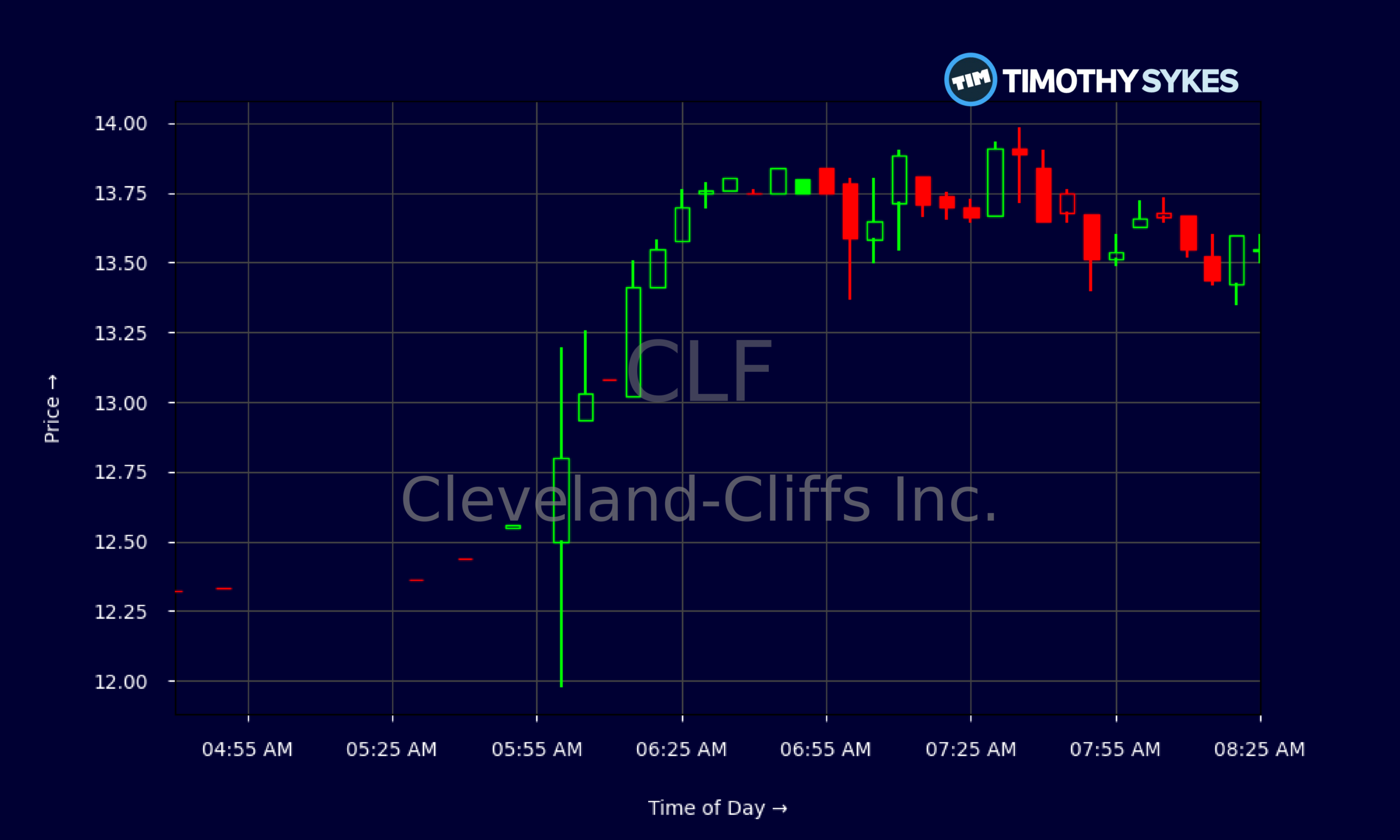
Live Update At 08:32:09 EDT: On Monday, October 19, 2026 Cleveland-Cliffs Inc. stock [NYSE: CLF] is trending up by 11.39%! Discover the key drivers behind this movement as well as our expert analysis in the detailed breakdown below.
Quick Financial Overview
Cleveland-Cliffs sits in that tricky zone where the chart is perking up while the income statement is still messy. Recent daily action shows CLF grinding higher from the low $11s to around the low $12s, with multiple failed breakdowns and fast snap-backs. That tells traders dip-buyers are active and shorts are not fully in control.
Intraday, the 5‑minute tape shows heavy pre-market range between roughly $12.80 and the mid‑$13s, with CLF repeatedly reclaiming levels after sharp flushes. This kind of action usually signals aggressive short-term trading flows and decent liquidity for scalpers.
On the fundamentals, CLF generated about $5.23B in quarterly revenue but still posted a net loss of roughly $145M and an operating loss near $46M. Margins are thin to negative, with EBIT margin around -3.1% and profit margins in the red. At the same time, operating cash flow of $230M and free cash flow of $73M show the business throwing off cash even while GAAP earnings lag.
More Breaking News
Debt is not small. Total debt-to-equity runs about 1.37, interest coverage is below 1, and long-term debt stands near $7.7B. For traders, that leverage adds torque: good steel pricing can swing CLF earnings hard in either direction.
Why Traders Are Watching CLF Right Now
Cleveland-Cliffs is suddenly back on a lot of trading screens thanks to a mix of policy support, capacity growth, and bullish analyst calls. The headline catalyst is CLF’s $200M expansion of Grain Oriented Electrical Steel at its Butler Works facility, supported by a $75M U.S. Department of Energy award. This is not just another capex line item. CLF is the only U.S. producer of this GOES product used in electrical transformers, which sit at the core of the power grid.
That matters because grid modernization, data center growth, and electrification all lean on transformers. If CLF can boost GOES output by up to 25% while improving efficiency and emissions, it tightens its grip on a strategic niche. For swing traders, that kind of “policy-protected” capacity story can support higher multiples when the market starts paying attention.
Analysts are already moving. GLJ Research raised its CLF target from $15.60 to $17.48 and called out management’s confidence in Q3 adjusted EBITDA around $575M and Q4 near $700M, 15–25% above Street numbers. Wells Fargo followed with an upgrade to Overweight and a $14 target, arguing that steel pricing power and 2H26–2027 EBITDA may be understated.
Layer in macro support: the U.S. President is expected to highlight a $15B Mesabi Metallics steel facility in Iowa, underscoring long-term domestic steel demand. That backdrop helps names like Cleveland-Cliffs, even if the benefit is indirect. The one caveat is consensus still sits at a Hold with an average target near $13.04, so not everyone is convinced yet. For traders, lingering skepticism plus rising estimates often sets up asymmetric upside when numbers come in strong.
Conclusion
Cleveland-Cliffs is shaping up as a classic “fundamentals catching up to the chart” story. The stock has fought off multiple pushes into the low $11s and is now building a base in the $12s–$13s, just as Wall Street starts to lift its view. The GOES expansion, backed by the Department of Energy, gives CLF a strategic angle that many steel names simply do not have — a direct line into grid and transformer demand with the scale to matter.
Financially, CLF is not a clean, high-margin story yet. Losses are still on the income statement and leverage is meaningful. But cash generation is positive, EBITDA is improving, and several analysts now project Q3 and Q4 EBITDA well above consensus. The upcoming Q3 2026 report on 2026/10/19 is the next major catalyst. That is when traders will see whether CLF’s bullish EBITDA talk turns into hard numbers and updated guidance.
Insider activity, as flagged by the Form 4, is worth tracking but does not override the strategic and earnings news. For active traders, this is about respecting both the upside potential and the downside risk if steel prices or execution stumble.
Tim Sykes loves to remind traders, “The market doesn’t care about your opinion, only your preparation.” As millionaire penny stock trader and teacher Tim Sykes, says, “Embrace the journey, the ups and downs; each mistake is a lesson to improve your strategy.”. With CLF, preparation means knowing the GOES story, the rising EBITDA expectations, the debt overhang, and the key dates on the calendar — then trading the price action, not the hype.
This is stock news, not investment advice. Timothy Sykes News delivers real-time stock market news focused on key catalysts driving short-term price movements. Our content is tailored for active traders and investors seeking to capitalize on rapid price fluctuations, particularly in volatile sectors like penny stocks. Readers come to us for detailed coverage on earnings reports, mergers, FDA approvals, new contracts, and unusual trading volumes that can trigger significant short-term price action. Some users utilize our news to explain sudden stock movements, while others rely on it for diligent research into potential investment opportunities.
Dive deeper into the world of trading with Timothy Sykes, renowned for his expertise in penny stocks. Explore his top picks and discover the strategies that have propelled him to success with these articles:
- Penny Stocks Trading Guide
- Best Penny Stocks Under $1 to Buy Today
- Top 8 Penny Stocks to Watch on Robinhood
Once you’ve got some stocks on watch, elevate your trading game with StocksToTrade the ultimate platform for traders. With specialized tools for swing and day trading, StocksToTrade will guide you through the market’s twists and turns.
Dig into StocksToTrade’s watchlists here:





Leave a reply