

Fractyl Health, Inc. faces heightened pressure after negative trial data, with stocks having been trading down by -68.51 percent.
What Traders Need To Know
- A securities class action has been filed against Fractyl Health (GUTS) alleging the company overstated the efficacy and prospects of its Revita DMR System and misled investors about REMAIN‑1 Midpoint Cohort data between 2025/01/13 and 2026/01/29.
- When more complete six‑month REMAIN‑1 data revealed weaker‑than‑touted weight‑maintenance results and issues at an outlier trial site, Fractyl Health’s stock price collapsed by roughly 68–75% over one to two days and was subsequently downgraded by Morgan Stanley with reduced peak‑sales expectations.
- Plaintiffs allege Fractyl used allegedly inflated interim Revita trial data and failed to disclose site‑level operational problems while conducting two equity offerings in August and September 2025 that raised about $76.7M.
- The lawsuit, which has an 2026/10/20 lead‑plaintiff deadline, focuses on alleged misstatements around trial design, data integrity, and risk disclosure, creating heightened legal, regulatory, execution, and financing risk for the company.
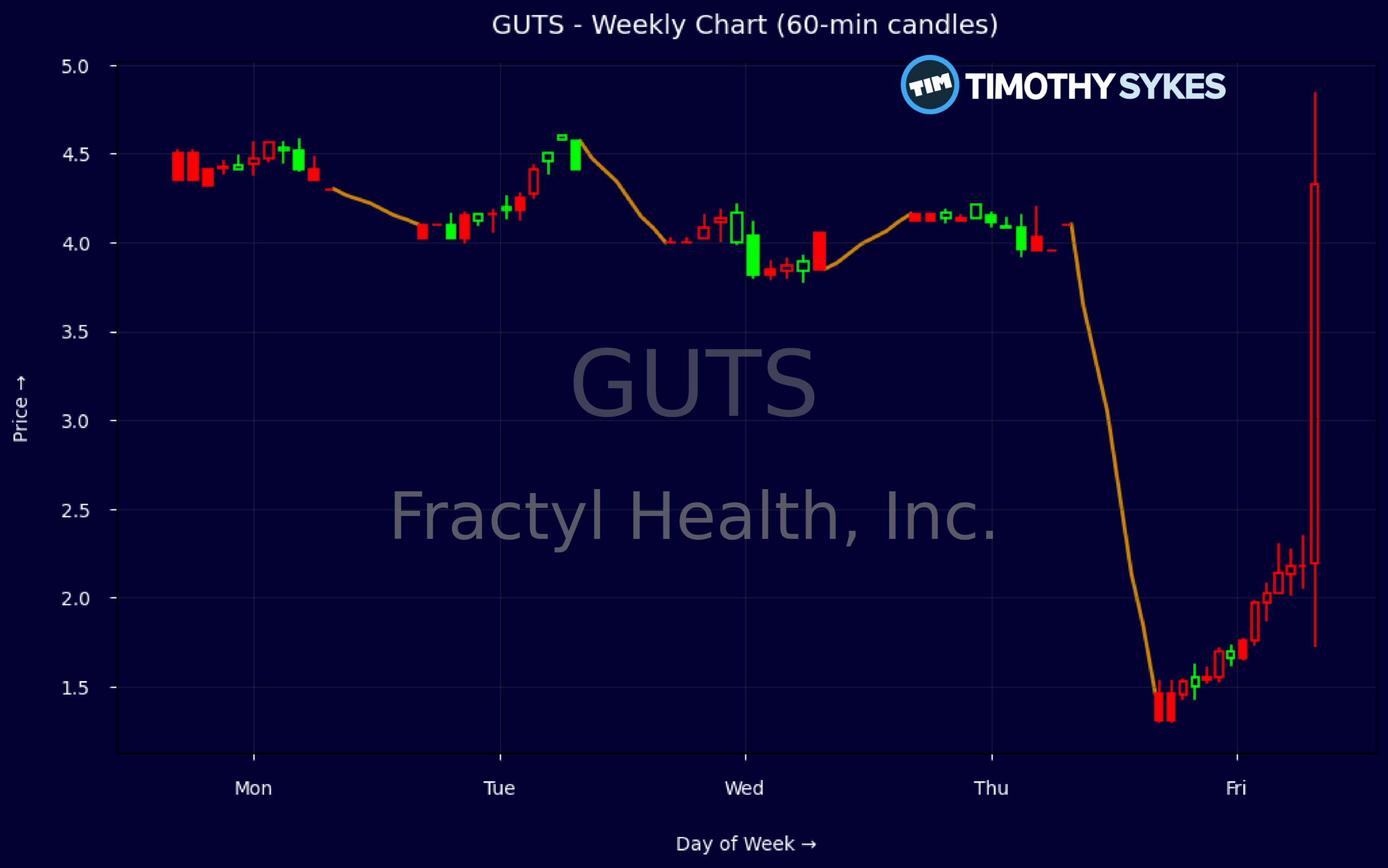
Weekly Update Oct 12 – Oct 16, 2026: On Saturday, October 17, 2026 Fractyl Health, Inc. stock [NASDAQ: GUTS] is trending down by -68.51%! Discover the key drivers behind this movement as well as our expert analysis in the detailed breakdown below.
Healthcare industry expert:
Analyst sentiment – negative
Fractyl Health (GUTS) is a single‑asset, pre‑revenue obesity/diabetes platform with biotech‑typical negative profitability and extreme balance‑sheet fragility. Q2 2026 EBITDA was –$25.3M and net income –$25.5M, implying an annualized burn of roughly $90–$110M. Free cash flow was –$15.9M for the quarter, with cash of $47.1M and working capital of $33.9M, giving barely 4–6 quarters of runway. Negative equity (–$1.7M) and ROA below –70% underscore weak fundamentals and high financing dependence.
Technically, GUTS has transitioned from a tight $4.00–4.50 consolidation to a violent breakdown, with the latest weekly bar collapsing from a $4.12 close to $1.31 on heavy volume, confirming a dominant bearish trend and capitulation‑style selling. Intraday 5‑minute candles show repeated failed bounces above $1.50, with supply hitting every spike. The key actionable level is $1.50: below it, rallies are short‑sale opportunities; only sustained closes above $1.80 would signal a tradable short‑covering reversal.
The litigation over alleged misrepresentation of Revita REMAIN‑1 data, coupled with a ~70–75% price collapse and major‑bank downgrades, creates a severe legal and reputational overhang. Versus broader healthcare and biotech benchmarks, GUTS now trades as a distressed, binary‑outcome trial asset with subscale cash and constrained access to equity markets. Base case is continued value erosion absent unequivocally positive new data. I see fair value skewed lower, with resistance at $1.80 and $2.50, support fragile near $1.00.
More Breaking News
Quick Financial Overview
Fractyl Health, Inc. (GUTS) is trading under heavy pressure after the REMAIN‑1 Midpoint Cohort data reset expectations for its Revita DMR System. Weekly prices show the stock trading around $4.41–$4.16 early in the data window, then collapsing to a $1.55 open and $1.31 close by the latest print. That pattern lines up with the reported 68–75% slide over one to two days once six‑month results and an outlier trial site were disclosed.
Intraday data reinforce the volatility story. A 5‑minute candle with a $2.30 high and $1.53 low, closing near $1.55, points to aggressive selling into any bounce and wide intraday ranges. For short‑term traders, that means spreads, slippage, and headline risk matter more than usual. Failed attempts to hold above the low $2s suggest that prior support zones have turned into resistance until sentiment improves.
Fundamentally, GUTS is still a pre‑profit, cash‑burning biotech. The latest quarterly report shows a net loss of about $25.5M and free cash flow around -$15.9M, but with $51.4M of cash at period‑end and working capital near $33.9M. Key ratios show a very weak return on assets and a negative book value per share of roughly -$0.13, which is why the price‑to‑book metric screens as sharply negative. On the positive side, a current ratio above 3 implies near‑term liquidity is adequate, but ongoing legal and trial risks raise questions about how Fractyl Health, Inc. will fund itself once this cash runway shortens.
Conclusion
This is stock news, not investment advice. Timothy Sykes News delivers real-time stock market news focused on key catalysts driving short-term price movements. Our content is tailored for active traders and investors seeking to capitalize on rapid price fluctuations, particularly in volatile sectors like penny stocks. Readers come to us for detailed coverage on earnings reports, mergers, FDA approvals, new contracts, and unusual trading volumes that can trigger significant short-term price action. Some users utilize our news to explain sudden stock movements, while others rely on it for diligent research into potential investment opportunities.
Dive deeper into the world of trading with Timothy Sykes, renowned for his expertise in penny stocks. Explore his top picks and discover the strategies that have propelled him to success with these articles:
- Penny Stocks Trading Guide
- Best Penny Stocks Under $1 to Buy Today
- Top 8 Penny Stocks to Watch on Robinhood
Once you’ve got some stocks on watch, elevate your trading game with StocksToTrade the ultimate platform for traders. With specialized tools for swing and day trading, StocksToTrade will guide you through the market’s twists and turns.
Dig into StocksToTrade’s watchlists here:





Leave a reply