

Positive satellite deployment and space-infrastructure partnership news could further propel WISeSat.Space Holdings Corp., whose stocks have been trading up by 44.33 percent.
Key Takeaways For SAIQ Traders
- WISeSat.Space has completed its business combination with Columbus Acquisition Corp and now trades on Nasdaq under ticker SAIQ as a post‑quantum‑secure satellite connectivity play.
- After the deal closed, shares spiked more than 500% in premarket trading, with volume exploding far above normal levels.
- A $10M PIPE from affiliate SEALSQ will fund cybersecurity, next‑gen satellites, and post‑quantum communications, but SAIQ dropped around 27% on the funding news.
- The company is lined up as space‑infrastructure partner for the Quantum Spatial Orbital Cloud, targeting up to 100 satellites through 2033, with the first payload planned for Q4 2026.
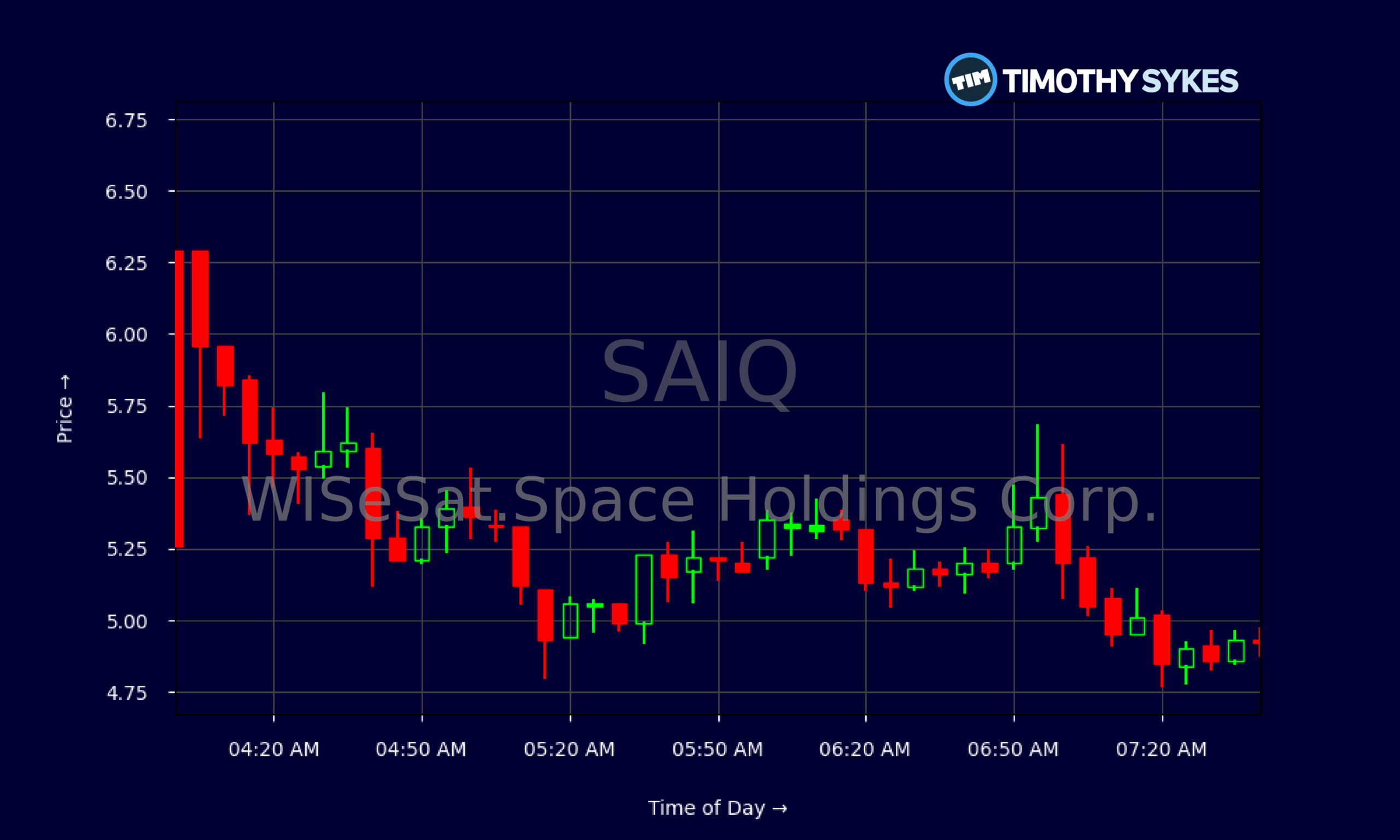
Live Update At 07:47:29 EDT: On Tuesday, October 20, 2026 WISeSat.Space Holdings Corp. stock [NASDAQ: SAIQ] is trending up by 44.33%! Discover the key drivers behind this movement as well as our expert analysis in the detailed breakdown below.
Quick Financial Overview
SAIQ is a brand‑new, story‑driven name, and the chart already looks like a rollercoaster. After debuting on Nasdaq around $1.85 on 2026/10/02 following its business combination, WISeSat.Space Holdings Corp. ripped to an intraday high near $9.94 on 2026/10/05. That move reflects the earlier premarket surge of more than 500% mentioned in the news flow.
From there, SAIQ gave back a big chunk of gains. Daily closes slid from $6.67 on 2026/10/05 to the low $3s by 2026/10/16–2026/10/19, with recent closes clustered between $3.16 and $3.41. That’s classic post‑SPAC and post‑news digestion as early traders lock in quick wins.
Intraday data show tight action around $5–$5.50 in premarket trading, with frequent wicks but no clear breakout. For short‑term traders, that’s a consolidation zone: buyers and sellers are battling, but neither side has full control.
More Breaking News
Fundamentals are early‑stage. SAIQ reported revenue of only about $0.20M and an enterprise value just over $94M, so traders are clearly paying for the satellite and post‑quantum security story, not current earnings. With valuation ratios largely blank so far, this is a pure momentum and narrative trade, not a value play.
Why Traders Are Watching SAIQ’s Wild Price Swings
SAIQ has quickly turned into the kind of chart momentum traders love. WISeSat.Space exploded onto the scene once its deal with Columbus Acquisition Corp closed and the stock listed on Nasdaq. The premarket jump of more than 500% signaled one thing very clearly: traders are hungry for small‑cap space and cybersecurity exposure, especially when it’s tied to a fresh ticker and low float dynamics.
Once SAIQ started regular trading, the fireworks continued. Multiple news snippets confirm intraday gains in the 200%–260% range, backed by “exploding” volume. That combination — huge percentage moves plus heavy liquidity — is exactly what day traders on platforms like StocksToTrade look for: the chance to trade clean breakouts, panic dips, and late‑day squeezes with real size.
But SAIQ is not just another space SPAC. WISeSat.Space positions itself as a post‑quantum‑secure satellite communications and IoT connectivity company, plugged into the broader WISeKey cybersecurity and space ecosystem. That post‑quantum angle gives SAIQ a buzzword‑rich narrative around future‑proof encryption and secure data links, which helps keep the hype alive.
The $10M PIPE from affiliate SEALSQ adds another twist. On paper, that cash backs next‑gen satellites and secure post‑quantum communications, strengthening SAIQ’s runway. The near‑27% selloff on the announcement, though, shows how fast sentiment can flip when dilution fears collide with traders taking profits. For active traders, that’s not a red flag; it’s a signal that SAIQ can move sharply in both directions and reward those who cut losses fast and trade the ranges, not the story.
On top of that, WISeSat.Space tying itself to the Quantum Spatial Orbital Cloud — a planned secure orbital cloud of up to 100 satellites through 2033 — keeps longer‑term capital interested and supports ongoing attention from momentum traders looking for repeat news catalysts.
Conclusion
SAIQ is exactly the type of new listing that can build a cult following among active traders. WISeSat.Space has a clean narrative: post‑quantum‑secure satellite communications, IoT connectivity, and a formal role as space‑infrastructure partner for the Quantum Spatial Orbital Cloud, targeting its first payload launch in Q4 2026 and a potential fleet of up to 100 satellites through 2033. That long‑dated roadmap gives SAIQ a pipeline of potential headlines well beyond the initial listing buzz.
At the same time, the price action is already proving ruthless. A move from $1.85 to nearly $10 in a few days, followed by a steady fade into the $3s and a sharp 27% hit on the PIPE news, tells traders everything they need to know: SAIQ is a volatility vehicle. WISeSat.Space may also help surface hidden value for parent WISeKey, but for now the tape rules the story.
For traders studying SAIQ, the key is discipline — not prediction. That means respecting support and resistance around recent consolidation zones, watching volume like a hawk, and treating every gap and spike as a potential day‑trade, not a promise. As millionaire penny stock trader and teacher Tim Sykes, says, “Cut losses quickly, let profits ride, and don’t overtrade.”. As Tim Sykes likes to remind his community, “The pattern is your edge, not your opinion.” SAIQ’s patterns are loud right now, and for prepared traders, that’s where the real opportunity to learn and refine a strategy lives. This remains educational, research‑driven territory, not a shortcut to guaranteed profits.
This is stock news, not investment advice. Timothy Sykes News delivers real-time stock market news focused on key catalysts driving short-term price movements. Our content is tailored for active traders and investors seeking to capitalize on rapid price fluctuations, particularly in volatile sectors like penny stocks. Readers come to us for detailed coverage on earnings reports, mergers, FDA approvals, new contracts, and unusual trading volumes that can trigger significant short-term price action. Some users utilize our news to explain sudden stock movements, while others rely on it for diligent research into potential investment opportunities.
Dive deeper into the world of trading with Timothy Sykes, renowned for his expertise in penny stocks. Explore his top picks and discover the strategies that have propelled him to success with these articles:
- Penny Stocks Trading Guide
- Best Penny Stocks Under $1 to Buy Today
- Top 8 Penny Stocks to Watch on Robinhood
Once you’ve got some stocks on watch, elevate your trading game with StocksToTrade the ultimate platform for traders. With specialized tools for swing and day trading, StocksToTrade will guide you through the market’s twists and turns.
Dig into StocksToTrade’s watchlists here:





Leave a reply