

Waste Connections Inc. stocks have been trading up by 10.0 percent following strong earnings and upbeat guidance driving investor optimism.
Key Takeaways
- Q3 results from Waste Connections topped expectations on both earnings and revenue, with adjusted EPS at $1.58 and sales at $2.64B, plus a strong 34% adjusted EBITDA margin.
- Full-year 2026 revenue guidance was nudged to about $10.09B, backing plans for at least $1.4B in double-digit adjusted free cash flow growth and above-plan 2026 performance.
- The company raised its quarterly dividend 10% to $0.385 per share and signaled annual reviews each October, with the new payout due 2026/11/19 for holders on 2026/11/05.
- Major Wall Street firms cut WCN price targets but kept bullish ratings, highlighting resilient pricing, solid waste performance, and attractive defensive valuations despite fuel and macro pressures.
- Sector-wide, Deutsche Bank expects strong pricing and improving volumes to offset higher diesel costs for WCN and peers, with EBITDA flagged as the key metric for traders.
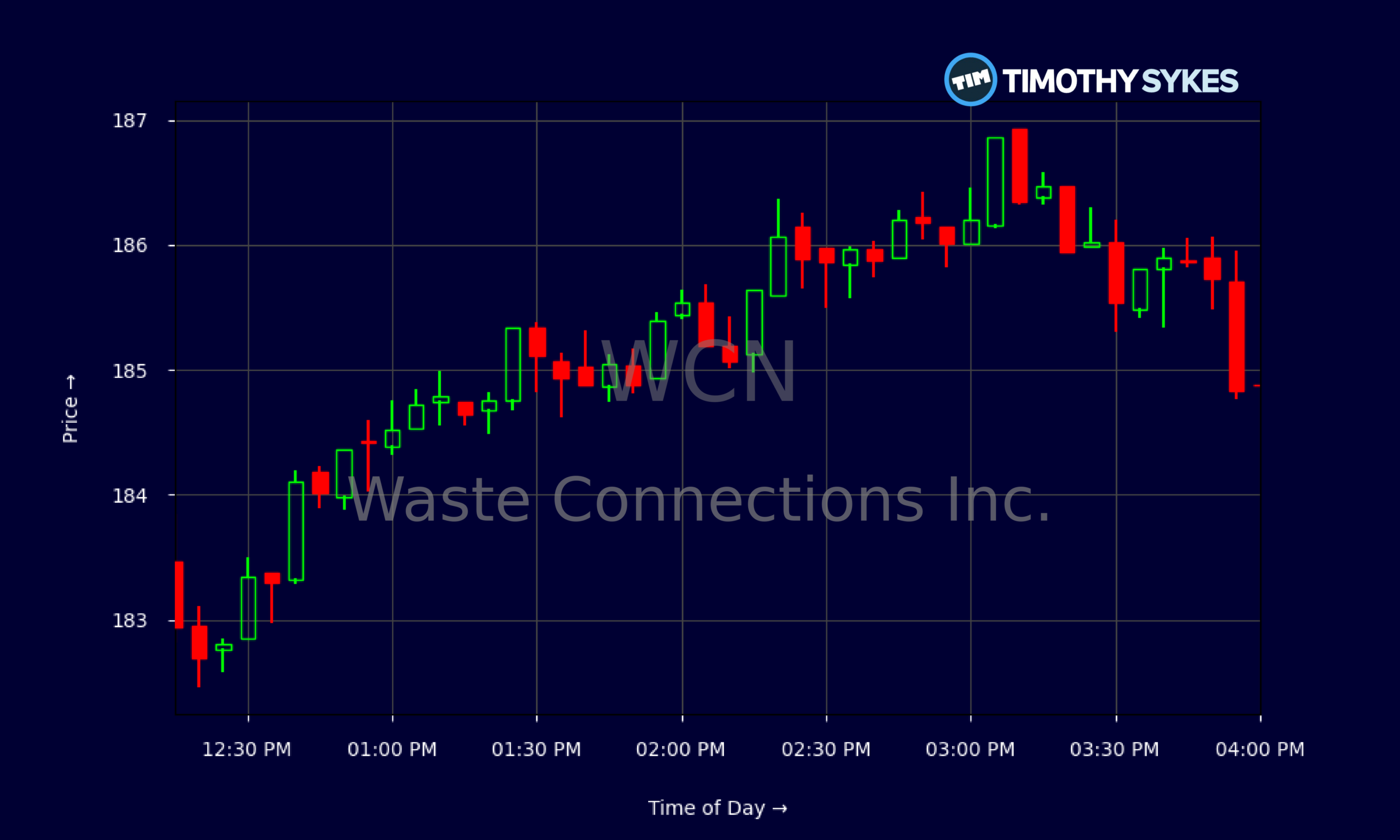
Live Update At 16:47:00 EDT: On Thursday, October 22, 2026 Waste Connections Inc. stock [NYSE: WCN] is trending up by 10.0%! Discover the key drivers behind this movement as well as our expert analysis in the detailed breakdown below.
Quick Financial Overview
Waste Connections (WCN) just printed the kind of quarter that gets serious traders to pull up the chart. Q3 adjusted EPS came in at $1.58, ahead of forecasts around $1.52–$1.54 and up from $1.44 a year earlier. Revenue reached $2.64B, slightly above roughly $2.61B consensus and up from $2.46B, while the adjusted EBITDA margin landed at a hefty 34%. That margin strength matters; it shows WCN is managing fuel and wage inflation without letting costs run the show.
On the tape, WCN has broken out hard. The stock ran from about $156 at the end of September to $184.88 on 2026/10/22, with an intraday spike near $186.93. Intraday action shows a steady grind higher after the open, not a one-and-done spike — that’s the kind of controlled momentum breakout short-term traders like to stalk.
More Breaking News
Fundamentally, WCN isn’t cheap with a P/E near 37.9 and price-to-sales around 2.8, but the company throws off serious cash. Operating cash flow is over $733M last quarter, free cash flow about $430.9M, and management is still willing to deploy capital into acquisitions and buybacks. For traders, that mix of strong cash generation, consistent revenue growth, and a rising dividend makes WCN a classic “quality momentum” name rather than a speculative flyer.
Why Traders Are Watching WCN Now
WCN is on radar because the company is doing what strong compounders do: beating numbers, raising guidance, and rewarding shareholders, all while the stock rips to new highs. Earnings first. Waste Connections reported Q3 EPS of $1.58 versus $1.52 consensus, with revenue of $2.64B versus $2.61B. The 34% adjusted EBITDA margin tells you pricing power is very real. This is not a low-margin, commodity trash hauler anymore; WCN is behaving like a premium service business.
Guidance backs that up. Management raised its 2026 revenue outlook to about $10.09B and is talking about at least $1.4B in double-digit adjusted free cash flow growth. They also outlined net income around $1.18B. For traders, those forward numbers are the fuel behind the breakout — Wall Street is being told that prior targets were too low.
At the same time, WCN increased its regular quarterly dividend by 10%, from $0.35 to $0.385 per share, and signaled plans to review that payout every October. The scheduled 2026/11/19 dividend to holders as of 2026/11/05 is more than just a check; it’s a message that management trusts the durability of its cash engine.
Yet the analyst tape is nuanced. Raymond James, Scotiabank, BMO Capital, Morgan Stanley, and JPMorgan all cut their WCN price targets, but every one of them kept bullish ratings like Strong Buy, Outperform, or Overweight. They cite resilient solid waste pricing, improving non-solid waste operations, and attractive defensive valuations, while acknowledging weak volumes in some pockets and higher diesel costs. Deutsche Bank’s call that Waste Connections, Waste Management, and Republic Services should all meet Q3 estimates — with EBITDA as the focus metric — frames WCN as part of a sector that is holding up even as other areas of the market wobble. For active traders, that combination of strong fundamentals and cautious-but-positive Street sentiment can set up powerful continuation moves once the “guidance jitters” shake out.
Conclusion
For WCN, the story right now is controlled strength, not hype. The stock has climbed from the low $150s to the mid-$180s in a few weeks, backed by real numbers: revenue growth, a 34% adjusted EBITDA margin, and rising free cash flow. Waste Connections is also running a levered but manageable balance sheet, with total debt-to-equity around 1.22 and interest coverage near 7.7, which is acceptable for a stable cash-flow business. That gives the company room to keep doing deals, paying a higher dividend, and buying back shares.
Traders should still respect the other side. Guidance, while raised to roughly $10.09B, is just shy of prior Street hopes around $10.14B, and after-hours action around the report showed that even “good” numbers can trigger selling when expectations run hot. WCN’s rich P/E and negative tangible book ratio remind you this is a quality name priced like one; sharp market-wide risk-off moves can hit it simply because it has run.
The edge for traders is preparation. Study how WCN trades around key levels, how it reacts to analyst notes, and where volume clusters on the intraday chart. As Tim Sykes likes to say, “Patterns repeat because human nature doesn’t change — your job is to recognize them faster than everyone else.” As millionaire penny stock trader and teacher Tim Sykes says, “The goal is not to win every trade but to protect your capital and keep moving forward.”. Use that mindset here: let the earnings beat, dividend hike, and sector support define the trend, then trade WCN’s momentum with clear risk levels and the discipline to cut losses fast.
This is stock news, not investment advice. Timothy Sykes News delivers real-time stock market news focused on key catalysts driving short-term price movements. Our content is tailored for active traders and investors seeking to capitalize on rapid price fluctuations, particularly in volatile sectors like penny stocks. Readers come to us for detailed coverage on earnings reports, mergers, FDA approvals, new contracts, and unusual trading volumes that can trigger significant short-term price action. Some users utilize our news to explain sudden stock movements, while others rely on it for diligent research into potential investment opportunities.
Dive deeper into the world of trading with Timothy Sykes, renowned for his expertise in penny stocks. Explore his top picks and discover the strategies that have propelled him to success with these articles:
- Penny Stocks Trading Guide
- Best Penny Stocks Under $1 to Buy Today
- Top 8 Penny Stocks to Watch on Robinhood
Once you’ve got some stocks on watch, elevate your trading game with StocksToTrade the ultimate platform for traders. With specialized tools for swing and day trading, StocksToTrade will guide you through the market’s twists and turns.
Dig into StocksToTrade’s watchlists here:





Leave a reply