

Space Exploration Technologies Corp. stocks have been trading down by -2.19 percent following heightened concerns over launch delays and regulatory risks.
Key Takeaways
- SPCX, a space and exploration-focused ETF, falls about 6% amid concerns that US election results may increase regulatory scrutiny on AI projects and companies.
- SpaceX proxy ticker SPCX is weaker pre-market amid concerns a Democratic Congress will clamp down on tech and AI-related spending and oversight.
- The EU is expediting antitrust approval for Project Bromo, a multi-company satellite venture that could rival SpaceX, and SpaceX shares fell about 2.9% on the news.
- SpaceX’s Starshield service used by Ukraine for battlefield communications and drones was reportedly slowed after an internal White House order to the US Defense Department; SpaceX shares were down 3.4%.
- SpaceX, referenced via SPCX, is noted as a drag on Alphabet’s EPS due to the September start of new capacity and a 12% decline in SpaceX shares during Q3, which negatively affects Alphabet’s mark-to-market results given its large SpaceX stake.
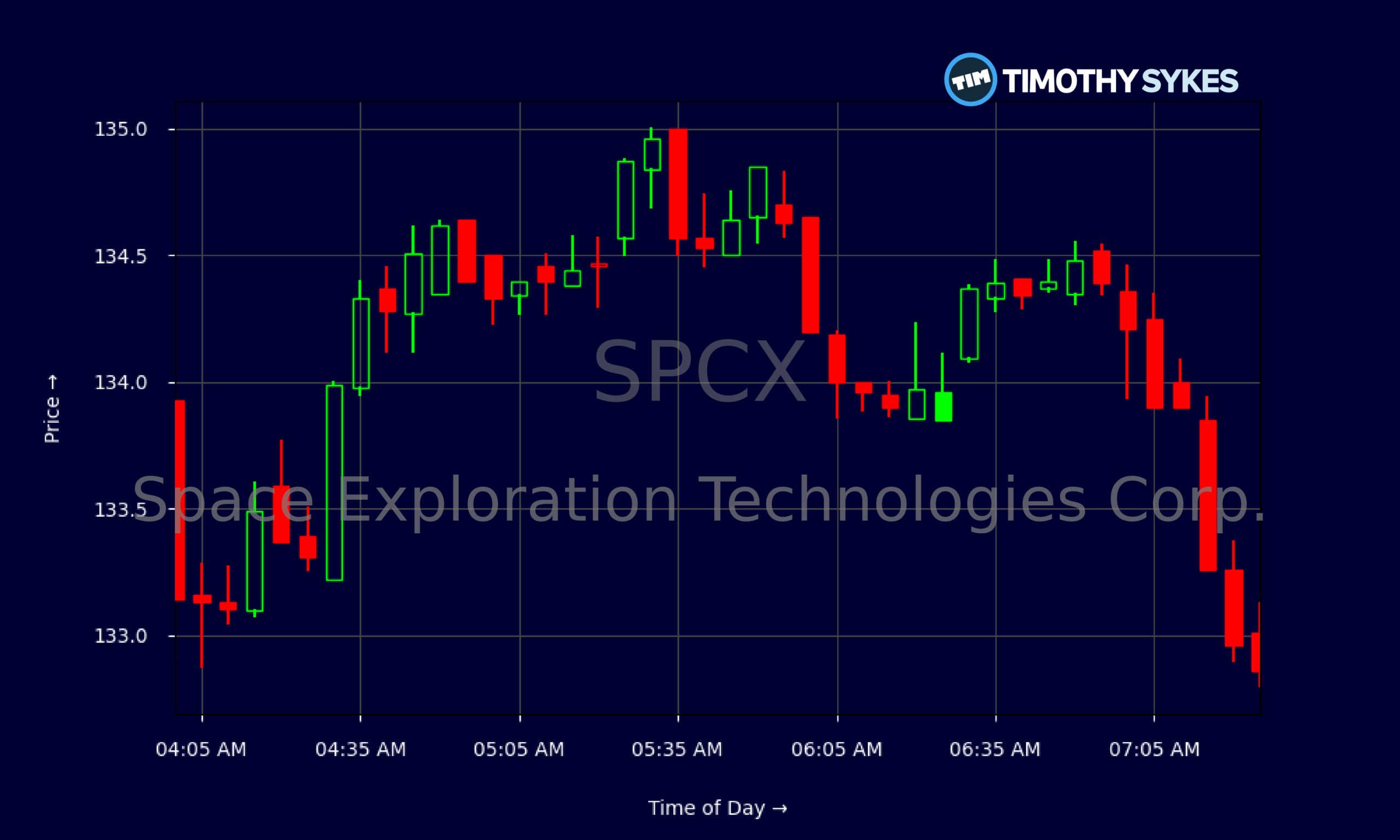
Live Update At 07:32:46 EST: On Thursday, November 05, 2026 Space Exploration Technologies Corp. stock [NASDAQ: SPCX] is trending down by -2.19%! Discover the key drivers behind this movement as well as our expert analysis in the detailed breakdown below.
Quick Financial Overview
SPCX has been trading like a high-beta tech name wrapped in a space story. The daily chart since 2026/10/12 shows a steady grind lower from the mid‑$160s to the mid‑$130s, with closing prices sliding from about $163 to roughly $136–$136. The latest print near $135.92 on 2026/11/04 marks a clear downtrend of almost 17% in just a few weeks.
Intraday, SPCX’s 5‑minute tape shows tight trading between roughly $133 and $135 in the premarket, with small candles and shallow wicks. That tells you liquidity is there, but conviction is fading. No big spikes, just controlled selling and modest bounces.
More Breaking News
Under the hood, the fundamentals linked to SPCX’s core holdings are classic “high‑growth, high‑expectation.” Revenue near $18.67B paired with a pretax margin of about -38.3% and negative free cash flow around -$9.97B means cash is being burned to chase scale. Valuation ratios like a price‑to‑sales above 170 and price‑to‑book in the high teens imply rich expectations. For traders, that mix usually equals sharp repricing when sentiment turns, which is exactly what the SPCX chart is telegraphing right now.
Why Traders Are Watching SPCX So Closely
SPCX is sitting in the crosshairs of three forces at once: politics, regulation, and pure tech‑sector risk‑off. The latest 6% drop on 2026/11/04 came as traders digested US election results and started gaming out a tighter regulatory stance on AI and big tech. For an ETF tied to space, exploration, and heavy AI infrastructure themes, that is a direct hit to the bull narrative.
Pre‑market, SPCX also traded weaker as headlines pointed to worries that a Democratic Congress may clamp down on tech and AI‑related spending. That tells you the selling is not random. It is a repricing of policy risk. SPCX traders are asking a simple question: what happens to growth multiples if Washington decides to slow the firehose of tech and defense contracts?
Layer on the macro tape. On 2026/11/02, major tech and semiconductor ETFs slid 1.8%–2.6% after reports of big losses at Anthropic, chunky capital raises, and fresh litigation noise. That broader tech shakeout bleeds straight into space names, dragging SPCX along as traders rotate out of expensive growth and into safer trades.
Then there are the SpaceX‑specific hits that echo through SPCX. The EU is fast‑tracking antitrust approval for Project Bromo, a rival satellite venture. SpaceX dropped about 2.9% on that news, a clear sign traders see competitive pressure on Starlink‑style businesses. Geopolitics adds more weight: reports that SpaceX’s Starshield service for Ukraine was slowed after a White House directive pushed SpaceX shares down another 3.4%. Each policy headline chips away at the premium baked into SPCX and keeps volatility elevated.
Conclusion
Right now SPCX is a case study in how narrative and news flow can overpower clean spreadsheets. The ETF has swung from a 7.8% surge in one session to a 2.4% pre‑bell pullback the next day, even with no fresh fundamentals cited. That kind of action is pure sentiment. For short‑term SPCX traders, those spikes and fades are the playground. For anyone holding longer, they are a signal to respect risk first.
Election‑driven fears over AI regulation, EU support for a Project Bromo satellite rival, and US limits on Starshield usage all lean in the same direction: more oversight, more uncertainty. SPCX, as a proxy for SpaceX and related high‑multiple names, will feel every twist in that story. Even Alphabet’s earnings felt the drag from a 12% SpaceX slide in Q3, reminding traders that the ripple effect is real.
The key with SPCX now is discipline. The chart says downtrend, the news tape says headline‑risk, and the fundamentals underneath point to aggressive spending and negative free cash flow. That is not a setup to marry; it is one to trade with tight plans. As Tim Sykes likes to hammer home, “Cut losses quickly, because holding and hoping is not a strategy.” As millionaire penny stock trader and teacher Tim Sykes, says, “Be patient, don’t force trades, and let the perfect setups come to you.”. For anyone stalking SPCX, that mindset is non‑negotiable in this tape.
This is stock news, not investment advice. Timothy Sykes News delivers real-time stock market news focused on key catalysts driving short-term price movements. Our content is tailored for active traders and investors seeking to capitalize on rapid price fluctuations, particularly in volatile sectors like penny stocks. Readers come to us for detailed coverage on earnings reports, mergers, FDA approvals, new contracts, and unusual trading volumes that can trigger significant short-term price action. Some users utilize our news to explain sudden stock movements, while others rely on it for diligent research into potential investment opportunities.
Dive deeper into the world of trading with Timothy Sykes, renowned for his expertise in penny stocks. Explore his top picks and discover the strategies that have propelled him to success with these articles:
- Penny Stocks Trading Guide
- Best Penny Stocks Under $1 to Buy Today
- Top 8 Penny Stocks to Watch on Robinhood
Once you’ve got some stocks on watch, elevate your trading game with StocksToTrade the ultimate platform for traders. With specialized tools for swing and day trading, StocksToTrade will guide you through the market’s twists and turns.
Dig into StocksToTrade’s watchlists here:





Leave a reply