
Intel Corporation stocks have been trading down by -2.45 percent after reports of weakening PC demand and margin pressures.
Key Takeaways Traders Need To Know
- Q4 2026 revenue guidance of $15–$16B came in more than $1B below Wall Street’s roughly $17B consensus, driven by PC-market weakness, supply constraints, and manufacturing bottlenecks.
- The soft Q3 print and weak outlook helped trigger roughly a 24.8–25% premarket slide in INTC, shocking many momentum-focused traders.
- Shareholder-rights firms, including Levi & Korsinsky, launched investigations into potential securities-law violations tied to Intel’s disclosures on PC demand and manufacturing risks.
- Multiple Wall Street desks cut INTC price targets while staying Neutral/Hold/Equal Weight, signaling caution rather than dip-buying conviction.
- Analysts also flagged sharp PC-market deterioration, severe memory and substrate constraints, and even an explosion at Intel’s Israeli fab as key overhangs on the story.
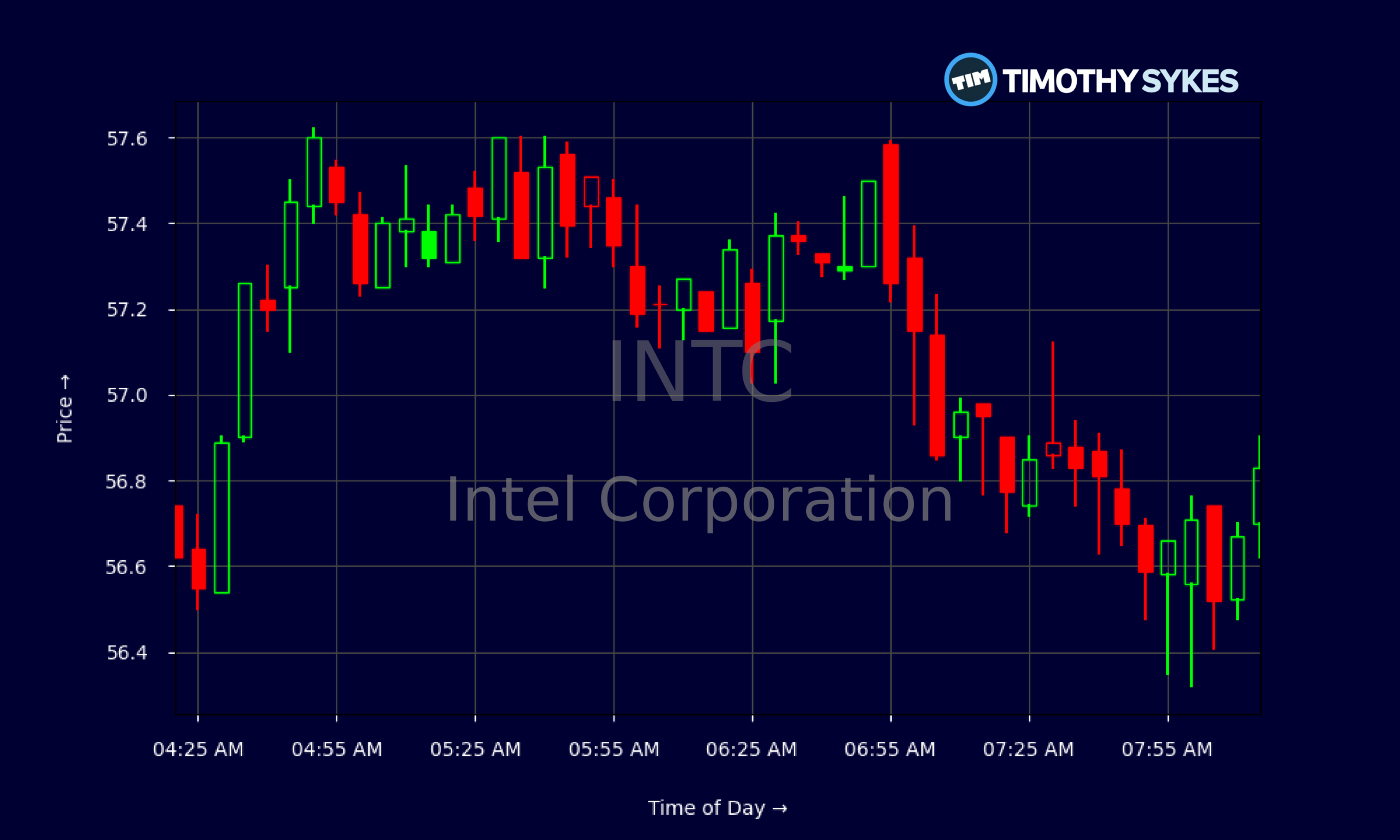
Live Update At 08:19:34 EST: On Thursday, November 05, 2026 Intel Corporation stock [NASDAQ: INTC] is trending down by -2.45%! Discover the key drivers behind this movement as well as our expert analysis in the detailed breakdown below.
Quick Financial Overview
INTC is trading like a fallen leader. Just a few weeks ago, Intel Corporation was changing hands above $100; now the stock has plunged into the high‑50s. The daily chart shows a brutal rollover: from a $102.81 close on 2026/10/13 to $58.27 on 2026/11/04. That’s a collapse of roughly 43% in three weeks, with the steepest damage coming right after Q3 earnings and Q4 guidance.
Zoom in, and the intraday tape backs up the story. Pre‑market prints cluster around $56–$57, with INTC chopping in a tight range and failing to bounce with any strength. That kind of flat, heavy trading after a crash tells you dip buyers are cautious and shorts are still in control.
More Breaking News
Fundamentals look stressed beneath the surface. Intel Corporation posted $16.51B in quarterly revenue and solid gross margin near 38.6%, yet profitability ratios are negative, including a roughly -20% net margin and negative returns on equity and assets. INTC does generate positive free cash flow, about $1.06B in the latest quarter, but the stock’s price‑to‑sales near 9.7 and price‑to‑cash‑flow near 19.8 look rich against shrinking PC revenue. For active traders, that mix—falling price, high multiples, and legal noise—spells elevated volatility and headline risk.
Why Traders Are Watching INTC After The Guidance Shock
INTC’s problem right now is simple to describe and painful to trade around: expectations got too far ahead of reality. For months, Intel Corporation leaned hard on the AI story—data center demand, custom silicon, and the foundry push. Then Q3 2026 hit, and management guided Q4 revenue to just $15–$16B, more than $1B below the roughly $17B Street consensus. The key drag was the old core business: Client Computing, or PCs.
Traders hate disconnects between talk and numbers. Intel Corporation is now living that mismatch. Management is blaming persistent PC‑market weakness, supply constraints, and manufacturing bottlenecks. At the same time, several firms say PC softness may last into at least the first half of 2027. That takes the air out of any near‑term turnaround story and forces traders to treat every pop as a potential short‑term fade until the data changes.
Wall Street’s reaction underlines the reset. DA Davidson cut its INTC target from $100 to $70, pointing to strong Foundry and Data Center growth but serious PC weakness that questions the stock’s rich valuation. Cantor Fitzgerald slashed its target from $125 to $90 and pushed the recovery narrative all the way out to 2H27, hinging on AI servers and foundry wins. Jefferies dropped its target from $120 to $85, citing weaker client revenue and lower gross margins as PC customers work through inventory.
Others piled on. Susquehanna took its target to $75 after guidance came in about $1.5B light, calling out a sharp PC deterioration. Morgan Stanley trimmed to $75 and still called INTC expensive on next‑year earnings. Truist flagged a production‑disrupting explosion at Intel’s Israeli fab on top of the weak PC outlook. Rosenblatt cut to $70 and kept a Sell rating, arguing that higher memory prices will further crush PC demand and Client Computing revenue.
Layer on top of that a wave of shareholder‑rights investigations—from Levi & Korsinsky and other firms—focused on whether Intel Corporation adequately disclosed PC‑demand and manufacturing‑bottleneck risks before the Q3 release. For traders, that’s pure headline risk. Any new filing, class‑action announcement, or regulatory move can suddenly hit the tape and move INTC several points in either direction.
Conclusion
Right now, INTC is a classic “fallen favorite” setup that active traders on timothysykes.com and StocksToTrade study all the time. The narrative broke, the guidance reset lower, and the stock got hammered more than 25% in a single post‑earnings move. Intel Corporation still has real strengths—data center demand, an ambitious foundry road map, solid liquidity—but the tape is telling you those long‑term positives are not the market’s focus today.
Instead, traders are locked in on three things: the depth and length of the PC downcycle, the ongoing supply and manufacturing constraints (including the Israeli fab incident), and the legal overhang from shareholder‑rights and securities‑law probes. Until Intel Corporation shows cleaner execution and more believable guidance, rallies are likely to face selling from funds de‑risking the name.
For short‑term traders, this is a volatility playground but also a trap for anyone who refuses to cut losses. Big gaps, fast fades, and sharp bounces will create opportunity on both the long and short side—if you treat INTC as a trade, not a hope. As millionaire penny stock trader and teacher Tim Sykes, says, “Be patient, don’t force trades, and let the perfect setups come to you.” That mindset is crucial in choppy names like INTC, where chasing sub‑par intraday patterns can quickly compound losses. As Tim Sykes likes to remind his students, “Volatility is your best friend and your worst enemy—study the pattern, plan the trade, and always, always respect your stop.”
This article is for educational and research purposes only and is not investment advice.
This is stock news, not investment advice. Timothy Sykes News delivers real-time stock market news focused on key catalysts driving short-term price movements. Our content is tailored for active traders and investors seeking to capitalize on rapid price fluctuations, particularly in volatile sectors like penny stocks. Readers come to us for detailed coverage on earnings reports, mergers, FDA approvals, new contracts, and unusual trading volumes that can trigger significant short-term price action. Some users utilize our news to explain sudden stock movements, while others rely on it for diligent research into potential investment opportunities.
Dive deeper into the world of trading with Timothy Sykes, renowned for his expertise in penny stocks. Explore his top picks and discover the strategies that have propelled him to success with these articles:
- Penny Stocks Trading Guide
- Best Penny Stocks Under $1 to Buy Today
- Top 8 Penny Stocks to Watch on Robinhood
Once you’ve got some stocks on watch, elevate your trading game with StocksToTrade the ultimate platform for traders. With specialized tools for swing and day trading, StocksToTrade will guide you through the market’s twists and turns.
Dig into StocksToTrade’s watchlists here:





Leave a reply