

Ovintiv Inc. (DE) stocks have been trading up by 4.97 percent amid upbeat news on expanded drilling and production growth.
What Traders Need To Know
- RBC raised its price target on Ovintiv to $90 from $85, pointing to strong Permian Basin productivity, higher base production, and a robust multi‑year free cash flow outlook versus a roughly $66.78 share price.
- Wells Fargo lifted its Ovintiv target to $82, framing upcoming Q3 results as an early read on 2027 fundamentals and stressing that cost control and hedging will separate winners in a high‑oil tape.
- A renewed normal course issuer bid allows repurchases of up to about 27 million shares over 12 months, tying into Ovintiv’s pledge to return at least 60% of annual non‑GAAP free cash flow through dividends and buybacks.
- UBS kept a Buy and $85 target, expecting strong Permian performance and better pricing to offset Montney outages while supporting heavier Q4 buybacks to exceed 60% free cash flow returns in 2026.
- Scotiabank, Truist, Morgan Stanley, and CIBC all raised Ovintiv price targets, linking their calls to firm commodity prices, expected solid Q3 execution, 2027 planning, and ongoing capital discipline.
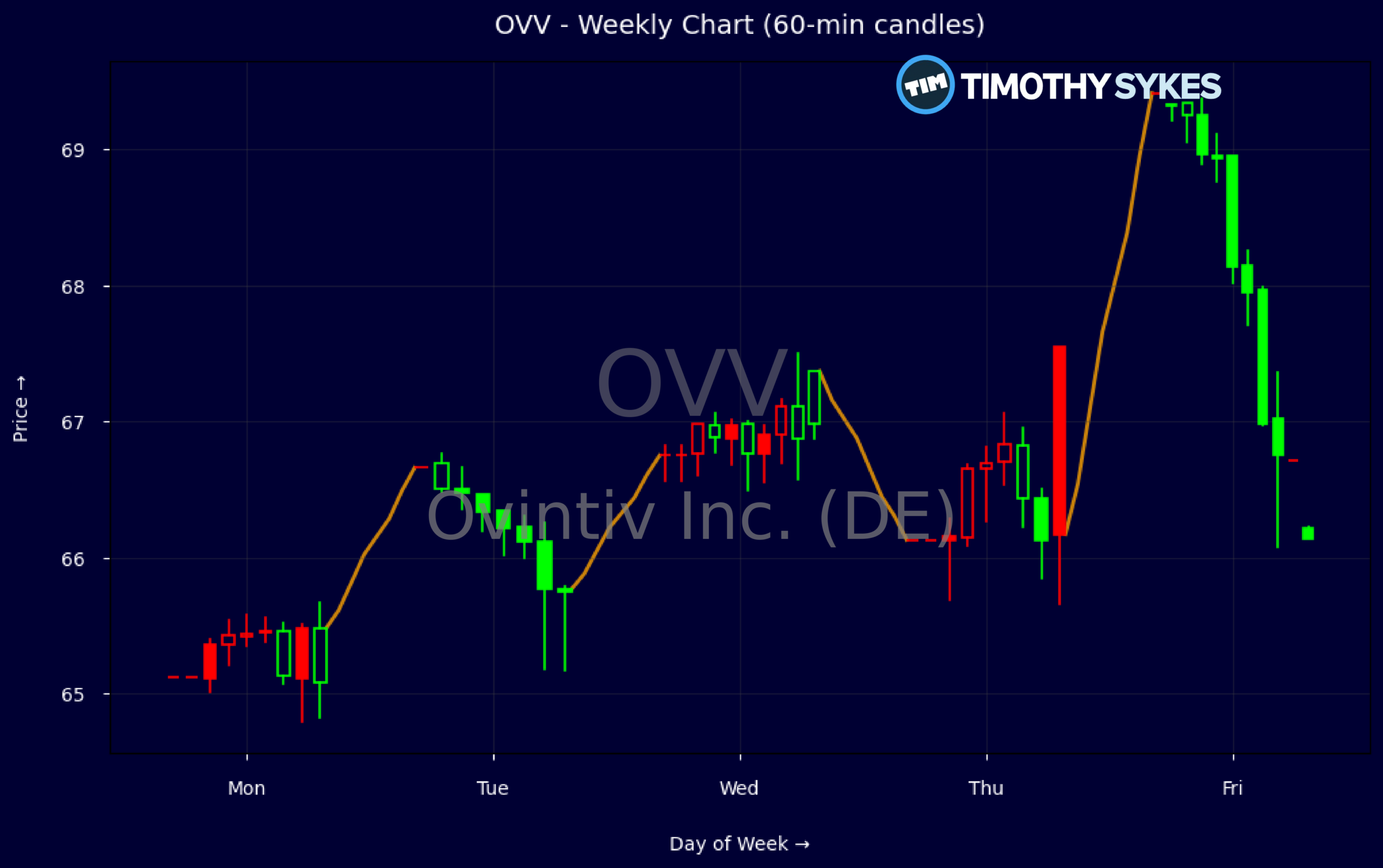
Weekly Update Oct 12 – Oct 16, 2026: On Sunday, October 18, 2026 Ovintiv Inc. (DE) stock [NYSE: OVV] is trending up by 4.97%! Discover the key drivers behind this movement as well as our expert analysis in the detailed breakdown below.
Energy industry expert:
Analyst sentiment – positive
Ovintiv sits as a top-tier North American liquids‑weighted E&P with attractive fundamentals and disciplined balance sheet management. EBITDA margin above 23% and gross margin near 60% demonstrate strong asset quality and cost control, while ROE above 25% and ROIC near low‑teens indicate efficient capital deployment. Leverage is moderate (total debt‑to‑equity 0.44x, interest coverage 5.8x) and supported by robust operating cash flow of $1.6 billion and over $1.0 billion in quarterly free cash flow, underpinning sustainable buybacks and a growing dividend.
Technically, OVV is in a clear short‑term uptrend, moving from ~$65 to above $69 this week with a series of higher highs and higher lows, consistent with strong institutional demand and rising volume on up‑days. The key actionable level is support at $66–67, aligning with recent consolidation and prior breakout. Pullbacks into that zone are buyable with a trading stop just below $64, targeting a retest and extension through the recent $69.40 high toward the low‑$70s.
Near‑term catalysts are strongly favorable: multiple bulge‑bracket upgrades (RBC to $90, UBS to $85, Wells Fargo to $82) and a renewed NCIB authorizing up to ~10% of float in buybacks, with a commitment to return ≥60% of free cash flow. Ovintiv screens better than the Energy and Fossil Fuels sector on free‑cash‑flow yield, capital returns, and balance sheet, justifying a 12‑month target range of $80–85, with support ~$66 and resistance ~$75 before a move higher.
More Breaking News
Quick Financial Overview
Ovintiv Inc. (DE) sits in a bullish research backdrop while trading in the mid‑$60s, with RBC calling for $90 and a Street average target around the high‑$70s. Weekly data show OVV pushing from $65.12 toward $69.41, and a recent intraday candle spanning $66.08 to $69.37 signals aggressive buying on dips and strong close‑of‑day demand. For traders, that combination of higher targets and firm price action points to an uptrend that is being confirmed rather than purely hoped for.
On the fundamentals, Ovintiv generated about $8.91B in revenue, with a gross margin near 59.5% and an EBITDA margin above 23%, giving OVV respectable operating leverage to crude and gas prices. A price‑to‑sales ratio near 1.9 and price‑to‑cash‑flow just under 3 suggest the market is not paying a premium for that cash engine. Return on equity north of 25% and return on capital above 20% show that, when management spends, it tends to create value.
Balance sheet quality is solid, with total debt‑to‑equity around 0.44 and interest coverage of roughly 5.8, meaning current cash flows comfortably service obligations. Recent cash flow from operations of about $1.63B and free cash flow near $1.06B support the company’s pledge to return at least 60% of non‑GAAP free cash flow via dividends and buybacks. A dividend yield around 1.7% is modest, but the authorization to repurchase up to 27M shares over 12 months gives OVV a powerful tool to support the tape on weakness.
Conclusion
This is stock news, not investment advice. Timothy Sykes News delivers real-time stock market news focused on key catalysts driving short-term price movements. Our content is tailored for active traders and investors seeking to capitalize on rapid price fluctuations, particularly in volatile sectors like penny stocks. Readers come to us for detailed coverage on earnings reports, mergers, FDA approvals, new contracts, and unusual trading volumes that can trigger significant short-term price action. Some users utilize our news to explain sudden stock movements, while others rely on it for diligent research into potential investment opportunities.
Dive deeper into the world of trading with Timothy Sykes, renowned for his expertise in penny stocks. Explore his top picks and discover the strategies that have propelled him to success with these articles:
- Penny Stocks Trading Guide
- Best Penny Stocks Under $1 to Buy Today
- Top 8 Penny Stocks to Watch on Robinhood
Once you’ve got some stocks on watch, elevate your trading game with StocksToTrade the ultimate platform for traders. With specialized tools for swing and day trading, StocksToTrade will guide you through the market’s twists and turns.
Dig into StocksToTrade’s watchlists here:





Leave a reply