

SELLAS Life Sciences Group Inc. stocks have been trading down by -12.57 percent following negative sentiment around its latest oncology trial news.
Key Takeaways
- Pomerantz LLP has opened an investigation into SELLAS Life Sciences Group over potential securities fraud and other unlawful practices following a delay in releasing Phase 3 trial results for its GPS cancer vaccine after a key pre-specified event was reached.
- The investigation centers on concerns that SELLAS Life Sciences did not release data from its Phase 3 Galinpepimut-S (GPS) trial when the pre-specified threshold of the 80th patient death was reportedly reached.
- Reports that the Phase 3 GPS trial hit its 80th patient death trigger without corresponding data disclosure coincided with a roughly 13% drop in SLS shares, to about $13.21 on 2026/08/28.
- Pomerantz LLP is exploring a potential class action on behalf of SELLAS Life Sciences traders, focusing on whether the company and its executives engaged in securities fraud or other unlawful business practices related to the timing of trial-data disclosure.
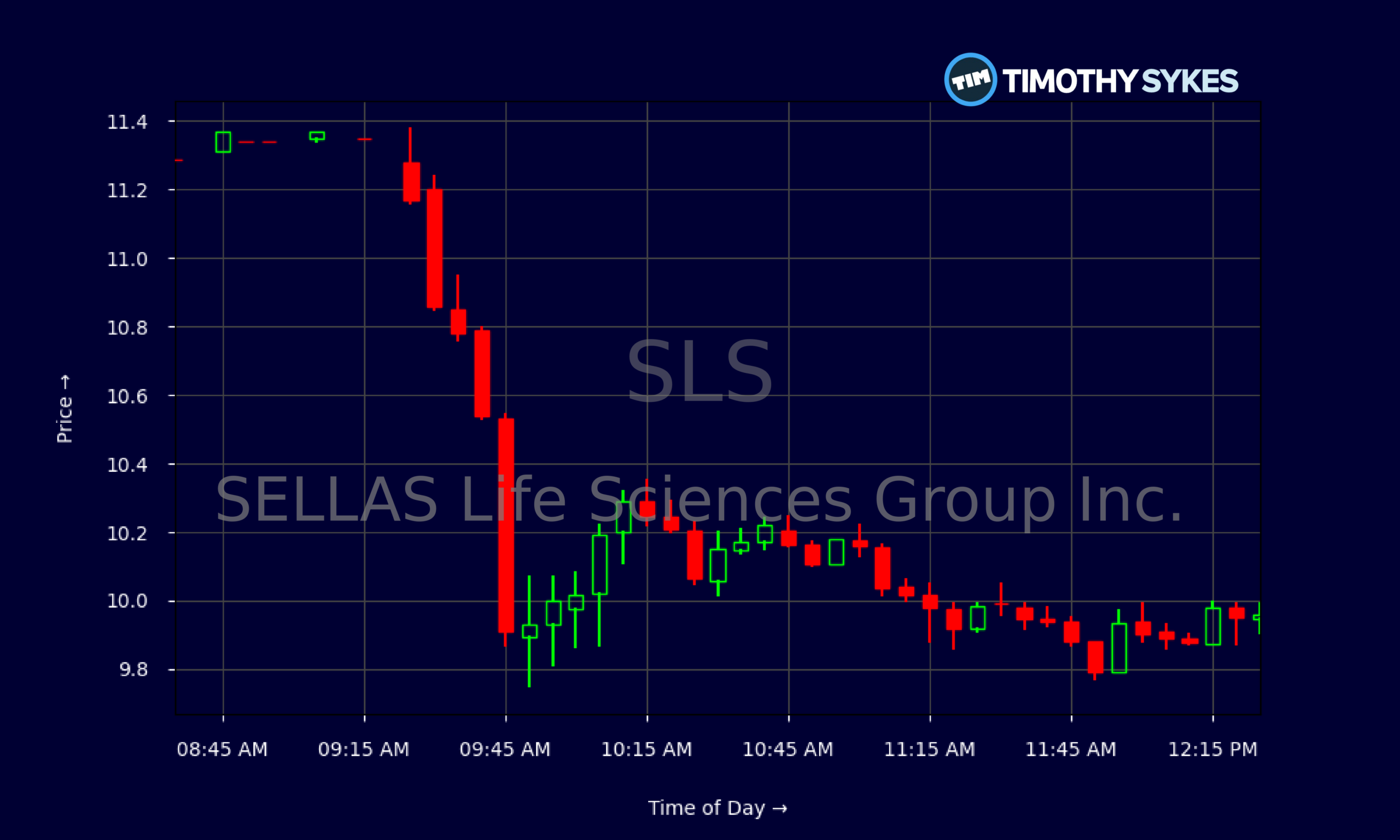
Live Update At 12:32:36 EDT: On Friday, October 16, 2026 SELLAS Life Sciences Group Inc. stock [NASDAQ: SLS] is trending down by -12.57%! Discover the key drivers behind this movement as well as our expert analysis in the detailed breakdown below.
Quick Financial Overview
For active traders, SLS is a classic high-risk biotech story: plenty of cash, no product revenue, and a binary clinical catalyst now tangled up with legal noise. SELLAS Life Sciences Group ended Q2 2026 with about $138.3M in cash and just $7.7M in total liabilities, giving SLS a very strong current ratio near 19. On paper, the balance sheet looks cushioned for a development-stage name.
But the income statement shows why the market treats SLS as a speculative vehicle. Net loss for the quarter was about $9.6M, driven mainly by $6.3M in research and $4.4M in G&A. With roughly 201.9M shares outstanding and no revenue, valuation measures like price‑to‑book above 17 and deeply negative returns on equity flag that traders are paying for future hopes around GPS, not current earnings power.
More Breaking News
The recent multi-day chart tells the story of confidence leaking out. In late September, SLS regularly closed above $11.50–$12.00. By 2026/10/16, the stock opened at $11.20 and faded to close near $9.92, breaking the prior $11–$12 consolidation. Intraday, SLS tried to hold above $11 at the open, then sold hard into the high $9s with shallow bounces, showing supply on every push. For momentum traders, that is a shift from buy-the-dip to sell-the-rip behavior.
Why Traders Are Watching SLS Now
SLS is back on radar because the story is no longer just clinical. It is legal. Pomerantz LLP, a well-known securities class-action firm, has opened an investigation into SELLAS Life Sciences over potential securities fraud and other unlawful practices. The focus: how SLS handled disclosure around its Phase 3 Galinpepimut‑S (GPS) trial.
According to multiple reports, the GPS study was designed with a pre‑specified trigger — the 80th patient death — for a key look at the data. A news outlet reported that this 80th‑death event had been reached, but SLS had not released corresponding Phase 3 results. That gap between the reported trigger and any formal data release is what lit the fuse.
The market reaction was swift. After the disclosure‑timing story hit, SLS dropped about 13% in one session to roughly $13.21 on 2026/08/28. Since then, the daily chart has shown a slow bleed, with SELLAS Life Sciences failing to regain its prior range. Each bounce toward $12 has been sold, and the latest close under $10 signals traders are discounting more bad news or at least more uncertainty.
Pomerantz is now exploring a potential class action on behalf of SLS traders. The firm is asking whether SELLAS Life Sciences and its executives misled the market or violated disclosure rules tied to this GPS trial event. For traders, this matters even beyond the clinical outcome. Legal overhang can weigh on a stock for months or years, pressuring valuations and adding headline risk to every press release.
This is why day traders and swing traders in the Sykes community gravitate to names like SLS at moments like this. You get volume, emotion, and clear catalysts: possible legal updates, any GPS data release, or corporate responses. But you also get landmines. The same uncertainty that creates range for scalps can crush anyone overstaying a position.
Conclusion
For SELLAS Life Sciences, the GPS cancer vaccine was supposed to be the main story. Now SLS is dealing with a different narrative — one about trust, timing, and transparency. The Pomerantz LLP investigation into potential securities fraud and other unlawful practices around the Phase 3 GPS trial has turned SLS into a case study in how governance can collide with science.
Financially, SELLAS Life Sciences still has a sizable cash cushion relative to its burn, which helps SLS avoid immediate funding panic. But the market is no longer paying up for that. The slide from a stable $11–$12 band to a sub‑$10 close shows traders are repricing the risk around both the trial and any future dilution if legal costs mount. Until SLS addresses the 80th‑death trigger timing and shares real Phase 3 GPS data, every rally is likely to face skepticism.
For active traders, that means treating SLS strictly as a trading vehicle, not a belief system. Map your levels. Respect the volatility. Stay aware that a single headline — a Pomerantz update, a company statement, or a data drop — can rip SLS in either direction. As Tim Sykes likes to remind traders, “The market doesn’t care about your opinion, only your risk management.” As millionaire penny stock trader and teacher Tim Sykes, says, “You must adapt to the market; the market will not adapt to you.”. In a name like SELLAS Life Sciences, that rule matters even more.
This is stock news, not investment advice. Timothy Sykes News delivers real-time stock market news focused on key catalysts driving short-term price movements. Our content is tailored for active traders and investors seeking to capitalize on rapid price fluctuations, particularly in volatile sectors like penny stocks. Readers come to us for detailed coverage on earnings reports, mergers, FDA approvals, new contracts, and unusual trading volumes that can trigger significant short-term price action. Some users utilize our news to explain sudden stock movements, while others rely on it for diligent research into potential investment opportunities.
Dive deeper into the world of trading with Timothy Sykes, renowned for his expertise in penny stocks. Explore his top picks and discover the strategies that have propelled him to success with these articles:
- Penny Stocks Trading Guide
- Best Penny Stocks Under $1 to Buy Today
- Top 8 Penny Stocks to Watch on Robinhood
Once you’ve got some stocks on watch, elevate your trading game with StocksToTrade the ultimate platform for traders. With specialized tools for swing and day trading, StocksToTrade will guide you through the market’s twists and turns.
Dig into StocksToTrade’s watchlists here:





Leave a reply