

RTX Corporation stocks have been trading up by 3.35 percent amid optimism over expanding defense contracts and government spending
Key Takeaways Traders Need To Know
- Raytheon, part of RTX, landed a five‑year U.S. Navy deal, plus two option years, worth up to $24.4B for SM‑6 multi‑mission interceptors, boosting long‑term revenue visibility.
- A separate U.S. Defense Department award gives RTX up to $6.3B over seven years for SM‑3 Block IB missile interceptors to refill missile‑defense inventories after combat use.
- RTX’s Raytheon unit also won a sole‑source U.S. Air Force contract with an $8B ceiling to modernize Strategic Communications Terminals for nuclear forces through 2036.
- Counter‑drone demand is ramping, with $729M in LIDS system contracts to the U.S. Army, Qatar, and Jordan, and RTX investing to scale Coyote interceptor output.
- On the Street, Barclays started RTX at Overweight with a $223 target, Citi kept a Buy with a $240 target, while others trimmed targets but stayed positive overall.
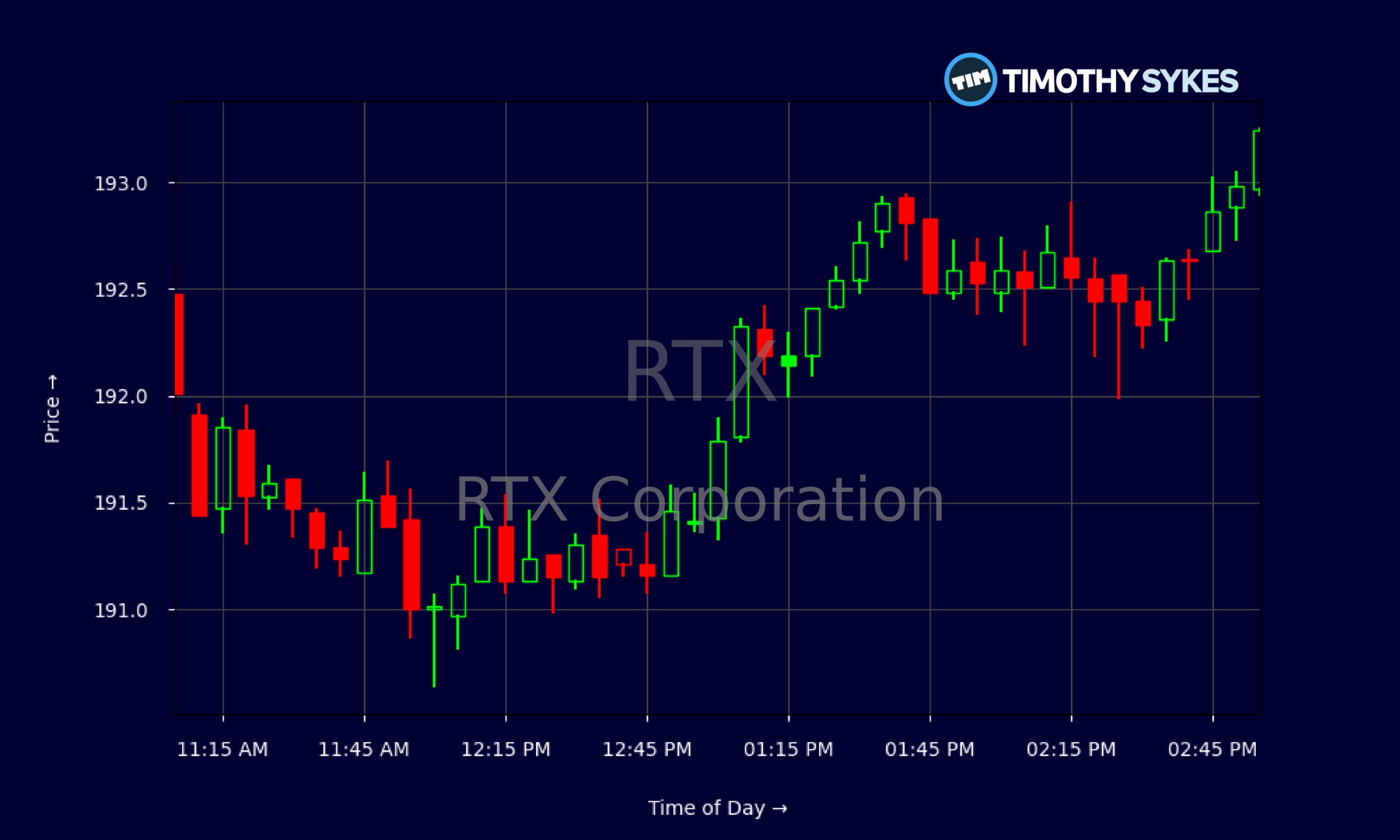
Live Update At 15:05:10 EDT: On Friday, October 16, 2026 RTX Corporation stock [NYSE: RTX] is trending up by 3.35%! Discover the key drivers behind this movement as well as our expert analysis in the detailed breakdown below.
Quick Financial Overview
RTX is trading like a slow but steady climber. Over the last few weeks, the stock has largely held in the high‑$180s to low‑$190s, with the latest close around $193.16 after bouncing from a brief dip near $183. That tells traders RTX has buyers defending the mid‑$180s and momentum building back toward prior highs.
Intraday action shows tight 5‑minute candles between roughly $191 and $193 for much of the afternoon, signaling controlled, institutional‑style trading rather than wild retail spikes. For short‑term traders, that often means breakouts and breakdowns matter more than random noise.
More Breaking News
Fundamentally, RTX just printed a strong quarter: about $24.7B in revenue and $2.25B in net income from continuing operations, with free cash flow of roughly $2.82B. Margins are solid for a defense prime — EBIT margin above 10% and EBITDA margin near 15%. The balance sheet carries meaningful debt, but leverage looks manageable with interest coverage near 9 times. A price‑to‑sales ratio around 2.7 and a P/E in the low‑30s say RTX is not cheap, but the market is paying up for durable cash flows, a $2.92 annual dividend, and a deep backlog supported by these new contracts.
Why Traders Are Watching RTX Right Now
RTX is in the middle of one of the most contract‑heavy streaks we’ve seen in a while, and traders are taking notice. The headline win is the U.S. Navy deal worth up to $24.4B for SM‑6 multi‑mission interceptors. That program gives RTX multi‑year visibility in both offensive strike and missile‑defense roles — the kind of backlog that can anchor revenue and cash flow for years.
On top of that, RTX’s Raytheon unit nailed an up‑to‑$6.3B SM‑3 Block IB interceptor contract and another sole‑source U.S. Air Force award with an $8B ceiling to support Strategic Communications Terminals for nuclear command and control through 2036. When a program is sole‑source and tied to nuclear communications, that’s moat territory. For traders, it means low competitive risk and highly sticky revenue.
Counter‑drone demand is a second leg of the story. RTX secured $729M in contracts for its LIDS system, with Coyote interceptors heading not only to the U.S. Army but also Qatar and Jordan. That marks the first international sales of this architecture and justifies RTX’s decision to expand Coyote production. Add in successful Coyote Block 2C+RM tests — going from concept to testing in only 15 months — and you get a clear read: RTX is not just milking legacy programs, it’s iterating fast where the threat is evolving.
Then there’s the space angle. RTX won a U.S. Space Force Ground‑Based Radar Digitization contract to modernize global early‑warning radars, plus a Navy research deal to upgrade radar software and algorithms through 2031. This pushes RTX deeper into space sensing and digital radar, fields with high barriers and long lifecycles.
Analysts are mostly lining up behind this story. Barclays launched coverage at Overweight with a $223 target, and Citi put RTX on a “90‑day catalyst watch” with a $240 target. Yes, Bernstein, BNP Paribas, and RBC trimmed their targets into the low‑ to mid‑$200s, but they all kept positive ratings. For active traders, that combination — rising contract wins, constructive research, and only modest target cuts — sets up a backdrop where dips often get bought.
Conclusion
RTX now looks like a textbook “contract cycle meets chart support” setup that active traders love to study. The stock’s recent pullback into the mid‑$180s drew support, while the tape rebuilt toward the low‑$190s just as the flow of big defense wins accelerated. With SM‑6, SM‑3, AMRAAM, LIDS, and nuclear communications work all stacking up, RTX’s backlog story is getting harder for the market to ignore.
At the same time, the Street isn’t blindly euphoric. Target cuts into the low‑$200s show that valuation and execution still matter, even with RTX powered by U.S. Navy, Air Force, and Space Force contracts through the 2030s. Traders need to watch how RTX converts this backlog into margins and free cash flow over the next several quarters, especially around earnings and guidance updates.
For short‑term setups, that means mapping key price levels around the recent range and using volume spikes on contract headlines or earnings to define risk. For swing traders, the cluster of analyst targets well above current prices frames the broader narrative, but as always, timing matters. As millionaire penny stock trader and teacher Tim Sykes, says, “Small gains add up over time; focus on building wealth gradually, not chasing jackpots.” That mindset is crucial when trading around RTX’s contract headlines and price swings, because aggressive chasing can quickly turn a solid plan into an avoidable loss.
Tim Sykes likes to hammer one point: “The market doesn’t care about your opinion, only your preparation.” With RTX, preparation means knowing the contract pipeline, tracking the chart, and being ready to cut losses fast if the thesis cracks. This article is for educational and research purposes only and is not investment advice.
This is stock news, not investment advice. Timothy Sykes News delivers real-time stock market news focused on key catalysts driving short-term price movements. Our content is tailored for active traders and investors seeking to capitalize on rapid price fluctuations, particularly in volatile sectors like penny stocks. Readers come to us for detailed coverage on earnings reports, mergers, FDA approvals, new contracts, and unusual trading volumes that can trigger significant short-term price action. Some users utilize our news to explain sudden stock movements, while others rely on it for diligent research into potential investment opportunities.
Dive deeper into the world of trading with Timothy Sykes, renowned for his expertise in penny stocks. Explore his top picks and discover the strategies that have propelled him to success with these articles:
- Penny Stocks Trading Guide
- Best Penny Stocks Under $1 to Buy Today
- Top 8 Penny Stocks to Watch on Robinhood
Once you’ve got some stocks on watch, elevate your trading game with StocksToTrade the ultimate platform for traders. With specialized tools for swing and day trading, StocksToTrade will guide you through the market’s twists and turns.
Dig into StocksToTrade’s watchlists here:





Leave a reply