

Leverage Shares 2X Short SPCX Daily fell as stocks have been trading down by -16.11 percent amid sharply negative sentiment.
Key Takeaways
- SSPC has ripped from roughly $6.50 to the high $8s this month, showing strong momentum that short-term traders track closely.
- Recent SSPC daily candles highlight wide trading ranges, signaling elevated volatility and opportunity for disciplined day traders.
- Intraday SSPC action centers around the low $7s, pointing to a key battle zone between bulls and bears.
- With no clear fundamental ratios, SSPC trades more like a pure price-action product than a traditional equity story.
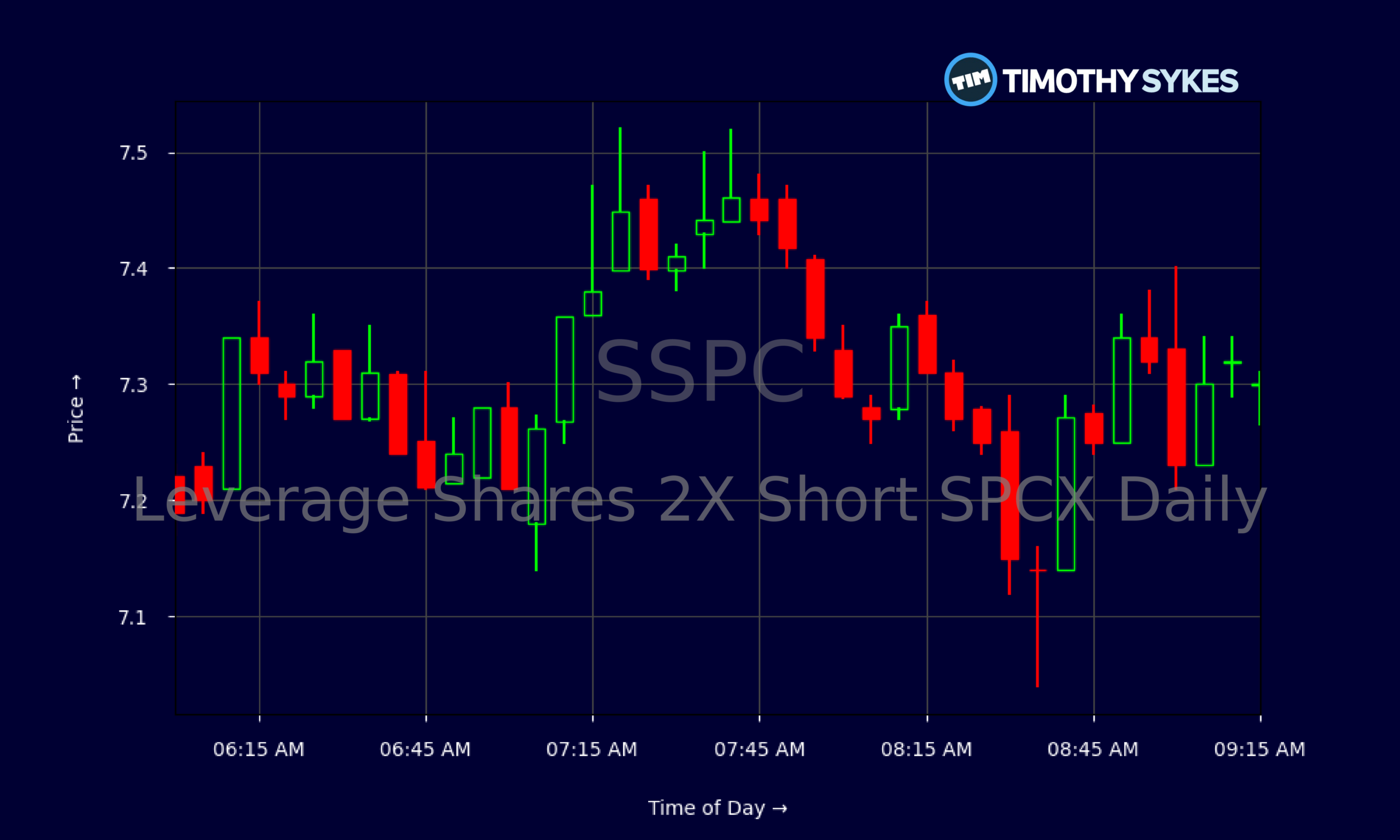
Live Update At 09:19:39 EDT: On Wednesday, October 21, 2026 Leverage Shares 2X Short SPCX Daily stock [BATS Global Markets: SSPC] is trending down by -16.11%! Discover the key drivers behind this movement as well as our expert analysis in the detailed breakdown below.
Quick Financial Overview
Leverage Shares 2X Short SPCX Daily, ticker SSPC, is a leveraged trading product, not a traditional operating company. That alone changes how traders should read the “financials.” There is no revenue line, no profit margin, and no leverage ratio in the usual sense. The key inputs for SSPC are price action, volatility, and how it tracks its underlying exposure.
Over the last several weeks, SSPC has swung between the mid-$6s and just under $9. That kind of range, in a relatively short timeframe, is what momentum traders look for. SSPC’s daily data show a run from about $6.56 to intraday highs above $9 before a modest pullback into the high $8s. For a 2X short product, this tells traders the underlying theme has seen sharp swings and SSPC is responding as designed.
More Breaking News
Because the key ratio fields are essentially blank, traders should treat SSPC as a tactical trading vehicle. Price, volume, and intraday levels matter far more than balance sheet math. In short, SSPC is a chart-first product where risk management and timing rule the game.
Why Traders Are Watching SSPC Price Action
SSPC has given active traders exactly what they crave lately: clean moves, big ranges, and repeatable intraday levels. The daily chart for Leverage Shares 2X Short SPCX Daily shows a textbook momentum sequence. SSPC pushed up from around $7.19–$7.33 on earlier days to peaks above $9.20, then cooled into the high $8s. That rise, pullback, and potential consolidation range is a classic setup that many pattern traders study.
The candles around 2026/10/02 to 2026/10/20 show SSPC repeatedly testing the $8.50–$9.20 zone. Each push higher drew in breakout traders, while every fade back toward $8 brought in dip-buying scalpers. When a leveraged product like SSPC respects levels this clearly, it often becomes a go-to ticker on many trading screens.
Zooming into the intraday data, SSPC has been grinding around the $7.20–$7.40 area, with frequent little spikes toward $7.50. That creates a tight battleground where scalpers can risk a few cents to potentially capture 20–40 cent swings. For short-term traders, those are attractive risk/reward pockets.
Because SSPC is 2X short exposure, every move reflects amplified sentiment in the underlying theme. When the underlying weakens, SSPC can accelerate to the upside. When the underlying firms up, SSPC can give back gains quickly. That leverage is a double-edged sword; experienced traders in the Tim Sykes community treat SSPC as a vehicle for quick tactical trades, not long holds.
Conclusion
SSPC, Leverage Shares 2X Short SPCX Daily, currently trades like a pure momentum vehicle built for nimble traders. The run from the mid-$6s to the high $8s, with peaks above $9, shows strong directional energy. The recent closes near $8.69 and $8.68 hint at consolidation after a big push, while earlier spikes toward $9.23 and $9.47 mark clear resistance zones that many chart-watchers will track.
On the shorter time frame, the intraday SSPC tape clustered around $7.20–$7.40 tells traders where the tug-of-war has been most intense. If SSPC holds above those prior intraday pivot areas, many day traders will look for renewed tests of the recent highs. If it loses those levels, some will shift toward fading bounces instead of chasing strength.
For leveraged products like SSPC, the message from veteran traders is always the same: understand the product, respect the leverage, and cut losses fast. As millionaire penny stock trader and teacher Tim Sykes, says, “It’s better to go home at zero than to go home in the red.”. As Tim Sykes likes to remind traders, “Your job is not to be right, your job is to manage risk.” Used that way, SSPC becomes a real-time classroom for studying volatility, trend, and discipline — all for educational and research purposes only, never as a substitute for your own due diligence.
This is stock news, not investment advice. Timothy Sykes News delivers real-time stock market news focused on key catalysts driving short-term price movements. Our content is tailored for active traders and investors seeking to capitalize on rapid price fluctuations, particularly in volatile sectors like penny stocks. Readers come to us for detailed coverage on earnings reports, mergers, FDA approvals, new contracts, and unusual trading volumes that can trigger significant short-term price action. Some users utilize our news to explain sudden stock movements, while others rely on it for diligent research into potential investment opportunities.
Dive deeper into the world of trading with Timothy Sykes, renowned for his expertise in penny stocks. Explore his top picks and discover the strategies that have propelled him to success with these articles:
- Penny Stocks Trading Guide
- Best Penny Stocks Under $1 to Buy Today
- Top 8 Penny Stocks to Watch on Robinhood
Once you’ve got some stocks on watch, elevate your trading game with StocksToTrade the ultimate platform for traders. With specialized tools for swing and day trading, StocksToTrade will guide you through the market’s twists and turns.
Dig into StocksToTrade’s watchlists here:





Leave a reply