
Intel Corporation stocks have been trading down by -2.27 percent amid reports of weakening PC demand and chip oversupply concerns.
Key Takeaways
- Q4 2026 guidance of $15–$16B is over $1B below Street estimates, tied to weak PC demand, supply constraints, and manufacturing bottlenecks.
- Multiple shareholder-rights and securities firms, including Levi & Korsinsky, launched investigations into Intel after a roughly 25% premarket share-price drop on the guidance.
- These probes question whether Intel properly disclosed PC-demand softness and manufacturing risks after previously stressing strong, sustainable AI-driven demand.
- Major brokers slashed INTC price targets while mostly sticking with Neutral/Hold ratings, flagging sharp PC-market deterioration and lower near-term earnings power.
- Analysts see Foundry and Data Center strength, but many push any real recovery story for INTC out to 2H 2027, leaving short-term traders focused on volatility, not growth.
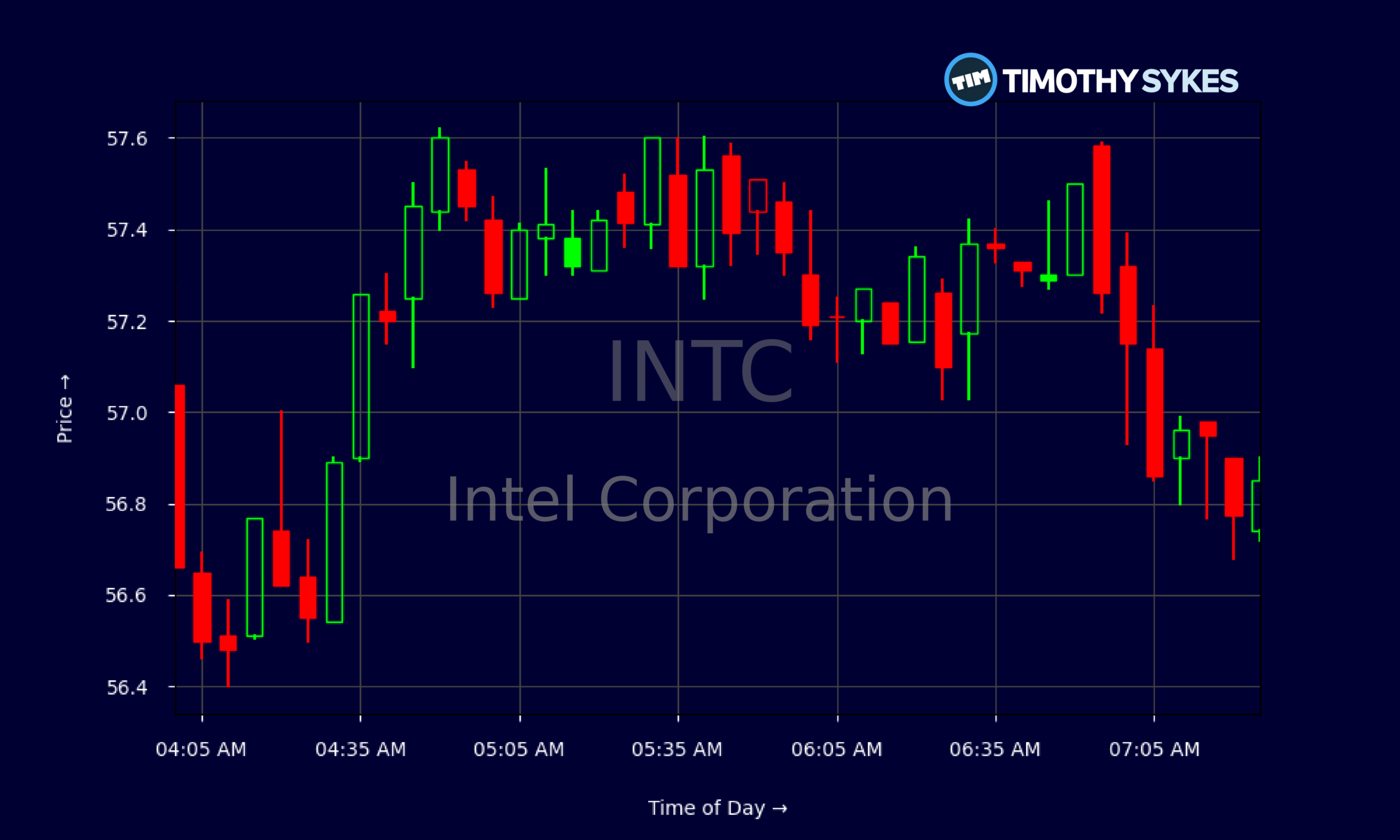
Live Update At 07:32:50 EST: On Thursday, November 05, 2026 Intel Corporation stock [NASDAQ: INTC] is trending down by -2.27%! Discover the key drivers behind this movement as well as our expert analysis in the detailed breakdown below.
Quick Financial Overview
For active traders, INTC now looks like a textbook sentiment flip on a big-cap name. Just weeks ago, the stock was trading above $100; by 2026/11/04 it closed near $58.27, essentially cutting the quote in half in a hurry. That’s the kind of reset that rewrites every trading plan.
The daily chart shows a brutal gap-and-slide from the $90s down into the $60s and then high $50s as the weak Q4 2026 outlook landed. Intraday, INTC is chopping in a tight $56–$58 premarket band, signaling consolidation after the shock but no real bounce yet. Think of it like a rollercoaster that just finished the big drop and is now rattling sideways.
More Breaking News
Fundamentally, Intel Corporation is still a revenue machine at about $52.85B over the last year, but profitability is under pressure. Profit margins are negative, returns on equity and assets are in the red, and the price-to-sales near 9.7 suggests traders had been paying a rich multiple for an AI turnaround that now looks delayed. Debt levels are manageable, with a current ratio of 1.6 giving some liquidity cushion, yet the story for traders is clear: earnings power lags the old valuation, and the chart finally caught up.
Why Traders Are Watching INTC Now
The main catalyst dragging INTC into every watchlist is the combination of weak guidance and legal overhang. Intel guided Q4 2026 revenue to $15–$16B, more than $1B below the roughly $17B Wall Street expected. Management blamed persistent PC-market weakness, supply constraints, manufacturing bottlenecks, and even cash-burn concerns. For a name like Intel Corporation, that is not a minor tweak — it’s a reset.
That reset hammered the stock, triggering roughly a 24.8%–25% premarket plunge and a 27%–28% intraday slide around the Q3 print. When a mega-cap like INTC trades like a small-cap biotech on bad news, momentum traders show up. Volatility is the product here.
But the hits kept coming. Levi & Korsinsky and other shareholder-rights firms launched securities-law investigations into Intel Corporation, focusing on whether Intel properly flagged PC-demand softness and manufacturing bottleneck risks ahead of the quarter. The core question: did prior “strong and sustainable” AI-demand messaging line up with the internal view on PCs and supply? That headline risk now hangs over every bounce attempt in INTC.
Wall Street is lining up on the cautious side. DA Davidson cut its Intel target from $100 to $70, calling out strong Foundry and Data Center trends but serious weakness in Client Computing. Jefferies slashed from $120 to $85, citing a major reset for the December quarter with softer client revenue and lower gross margins as PC channels work down inventory. Susquehanna and Morgan Stanley both took targets down into the mid-$70s, tying the guidance miss to broader PC-market deterioration and even saying INTC still looks expensive on next year’s earnings.
Other firms, like Cantor Fitzgerald and Truist, highlight severe memory, wafer, and substrate constraints, plus an explosion at Intel’s Israeli fab, as extra pressure points. Several of these analysts push any real AI- and foundry-driven recovery for Intel Corporation out to 2H 2027. That leaves short-term traders treating INTC less like a growth story and more like a volatility vehicle around each new headline.
Conclusion
For traders who live on momentum and catalysts, INTC now checks both boxes. A stock that once felt “too big to move” just dropped more than 25% in one shot on guidance and is now shadowed by shareholder-rights and securities-law probes. Add in a wall of reduced price targets and a PC market that Intel expects to stay soft into at least the first half of 2027, and you get a crowded battleground chart.
This is not a calm, slow-burn turnaround narrative anymore. It’s an emotional tape. Every new update on PC demand, supply constraints, or the Levi & Korsinsky investigation can spark another sharp leg up or down in Intel Corporation shares. Short-term traders in the Tim Sykes community typically treat that kind of backdrop with a simple mantra: react, don’t predict.
The mixed fundamentals matter, too. INTC still generates strong cash flow, but negative margins, heavy capex, and a delayed recovery path mean valuation questions will not fade quickly. For many, this becomes a trade-the-waves setup rather than a “set and forget” holding. In that kind of fast-moving, headline-driven environment, risk management becomes the real edge for active traders. As millionaire penny stock trader and teacher Tim Sykes says, “It’s not about how much money you make; it’s about how much money you keep.”
As Tim Sykes likes to say, “Volatile markets create opportunities, but only for traders who respect risk and cut losses quickly.” Intel Corporation has just moved from sleepy blue chip to live-wire ticker. How traders handle INTC from here will depend less on hope for AI in 2029 and more on disciplined execution in the next few days and weeks.
This is stock news, not investment advice. Timothy Sykes News delivers real-time stock market news focused on key catalysts driving short-term price movements. Our content is tailored for active traders and investors seeking to capitalize on rapid price fluctuations, particularly in volatile sectors like penny stocks. Readers come to us for detailed coverage on earnings reports, mergers, FDA approvals, new contracts, and unusual trading volumes that can trigger significant short-term price action. Some users utilize our news to explain sudden stock movements, while others rely on it for diligent research into potential investment opportunities.
Dive deeper into the world of trading with Timothy Sykes, renowned for his expertise in penny stocks. Explore his top picks and discover the strategies that have propelled him to success with these articles:
- Penny Stocks Trading Guide
- Best Penny Stocks Under $1 to Buy Today
- Top 8 Penny Stocks to Watch on Robinhood
Once you’ve got some stocks on watch, elevate your trading game with StocksToTrade the ultimate platform for traders. With specialized tools for swing and day trading, StocksToTrade will guide you through the market’s twists and turns.
Dig into StocksToTrade’s watchlists here:





Leave a reply