

FTC Solar Inc. stocks have been trading up by 4.37 percent amid upbeat sentiment on expanding solar infrastructure demand.
Key Takeaways
- Tandem solar panels nearing commercialization promise about 25% more energy output, with FTC Solar (FTCI) highlighted among names that may benefit from advanced module and balance‑of‑system demand.
- A revised credit agreement pushes a $5M principal repayment to 2027 and suspends key covenants through 2026, giving FTC Solar more liquidity and room to operate.
- An upcoming Q3 2026 earnings call will give traders a fresh look at FTCI’s solar tracker, software, and engineering business trends.
- Recent Form 4 filings show insider or major-holder ownership changes in FTCI, but with no detail on size or whether they were buys or sells.
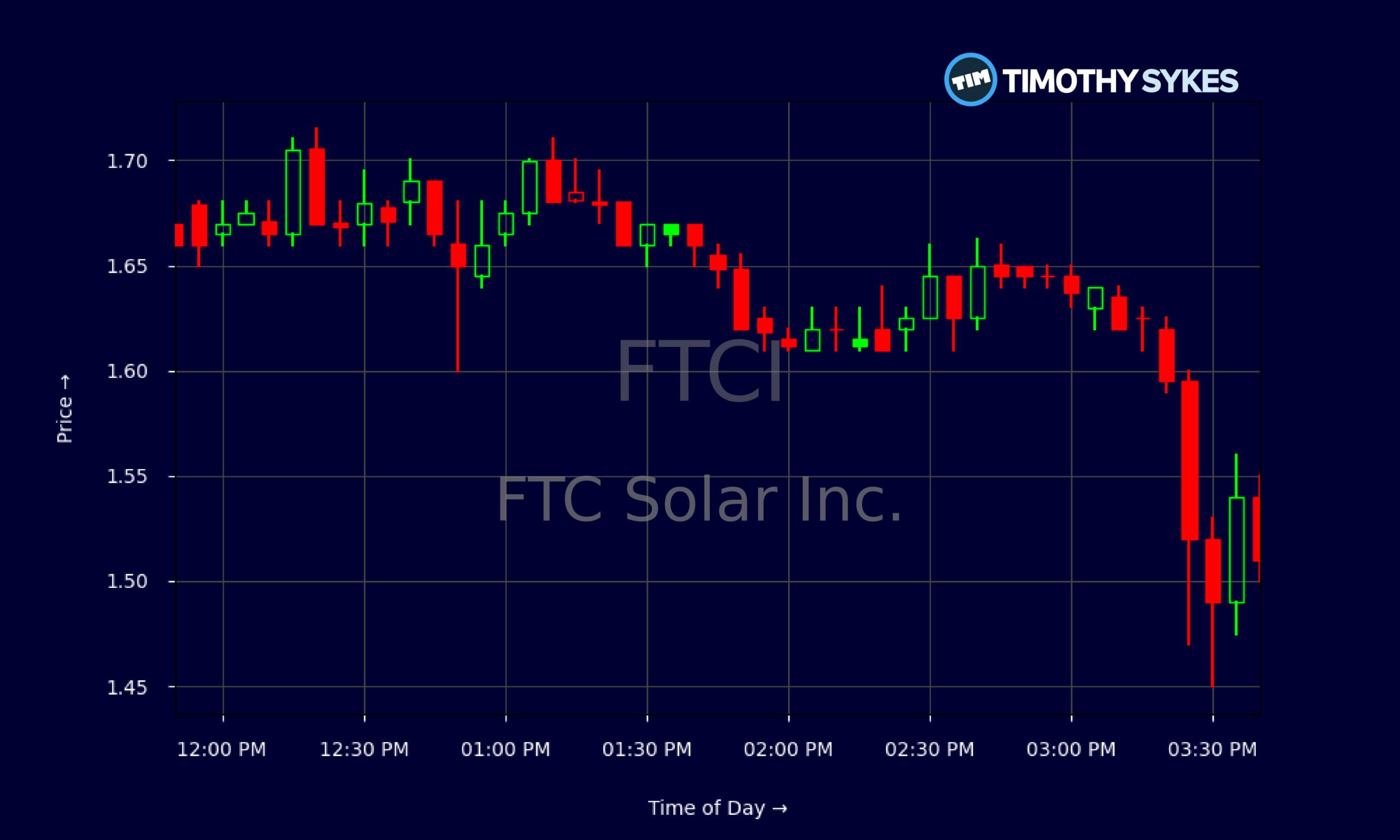
Live Update At 15:46:50 EST: On Wednesday, November 04, 2026 FTC Solar Inc. stock [NASDAQ: FTCI] is trending up by 4.37%! Discover the key drivers behind this movement as well as our expert analysis in the detailed breakdown below.
Quick Financial Overview
FTCI has been trading like a small-cap battleground name. In late October 2026, FTC Solar bounced between roughly $1.30 and $1.94, then slid from $1.83 on 2026/10/12 to $1.505 by 2026/11/04. That’s a sharp downtrend on the daily chart, with lower highs and heavy volatility that active traders tend to love — and long-term holders tend to hate.
Intraday on the latest session, FTCI spiked over $2 early before fading hard into the close near $1.50. That kind of round‑trip shows aggressive day-trading and weak conviction in the move. For short-term traders, FTC Solar is clearly a momentum playground, but risk is high when a morning squeeze unwinds this fast.
More Breaking News
Fundamentals explain some of the hesitation. FTCI’s revenue sits around $99.7M, but gross margin is about 3%, and profit margins are deeply negative, with EBIT margin near -38%. Returns on assets are worse than -50%, and book value is negative. Liquidity is tight: a current ratio of 0.9 and quick ratio of 0.6 tell traders the balance sheet needs careful watching. In simple terms, FTC Solar is still fighting to turn a real profit while keeping enough cash to ride out the solar cycle.
Why Traders Are Watching FTC Solar Now
What keeps FTCI on watchlists is not today’s income statement, but the setup around future demand and balance‑sheet breathing room.
On the macro side, The New York Times recently pointed to tandem solar panels — modules that stack materials to squeeze out about 25% more energy than standard panels. This isn’t FTC Solar turning into a cell manufacturer. Instead, it’s about more efficient projects needing smart, precise tracker systems and balance‑of‑system hardware to capture that extra output. FTC Solar, as a tracker, software, and engineering player, sits in that supply chain.
If tandem modules accelerate deployments, utility‑scale developers will care a lot about yield, angle, and uptime. That’s exactly where FTCI’s hardware and software pitch comes in. Traders looking ahead see a potential tailwind: more megawatts on the ground can mean more demand for tracking systems, even if module makers grab the headlines.
At the same time, FTC Solar just bought itself time on the balance sheet. By amending its credit agreement, the company pushed a $5M principal payment out to 2027, suspended financial covenants for the rest of 2026, and set lighter cash and EBITDA tests that only kick in starting 2027. For FTCI, that reduces near‑term pressure and lets management focus on operations and orders instead of scrambling around the bank line every quarter.
There are also multiple Form 4 filings showing insider or major‑holder changes in FTCI ownership. Because the disclosures don’t say whether these were buys or sells or how big they were, seasoned traders treat this as noise, not a clean signal. Still, when a name like FTC Solar is this volatile, any hint of insider activity keeps it on radar screens.
Conclusion
FTCI right now is classic high‑risk, high‑potential territory. On one hand, the chart shows a stock that repeatedly fails to hold spikes, with intraday moves from above $2 back to the mid‑$1s in a single session. On the other hand, FTC Solar operates in a part of the solar chain that could see real leverage if tandem panels scale, and its amended credit deal gives it more time to execute.
The latest financials show negative margins, thin gross profit, and a weak current ratio. None of that screams safety. But for active traders, safety is rarely the point. Volatility, clear news catalysts, and sector narratives are what matter, and FTCI has all three right now — a New York Times‑highlighted technology shift, a meaningful credit amendment, and an upcoming Q3 2026 earnings call that can reset expectations.
The key is discipline. As Tim Sykes loves to say, “Cut losses quickly, because hoping is not a strategy.” That idea goes hand in hand with another core trading principle: adapting your approach to what the market is actually doing instead of what you wish it would do. As millionaire penny stock trader and teacher Tim Sykes, says, “You must adapt to the market; the market will not adapt to you.”. FTC Solar is a name where that mindset is essential. For educational and research-focused traders, the game plan is simple: study the FTCI chart, track the news around tandem panels and liquidity, and let price action confirm the story before committing to any trading thesis.
This is stock news, not investment advice. Timothy Sykes News delivers real-time stock market news focused on key catalysts driving short-term price movements. Our content is tailored for active traders and investors seeking to capitalize on rapid price fluctuations, particularly in volatile sectors like penny stocks. Readers come to us for detailed coverage on earnings reports, mergers, FDA approvals, new contracts, and unusual trading volumes that can trigger significant short-term price action. Some users utilize our news to explain sudden stock movements, while others rely on it for diligent research into potential investment opportunities.
Dive deeper into the world of trading with Timothy Sykes, renowned for his expertise in penny stocks. Explore his top picks and discover the strategies that have propelled him to success with these articles:
- Penny Stocks Trading Guide
- Best Penny Stocks Under $1 to Buy Today
- Top 8 Penny Stocks to Watch on Robinhood
Once you’ve got some stocks on watch, elevate your trading game with StocksToTrade the ultimate platform for traders. With specialized tools for swing and day trading, StocksToTrade will guide you through the market’s twists and turns.
Dig into StocksToTrade’s watchlists here:





Leave a reply