

Grab Holdings Limited stocks have been trading up by 7.07 percent following upbeat news on regional super-app expansion prospects.
Key Takeaways
- Barclays cut its price target on Grab Holdings from $5 to $4 but kept an Overweight rating, pointing to solid core performance despite macro pressure like rising fuel costs.
- JPMorgan lowered its GRAB price target from $5.90 to $4.80 while reiterating Overweight, signaling ongoing positive conviction with moderated expectations.
- Barclays’ $4 target sits below a broader street mean near $6.04, where most analysts still rate GRAB a Buy.
- The company is expanding its ecosystem with a 60% stake in Advance Intelligence’s digital financial services arm for $1.49B and a $600M deal for Delivery Hero’s Taiwan operations.
- Taiwan’s Fair Trade Commission blocked the Foodpanda Taiwan acquisition, but GRAB plans to redirect capital to its core Southeast Asia roadmap.
Live Update At 11:32:06 EST: On Monday, November 02, 2026 Grab Holdings Limited stock [NASDAQ: GRAB] is trending up by 7.07%! Discover the key drivers behind this movement as well as our expert analysis in the detailed breakdown below.
Quick Financial Overview
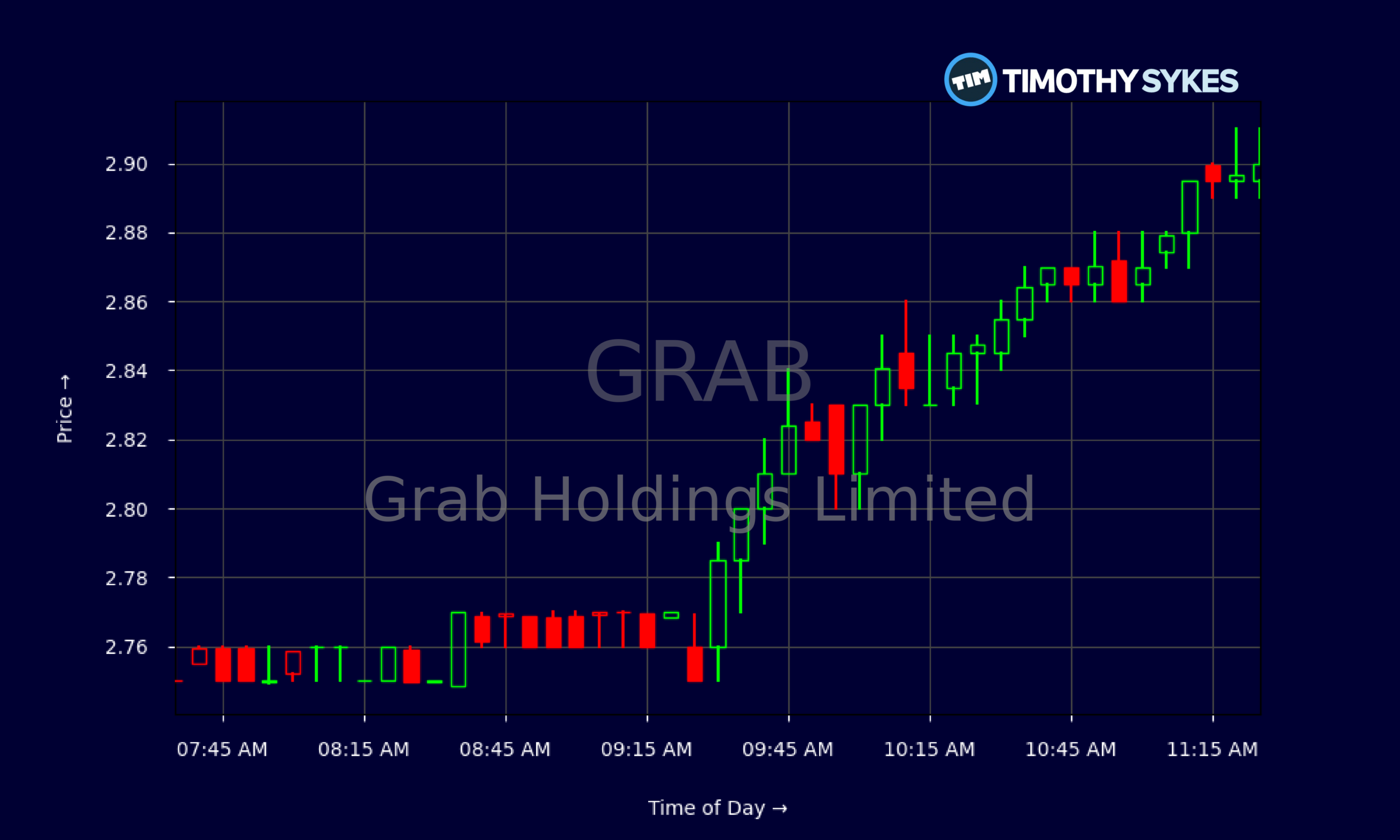
GRAB has been grinding sideways to higher on the chart. Over the recent stretch, the stock slipped from the low‑$3s to around $2.71, then pushed back toward $2.90 and closed near $2.9001 on the latest session. For short‑term traders, that bounce off the high‑$2.60s and $2.70s shows dip buyers are still active.
Intraday, GRAB has been trading in a tight band between roughly $2.74 and $2.91. That narrow 5‑minute range tells you liquidity is decent, but there is no panic or blow‑off yet. Breakouts or breakdowns from this channel tend to matter more when a stock has been this coiled.
More Breaking News
Fundamentally, Grab Holdings generated about $3.37B in revenue, but the pretax profit margin near -169.5% highlights a still‑unprofitable model. Return on assets at -15.88% and return on equity at -24.38% show the business is burning value, not compounding it, at least for now. On the flip side, GRAB has roughly $6.8B in cash and short‑term investments, total assets of $11.98B, and total liabilities of about $5.23B, giving it a solid equity cushion. With price‑to‑book around 1.94, traders are paying just under 2x the company’s net assets, which can anchor downside if sentiment sours.
Why Traders Are Watching GRAB Now
GRAB is in that unusual spot where the chart looks calm, but the news flow is loud. On 2026/10/28, JPMorgan cut its price target from $5.90 to $4.80 yet stuck with an Overweight rating. A week earlier, Barclays had trimmed its target from $5 to $4, also keeping GRAB at Overweight and stressing strong Q3 fundamentals. When two major houses both lower numbers but keep the same bullish rating, that signals a reset in expectations, not a broken story.
For traders, this matters. The street is telling you GRAB’s core Southeast Asia rideshare and delivery engine is still working, but market‑wide valuation multiples have come in. Barclays even pointed to rising fuel prices and macro headwinds, yet still sees upside from current trading levels. Meanwhile, the broader analyst community reportedly holds an average Buy rating and a higher mean target near $6.04, well above where GRAB shares are trading now. That gap between price and street targets can act like a magnet in momentum phases.
On the strategic side, GRAB is not sitting still. Management agreed to buy 60% of Advance Intelligence’s digital financial services platform for $1.49B, pushing deeper into higher‑margin fintech. It also struck a $600M deal for Delivery Hero’s Taiwanese food delivery operations, aiming to expand beyond its home turf. Taiwan’s Fair Trade Commission later blocked the Foodpanda Taiwan deal, a clear reminder that regulators can kill even big, well‑planned moves. Still, GRAB says it will redirect that capital back into its core Southeast Asia roadmap, which tells traders this is a focused, not flailing, pivot.
Put it together and you get a name where execution risk is real, but the growth story and analyst support remain firmly intact.
Conclusion
GRAB now trades around the high‑$2s after pulling back from the low‑$3s, while the street’s key targets cluster in the mid‑$4s and even above $6 on average. That disconnect is what active traders live for. The daily chart shows support building near $2.70, with recent action reclaiming $2.80 and pressing toward $2.90. If GRAB can hold above that prior support zone, any fresh catalyst — earnings, guidance, or deal progress — may trigger a volatility spike.
Under the hood, Grab Holdings is still losing money, and ratios like the -169.5% pretax margin are ugly on paper. But the balance sheet carries about $6.8B in cash against $5.23B in total liabilities, and equity of roughly $6.73B. That gives GRAB time to chase scale, integrate its fintech push, and digest its acquisition strategy, even after the Foodpanda Taiwan rejection.
For traders, the real edge is preparation. GRAB is backed by multiple Overweight and Buy calls, yet priced like a turnaround work‑in‑progress. That’s a recipe for sharp moves in both directions. As Tim Sykes likes to say, “The market rewards the prepared, not the hopeful.” And as millionaire penny stock trader and teacher Tim Sykes says, “It’s not about how much money you make; it’s about how much money you keep.”. Study how GRAB reacts around support and resistance, track news on its ecosystem expansion, and treat every trade as a planned, risk‑managed bet — not a hope‑and‑pray hold.
This is stock news, not investment advice. Timothy Sykes News delivers real-time stock market news focused on key catalysts driving short-term price movements. Our content is tailored for active traders and investors seeking to capitalize on rapid price fluctuations, particularly in volatile sectors like penny stocks. Readers come to us for detailed coverage on earnings reports, mergers, FDA approvals, new contracts, and unusual trading volumes that can trigger significant short-term price action. Some users utilize our news to explain sudden stock movements, while others rely on it for diligent research into potential investment opportunities.
Dive deeper into the world of trading with Timothy Sykes, renowned for his expertise in penny stocks. Explore his top picks and discover the strategies that have propelled him to success with these articles:
- Penny Stocks Trading Guide
- Best Penny Stocks Under $1 to Buy Today
- Top 8 Penny Stocks to Watch on Robinhood
Once you’ve got some stocks on watch, elevate your trading game with StocksToTrade the ultimate platform for traders. With specialized tools for swing and day trading, StocksToTrade will guide you through the market’s twists and turns.
Dig into StocksToTrade’s watchlists here:




Leave a reply