
Fabrinet stocks have been trading up by 17.76 percent following strong earnings and optimistic guidance that boosted investor confidence
Key Takeaways
- Record Q1 FY27 for Fabrinet, with revenue up 51% year-over-year and non-GAAP EPS climbing about 49%, both topping prior guidance on broad-based demand and new product ramps.
- Street-beating Q1 numbers from Fabrinet showed EPS of $4.34 versus $4.19 consensus and revenue of $1.474B versus $1.4B, sparking a sharp after-hours surge in FN trading.
- For Q2, Fabrinet guided EPS to $4.77–$4.92 and revenue to $1.6B–$1.65B, well ahead of Wall Street’s $4.43 EPS and $1.48B revenue estimates.
- The board expanded Fabrinet’s share repurchase authorization by $103M to $637.3M, reinforcing confidence in FN’s cash generation and valuation.
- Major firms cut price targets on Fabrinet but kept Positive or Neutral views, citing strong optical and AI demand while flagging sector risks like tighter credit for big cloud customers.
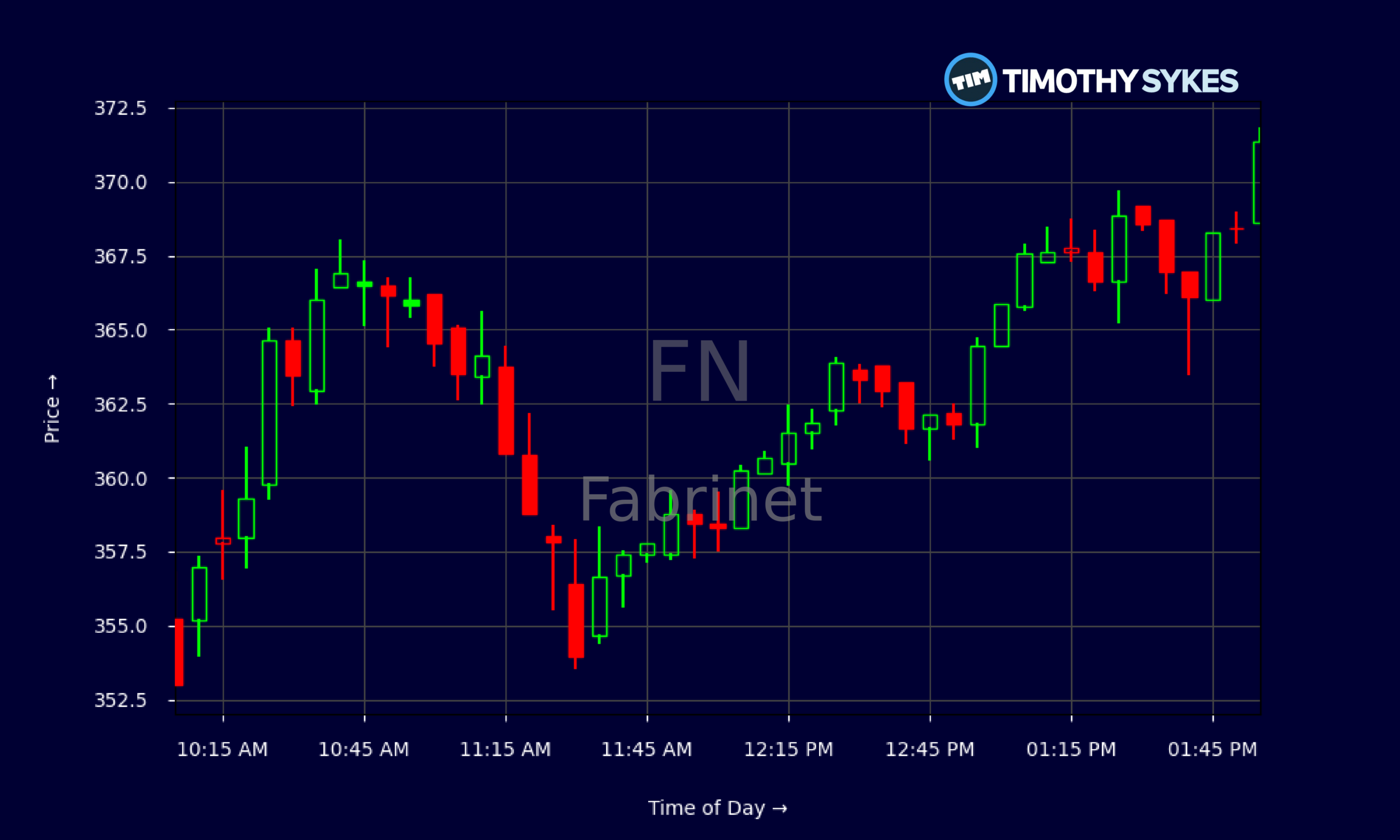
Live Update At 14:02:18 EST: On Tuesday, November 03, 2026 Fabrinet stock [NYSE: FN] is trending up by 17.76%! Discover the key drivers behind this movement as well as our expert analysis in the detailed breakdown below.
Quick Financial Overview
Fabrinet (FN) just posted the kind of numbers that wake traders up. Q1 revenue landed around $1.47B, above the $1.41B consensus, while adjusted EPS hit $4.34 versus $4.19 expected. That sits on top of record Q1 FY27 growth, with revenue up 51% year-over-year and non-GAAP earnings up roughly 49%. For an electronics manufacturing services name, those are hyper-growth style numbers.
The chart backs up the story. FN closed near $370.65 after opening the day around $330, an explosive move that tells you how traders digested the guidance and buyback news. In recent weeks, Fabrinet has pulled back hard from above $500 to the low $300s, but this latest surge shows dip-buyers are very active.
More Breaking News
Intraday, FN showed steady grinding strength, with higher lows through midday and a push toward the session high at $371.79. On the fundamentals side, margins are solid: EBIT margin around 12% and profit margin just above 10%, with return on equity north of 17%. Fabrinet carries effectively no net debt, a current ratio near 2.3, and strong cash on hand, giving FN plenty of room to handle cycles while still returning capital. For traders, this is a high-valuation, high-quality growth story riding a strong trend.
Why Traders Are Watching Fabrinet Now
Fabrinet is turning into one of those “must-watch” names every active trader keeps on the screen. FN didn’t just beat Q1; it torched expectations and then raised the bar again. Management guided Q2 EPS to $4.77–$4.92 versus $4.43 on the Street and revenue to $1.6B–$1.65B versus $1.48B. When a company this tied to optical and AI infrastructure guides that far above consensus, traders pay attention.
The after-hours surge following Fabrinet’s earnings release shows how aggressively the market reprices a growth path like this. Record Q1 FY27 numbers — 51% revenue growth and roughly 49% EPS growth — say this is not a slow, mature hardware story. FN is leaning into new product ramps and broad-based demand across programs, and that’s exactly the kind of acceleration momentum traders hunt.
At the same time, Fabrinet’s board expanded its share repurchase authorization to $637.3M. For FN, that kind of buyback firepower can act like a downside shock absorber during sector pullbacks. Management does not commit that kind of capital unless they’re confident in cash flow.
Wall Street’s take is nuanced. Susquehanna cut its FN target from $850 to $600 but kept a Positive stance, still pointing to AI-driven upside in the semiconductor cycle. JPMorgan and B. Riley trimmed price targets to $465 and $385, respectively, while keeping Neutral ratings and calling out strong optical demand but also macro risks like tighter credit for big cloud spenders. Even with those trims, the broader analyst community reportedly sits at an Overweight stance with an average target around $720.70. For short-term traders, that mix of huge growth, capital returns, and cautious-but-constructive Street views is a recipe for volatility — and opportunity.
Conclusion
For active traders, Fabrinet is now a classic momentum-plus-fundamentals setup. FN has ripped from the low $300s back toward $370 on a powerful earnings beat, bullish Q2 guidance, and a larger buyback plan. The fundamentals show a company executing at a high level: double-digit margins, 50%+ revenue growth, strong returns on capital, and a pristine balance sheet. Those are the ingredients that keep trend traders coming back.
But FN is not a free ride. The valuation is rich, with a P/E in the high 30s and a price-to-sales multiple near 3.75. Price-target cuts from Susquehanna, JPMorgan, and B. Riley remind traders that even great stories can overshoot. Sector risks — especially any slowdown in cloud and AI capex — can flip sentiment quickly. That’s why the FN chart, not just the Fabrinet story, has to be your guide.
For now, Fabrinet sits in that sweet spot where strong earnings, aggressive guidance, and a sizable repurchase authorization line up with a stock recovering from a sharp pullback. As Tim Sykes loves to remind his students, “The market doesn’t reward you for predicting, it rewards you for reacting — trade the price action, not your ego.” As millionaire penny stock trader and teacher Tim Sykes, says, “The goal is not to win every trade but to protect your capital and keep moving forward.”. FN is giving traders a clear message; the job now is to manage risk, watch support and resistance, and react, not hope. This analysis is for educational and research purposes only, not trading advice.
This is stock news, not investment advice. Timothy Sykes News delivers real-time stock market news focused on key catalysts driving short-term price movements. Our content is tailored for active traders and investors seeking to capitalize on rapid price fluctuations, particularly in volatile sectors like penny stocks. Readers come to us for detailed coverage on earnings reports, mergers, FDA approvals, new contracts, and unusual trading volumes that can trigger significant short-term price action. Some users utilize our news to explain sudden stock movements, while others rely on it for diligent research into potential investment opportunities.
Dive deeper into the world of trading with Timothy Sykes, renowned for his expertise in penny stocks. Explore his top picks and discover the strategies that have propelled him to success with these articles:
- Penny Stocks Trading Guide
- Best Penny Stocks Under $1 to Buy Today
- Top 8 Penny Stocks to Watch on Robinhood
Once you’ve got some stocks on watch, elevate your trading game with StocksToTrade the ultimate platform for traders. With specialized tools for swing and day trading, StocksToTrade will guide you through the market’s twists and turns.
Dig into StocksToTrade’s watchlists here:





Leave a reply