
Neurocrine Biosciences Inc. stocks have been trading up by 14.3 percent, driven by strong drug pipeline and regulatory progress.
Key Takeaways
- Q3 for NBIX delivered adjusted EPS of $3.29 and revenue of $1.12B, crushing Street estimates and marking the first quarter with net product sales above $1B.
- Management nudged its FY26 revenue outlook to $2.9B–$2.925B and trimmed SG&A, but the guide still trails the $3.9B consensus, creating debate on growth pacing.
- Neurocrine Biosciences launched a Phase 2 trial of NBI-1117567 in Alzheimer’s cognitive impairment, expanding NBIX’s late-stage pipeline beyond movement disorders.
- Fresh Phase 4 data show INGREZZA more than doubles a clinically meaningful health-improvement threshold, reinforcing the NBIX flagship drug’s real-world value.
- The VYKAT XR story in Prader-Willi syndrome gives NBIX another validated growth pillar in rare disease, supported by an expert publication.
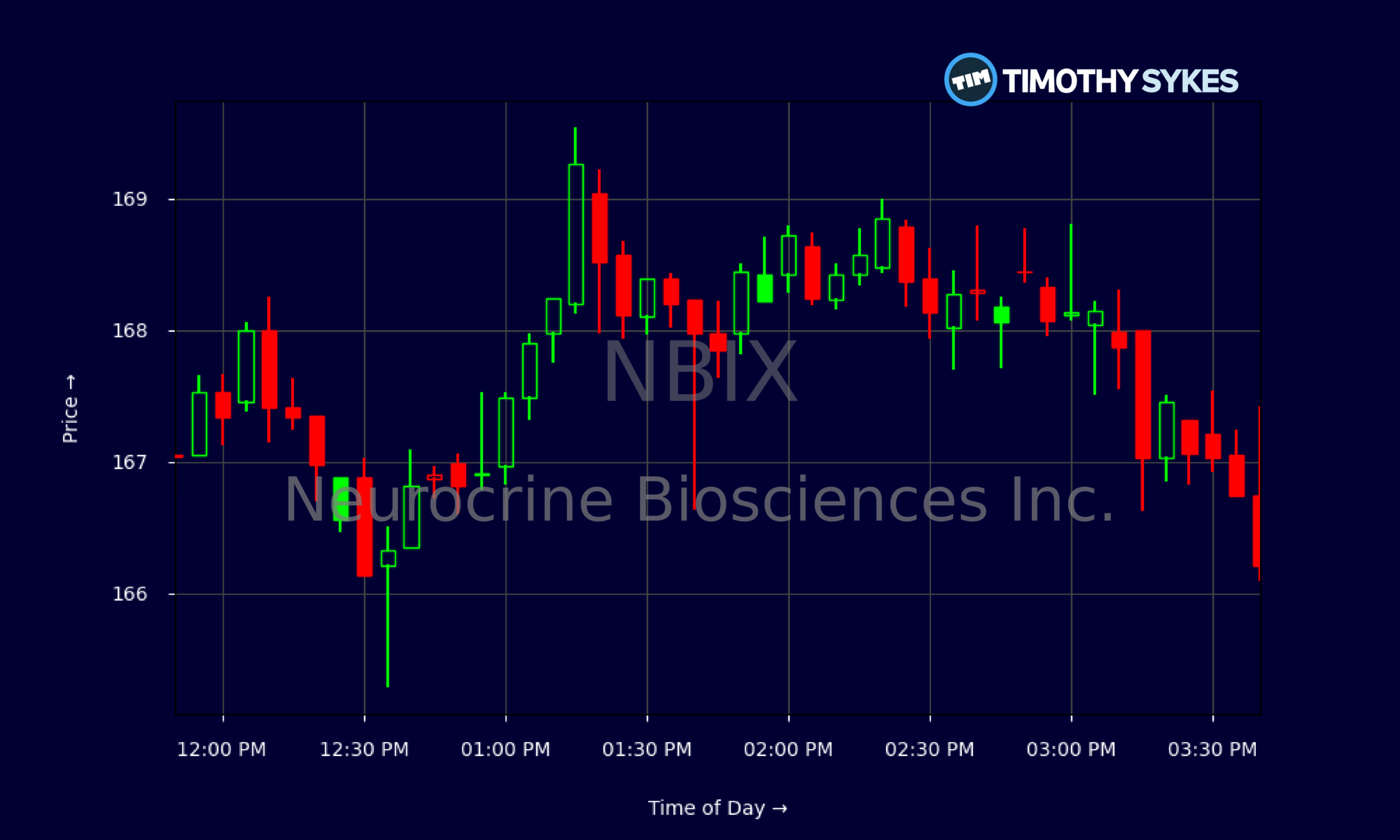
Live Update At 15:46:58 EST: On Tuesday, November 03, 2026 Neurocrine Biosciences Inc. stock [NASDAQ: NBIX] is trending up by 14.3%! Discover the key drivers behind this movement as well as our expert analysis in the detailed breakdown below.
Quick Financial Overview
NBIX has been grinding higher for weeks, and the numbers now show why traders are crowding in. From 2026/10/09 to 2026/11/03, Neurocrine Biosciences stock climbed from the low $140s to a $166.01 close, with a spike day from $145.70 to $166+ right after earnings. That is classic gap-and-hold behavior after a strong catalyst.
On the tape, Friday’s intraday action in NBIX was tight and controlled. After an opening flush, the stock pushed from $159 to above $168, then consolidated in a narrow $166–$168 range most of the afternoon. That tells traders dip buyers were in charge and supply above $170 is the next key test.
Fundamentals back that price action. NBIX just printed Q3 revenue of $1.12B versus $794.9M a year ago, and adjusted EPS of $3.29 versus $2.17. Margins are fat: gross margin around 99%, EBIT margin above 25%, and profit margin above 20%. With a P/E near 20.9 and price-to-sales around 4.3, the market is paying a growth multiple, but not a bubble one.
More Breaking News
Leverage is low for Neurocrine Biosciences, with total debt-to-equity of 0.11 and a current ratio near 1.9, giving the balance sheet room to support R&D and deals. For active traders, that combination — strong trend, big beat, healthy margins, and modest valuation — sets up NBIX as a stock where pullbacks can attract aggressive dip buying, while any break of recent support near $160 becomes a clear line in the sand.
Why Traders Are Watching NBIX Now
The core of the NBIX story this week is simple: execution. Neurocrine Biosciences didn’t just edge past estimates; it tore through them. Q3 revenue hit $1.12B versus a $1.04B consensus, and adjusted EPS landed at $3.29 versus $2.67 expected. On top of that, it’s the first time net product sales for NBIX have topped $1B in a single quarter. That shows scale, not a one-off quarter.
For momentum traders, that kind of year-over-year step-change — revenue jumping from $794.9M to $1.12B — is the lifeblood of multi-day moves. When a company like Neurocrine Biosciences converts that revenue to strong profitability, it often draws in both fundamental and technical players. Volume builds, spreads tighten, and breakouts can travel farther than many expect.
But NBIX is not just an earnings beat story. The pipeline and product data are giving the move extra fuel. New Phase 4 analysis on INGREZZA shows patients more than doubling a clinically meaningful improvement threshold on an overall health scale. That matters because it supports long-term payer and prescriber confidence. If INGREZZA keeps proving real-world quality-of-life gains, NBIX’s flagship franchise looks more durable and defendable.
At the same time, Neurocrine Biosciences is plowing that cash flow into future shots on goal. The company initiated a Phase 2 trial of NBI-1117567, an M1/M4 muscarinic agonist for cognitive impairment in Alzheimer’s. That’s a crowded, high-risk space, but it is also one of the biggest unmet markets in biotech. If NBIX shows even modest cognitive benefit on validated tests like ADAS-Cog13, traders will start modeling serious optionality into the story.
Then there is VYKAT XR in Prader-Willi syndrome hyperphagia. An expert publication now frames it as a significant advance, reinforcing Neurocrine Biosciences’ rare-disease positioning. For traders, that means NBIX is not a single-drug story. INGREZZA, VYKAT XR, and an expanding CNS pipeline together create multiple catalysts, which can support higher volatility and more trading opportunities over time.
Conclusion
Neurocrine Biosciences is handing traders a textbook catalyst setup: explosive fundamentals, fresh clinical data, and a clean, tradable chart. The only real wrinkle is guidance. Management raised the FY26 revenue outlook to $2.9B–$2.925B and trimmed SG&A, but that range still sits well below the $3.9B Street consensus. Some desks will read that as NBIX being conservative; others will argue Neurocrine Biosciences is bracing for slower growth.
That tension often creates exactly what short-term traders want — two-way action. Strong bulls point to the Q3 beat, 99% gross margins, 20%+ profit margins, and a balance sheet that easily funds late-stage work in Alzheimer’s and rare disease. Skeptics focus on the long-term guide and ask how many more INGREZZA-style wins Neurocrine Biosciences can realistically stack.
For NBIX, the path forward on the chart is clear. Above the post-earnings gap zone around $160, bulls control the tape. Lose that level with volume, and you have a failed breakout that day traders can attack from the short side. As Tim Sykes likes to hammer home, “The market doesn’t care about your opinion, it cares about price and volume — react to the trend, don’t predict it.” As millionaire penny stock trader and teacher Tim Sykes, says, “Be patient, don’t force trades, and let the perfect setups come to you.”
For educational and research-focused traders studying NBIX, that means watching how price behaves around these key levels and catalysts, staying nimble, and always respecting risk while Neurocrine Biosciences writes its next chapter.
This is stock news, not investment advice. Timothy Sykes News delivers real-time stock market news focused on key catalysts driving short-term price movements. Our content is tailored for active traders and investors seeking to capitalize on rapid price fluctuations, particularly in volatile sectors like penny stocks. Readers come to us for detailed coverage on earnings reports, mergers, FDA approvals, new contracts, and unusual trading volumes that can trigger significant short-term price action. Some users utilize our news to explain sudden stock movements, while others rely on it for diligent research into potential investment opportunities.
Dive deeper into the world of trading with Timothy Sykes, renowned for his expertise in penny stocks. Explore his top picks and discover the strategies that have propelled him to success with these articles:
- Penny Stocks Trading Guide
- Best Penny Stocks Under $1 to Buy Today
- Top 8 Penny Stocks to Watch on Robinhood
Once you’ve got some stocks on watch, elevate your trading game with StocksToTrade the ultimate platform for traders. With specialized tools for swing and day trading, StocksToTrade will guide you through the market’s twists and turns.
Dig into StocksToTrade’s watchlists here:





Leave a reply