

Eos Energy Enterprises Inc. stocks have been trading up by 11.48 percent amid heightened optimism around its energy storage technology.
Key Takeaways
- EOSE has faded from the $3.50s to the low $2s in recent weeks, showing clear downside momentum and heavy selling pressure.
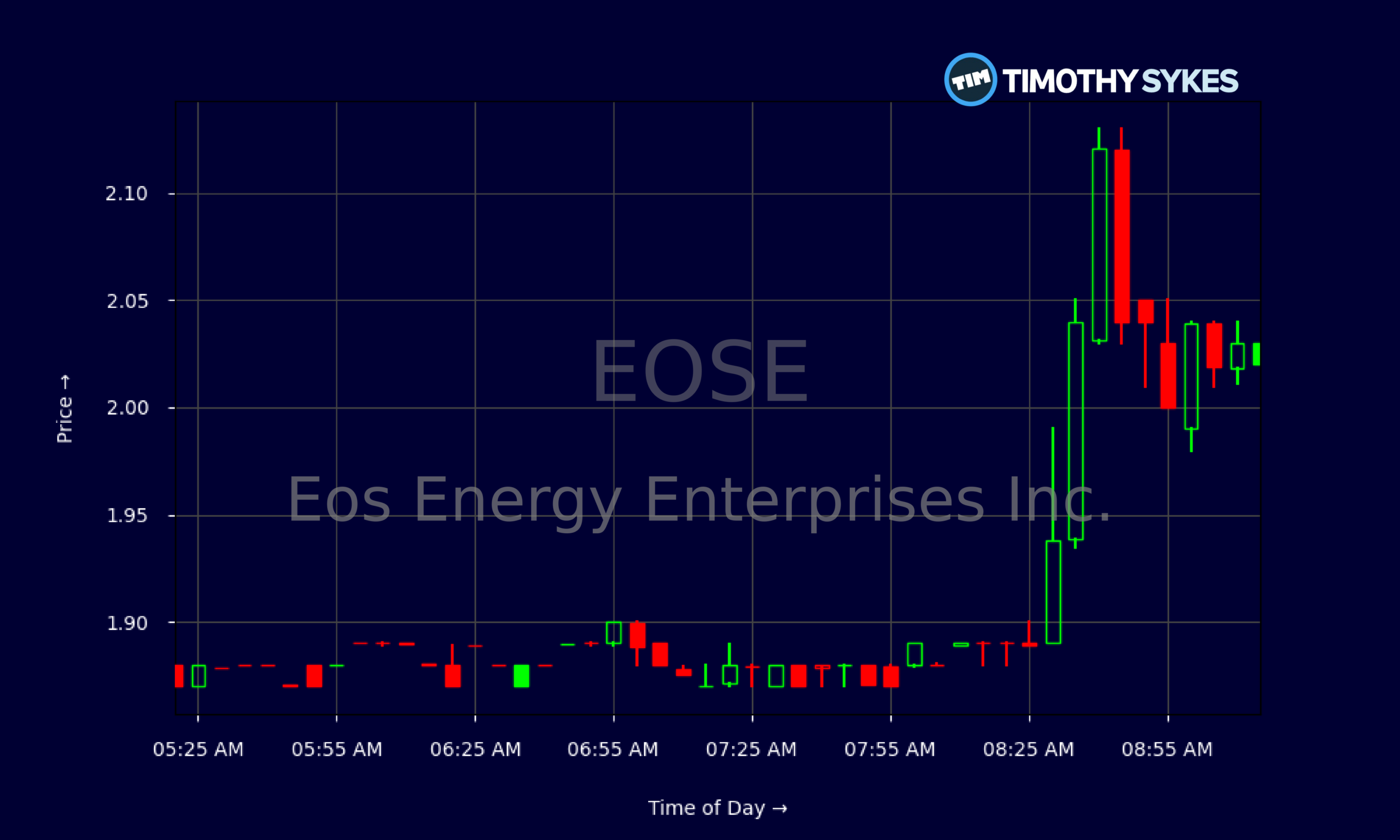
- Intraday action in EOSE around $1.90–$2.05 shows tight consolidation after a sharp pullback, signaling a key battleground area for short-term traders.
- Eos Energy Enterprises Inc. is growing revenue fast, but EOSE still posts deep losses and a negative gross margin, keeping it firmly in speculative territory.
- The balance sheet shows over $300M in cash and high long-term debt, giving EOSE runway but also real financing risk if losses continue.
Live Update At 09:18:39 EDT: On Monday, October 19, 2026 Eos Energy Enterprises Inc. stock [NASDAQ: EOSE] is trending up by 11.48%! Discover the key drivers behind this movement as well as our expert analysis in the detailed breakdown below.
Quick Financial Overview
EOSE is a classic high-risk, high-reward story stock. Eos Energy Enterprises Inc. is scaling revenue fast — about $114.2M over the trailing period and triple‑digit growth rates over three and five years. That’s strong top-line expansion, and traders notice that kind of acceleration.
But the other side of the ledger is rough. EOSE is still losing money on every dollar of sales, with a gross margin near -85% and an EBIT margin worse than -200%. That tells traders the core battery business is not yet profitable, even before overhead. The latest quarterly numbers show a net loss of about $275.7M and EBITDA around -$256.9M. On a per-share basis, EOSE printed about -$1.20 in basic and diluted EPS, so dilution and future capital raises stay on the radar.
More Breaking News
The balance sheet for Eos Energy Enterprises Inc. shows around $305.5M in cash and cash equivalents against total liabilities near $1.94B, including roughly $617.1M in long-term debt. Liquidity looks decent in the near term, with a current ratio of 3.3 and quick ratio of 1.9, but common equity is negative. That mix explains why EOSE trades like a speculative, volatile battery storage play rather than a steady cash generator.
Why Traders Are Watching EOSE Price Action
EOSE price action is doing exactly what you expect from a speculative clean‑energy name with big losses and big dreams. At the end of 2026/09, Eos Energy Enterprises Inc. was closing around $3.20–$3.50. From 2026/09/24 near $3.25, EOSE churned in the low-to-mid $3s for several days, then started to roll. By 2026/10/02 to 2026/10/09, EOSE was still holding the low $3s, but the highs stopped pushing higher. That’s often an early warning that momentum is fading.
The real crack showed up mid‑October. EOSE slipped from closes above $3.20 down toward $2.50, then $2.30, and finally the $1.80s. The last daily print has EOSE opening near $2.10 and finishing around $1.82, after a low of $1.81. That’s a steep downtrend from the $3.50 area — roughly a 45% drawdown for Eos Energy Enterprises Inc. in a few weeks.
Zooming in, the intraday five‑minute chart around $1.88–$2.05 is telling. Pre‑market, EOSE grinds in a tight band between $1.87 and $1.90, then slowly pushes above $2.00, topping around $2.13 before stalling. This kind of slow grind up after a big selloff usually signals shorts taking profits and dip buyers testing the waters. For day traders, EOSE here is a textbook “bounce or fail” setup: clear support in the high $1.80s, a developing resistance zone near $2.10–$2.15, and plenty of range for scalps.
Given the negative margins and heavy cash burn, many experienced traders will continue treating EOSE as a pure trading vehicle. Eos Energy Enterprises Inc. offers volatility, range, and clear technical levels — exactly what momentum and short‑bias traders like to see.
Conclusion
EOSE sits at the crossroads of aggressive growth and aggressive losses. On one hand, Eos Energy Enterprises Inc. is ramping revenue, holding more than $300M in cash, and operating in a hot sector — long‑duration energy storage. On the other hand, EOSE still carries negative gross margins, a massive net loss, and a capital structure with heavy debt and negative equity. That combo feeds volatility, and volatility is why active traders keep EOSE on their screens.
The recent chart tells a simple story. EOSE broke down from the $3s, flushed into the $1.80s, and is now coiling in a tight intraday range. If Eos Energy Enterprises Inc. can reclaim and hold above the $2.10–$2.20 area with volume, short‑term momentum traders may lean long for a bounce. If EOSE cracks and closes below the high $1.70s, breakdown traders will likely press the short side, betting on further weakness.
For now, EOSE is not about comfort; it’s about discipline. The financials demand respect, and so does the volatility. In Tim Sykes’ words, “The market doesn’t care about your opinion, it cares about your discipline.” As millionaire penny stock trader and teacher Tim Sykes says, “It’s better to go home at zero than to go home in the red.”. For Eos Energy Enterprises Inc., that means traders should focus on risk management, clear technical levels, and cutting losses fast, rather than hoping this battery story magically turns around overnight.
This is stock news, not investment advice. Timothy Sykes News delivers real-time stock market news focused on key catalysts driving short-term price movements. Our content is tailored for active traders and investors seeking to capitalize on rapid price fluctuations, particularly in volatile sectors like penny stocks. Readers come to us for detailed coverage on earnings reports, mergers, FDA approvals, new contracts, and unusual trading volumes that can trigger significant short-term price action. Some users utilize our news to explain sudden stock movements, while others rely on it for diligent research into potential investment opportunities.
Dive deeper into the world of trading with Timothy Sykes, renowned for his expertise in penny stocks. Explore his top picks and discover the strategies that have propelled him to success with these articles:
- Penny Stocks Trading Guide
- Best Penny Stocks Under $1 to Buy Today
- Top 8 Penny Stocks to Watch on Robinhood
Once you’ve got some stocks on watch, elevate your trading game with StocksToTrade the ultimate platform for traders. With specialized tools for swing and day trading, StocksToTrade will guide you through the market’s twists and turns.
Dig into StocksToTrade’s watchlists here:





Leave a reply