

Cipher Digital Inc. stocks have been trading up by 8.95 percent after announcing a transformative AI-partnership expansion.
Key Takeaways For CIFR Traders
- Cantor Fitzgerald cut its CIFR price target to $19 from $28 but kept an Overweight rating, blaming sector-wide AI/data-center pressure rather than Cipher Digital–specific problems.
- A new $850M zero-coupon convertible-notes deal, plus a $150M option, and exchanges of 2030 notes are reshaping Cipher Digital’s balance sheet and future share count.
- Most of the new CIFR capital is earmarked for capped-call hedges, the Barber Lake data-center build-out, and expansion of its high-performance computing and development sites.
- Shares of CIFR dropped 16.4% intraday to $10.87 and nearly 10% on the financing announcement as traders reacted to heavy dilution and leverage.
- Large-scale gas pipelines targeting up to 2.5GW of on-site power put Cipher Digital on a path to industrial-scale, high-performance computing data centers.
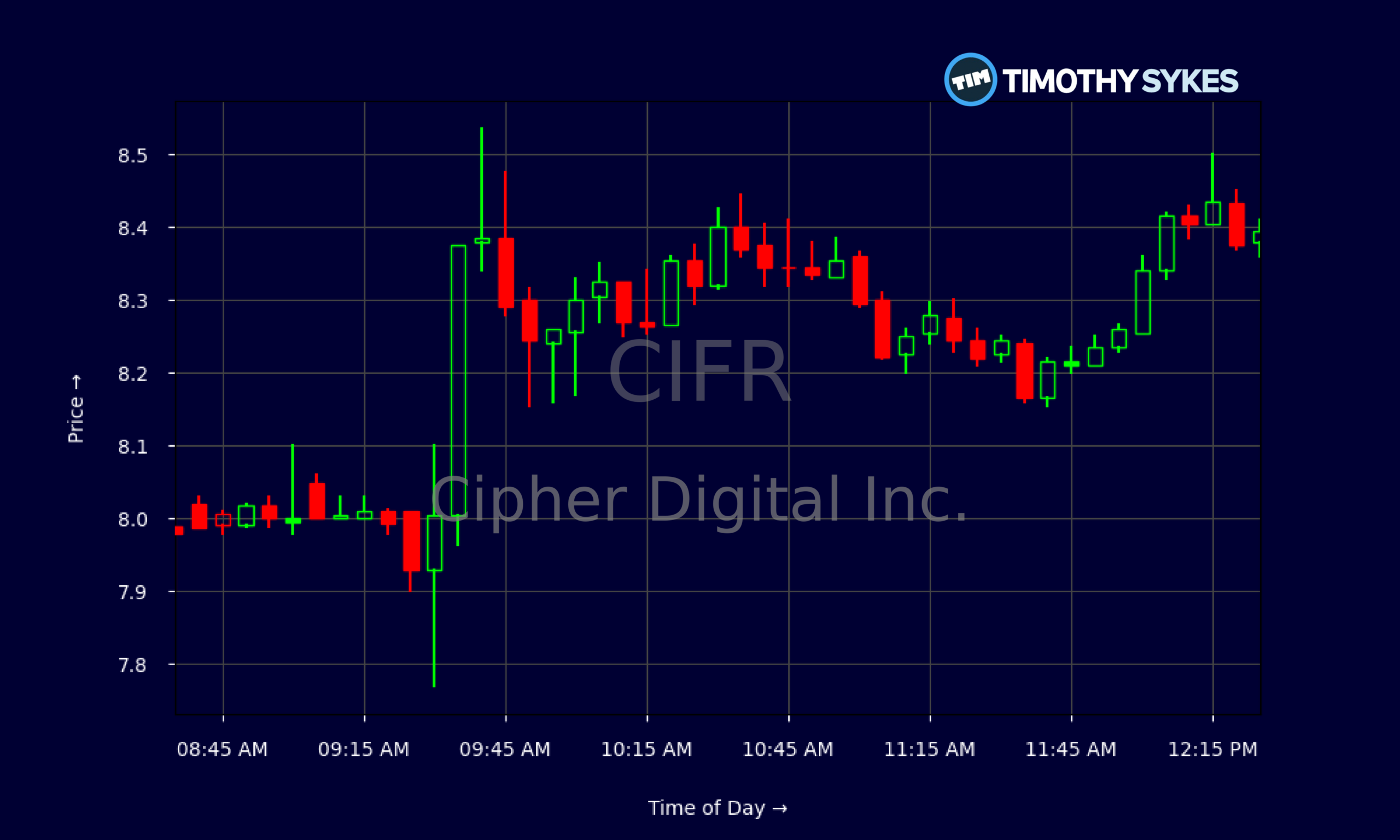
Live Update At 12:32:38 EDT: On Tuesday, October 27, 2026 Cipher Digital Inc. stock [NASDAQ: CIFR] is trending up by 8.95%! Discover the key drivers behind this movement as well as our expert analysis in the detailed breakdown below.
Quick Financial Overview
Cipher Digital, trading under ticker CIFR, has been on a clear downtrend this month. The stock fell from about $15.71 on 2026/10/02 to roughly $8.40 on 2026/10/27. That’s a brutal drawdown of close to 50% in a few weeks, with volatility spiking around the financing headlines.
The daily chart shows CIFR stair-stepping lower from the mid-teens to single digits, with brief bounces getting sold quickly. Intraday today, the 5‑minute tape shows a grind up from the high-$7s premarket to the low‑$8s, suggesting dip-buyers are nibbling but not in full control. Range is tight, so momentum traders need to be patient and let a clear trend form.
Fundamentally, Cipher Digital is still in heavy build-out mode. The latest quarterly data shows revenue around $224M but extremely negative margins, with profit margin deeply in the red and return on equity sharply negative. CIFR is effectively paying up front to secure power, hardware, and data-center assets, while profits lag.
More Breaking News
Leverage is high, with total debt to equity near 10 and a leverageratio above 13. The balance sheet shows over $4.5B in cash and restricted cash, but also more than $5.4B in long-term debt. For traders, that mix screams “story stock” — big growth plans backed by aggressive financing, not a clean cash-flow machine yet.
Why Traders Are Locked In On CIFR Now
CIFR is right in the middle of a classic high-growth, high-dilution story that active traders love to stalk. The headline move is Cipher Digital’s plan to issue $850M of zero‑coupon convertible senior notes due 2032, with an extra $150M overallotment option. At the same time, Cipher Digital is exchanging about $165.9M of its 1.75% 2030 convertible notes for 40.7M common shares.
For CIFR, this is a major recapitalization. Traders know zero‑coupon converts often pressure the equity near term. You get future share dilution, plus arb flows as funds hedge with stock. That’s exactly what the tape showed: Cipher Digital shares dropped nearly 10% on the financing announcement, and in a separate session plunged 16.4% intraday to $10.87 on heavy selling. The market is repricing CIFR’s risk and future share count, not its current quarter.
But Cipher Digital isn’t just plugging balance-sheet holes. Management is tying the capital to big, long-lived projects. A large chunk of the proceeds targets Barber Lake, a flagship data-center build that fits directly into CIFR’s high‑performance computing strategy. Another piece funds capped-call transactions, which can offset some dilution at higher prices, plus general corporate uses.
The real long-term swing, though, is power. Cipher Digital is building lateral natural‑gas pipelines across multiple sites to support up to 2.5GW of on‑site “bring‑your‑own‑generation” power. If those plans play out, CIFR locks in cheap, local energy for industrial‑scale data-center capacity. That’s the backbone you need for serious AI and HPC workloads.
Layer on top Cantor Fitzgerald’s move: cutting the CIFR price target from $28 to $19 while keeping an Overweight rating. That tells traders that, despite the drawdown and sector pressure on AI/data-center names, at least one major shop still sees upside from here — just off a lower base.
Conclusion
CIFR is a battleground name right now, which is exactly why active traders are glued to it. On one side, Cipher Digital is bleeding red ink, posting deeply negative margins and burning cash on heavy capex. The company is adding leverage and issuing a mountain of convertible debt, plus swapping existing 2030 notes into tens of millions of new shares. That’s textbook dilution pressure — and the recent price slide in CIFR reflects that reality.
On the other side, Cipher Digital is laying down serious infrastructure. Think Barber Lake, think multi‑site gas pipelines, think up to 2.5GW of on‑site generation aimed at industrial‑scale high‑performance computing. CIFR is trying to secure the power and data-center footprint before the full wave of AI and HPC demand crashes ashore. If the bet pays off, the current pain funds tomorrow’s capacity.
For short-term traders, that means CIFR is a pure catalyst and sentiment play. Watch the tape around key levels, map the financing overhang, and circle 2026/11/02 — when Cipher Digital will host its Q3 call and business update — as the next major headline date. In a name this volatile, discipline matters: refusing to chase and waiting for clean, high‑probability entries can be the difference between surviving and getting blown out. As millionaire penny stock trader and teacher Tim Sykes, says, “Be patient, don’t force trades, and let the perfect setups come to you.” Applying that mindset to CIFR means letting the chart confirm your thesis before committing size.
And remember what Tim Sykes pounds into his students: “The market doesn’t care about your opinion, only about price action — trade the chart, not the story.” With CIFR, there’s a huge story. But the edge comes from respecting the trend, reacting fast, and cutting losses even faster. This coverage is for educational and research purposes only and is not advice for any kind of trading activity.
This is stock news, not investment advice. Timothy Sykes News delivers real-time stock market news focused on key catalysts driving short-term price movements. Our content is tailored for active traders and investors seeking to capitalize on rapid price fluctuations, particularly in volatile sectors like penny stocks. Readers come to us for detailed coverage on earnings reports, mergers, FDA approvals, new contracts, and unusual trading volumes that can trigger significant short-term price action. Some users utilize our news to explain sudden stock movements, while others rely on it for diligent research into potential investment opportunities.
Dive deeper into the world of trading with Timothy Sykes, renowned for his expertise in penny stocks. Explore his top picks and discover the strategies that have propelled him to success with these articles:
- Penny Stocks Trading Guide
- Best Penny Stocks Under $1 to Buy Today
- Top 8 Penny Stocks to Watch on Robinhood
Once you’ve got some stocks on watch, elevate your trading game with StocksToTrade the ultimate platform for traders. With specialized tools for swing and day trading, StocksToTrade will guide you through the market’s twists and turns.
Dig into StocksToTrade’s watchlists here:




Leave a reply