

Corteva Inc. stocks have been trading down by -3.69 percent amid heightened concerns over agricultural input demand and pricing pressures.
Key Takeaways Traders Need To Know
- Corteva completed the separation of its seed business into new public company Vylor after a U.S. court denied California’s request to temporarily block the deal.
- Shares of CTVA plunged more than 81% in premarket trading and were down about 84.3% after the Vylor spin-off, reflecting a major value transfer to the new listing.
- The stock slid another 5.2% as S&P index reshuffling and forced flows added technical selling pressure on top of the structural hit.
- Management slashed Corteva’s quarterly dividend from $0.18 to $0.05 per share, effective for the 2026/12/15 payment to holders of record on 2026/12/01.
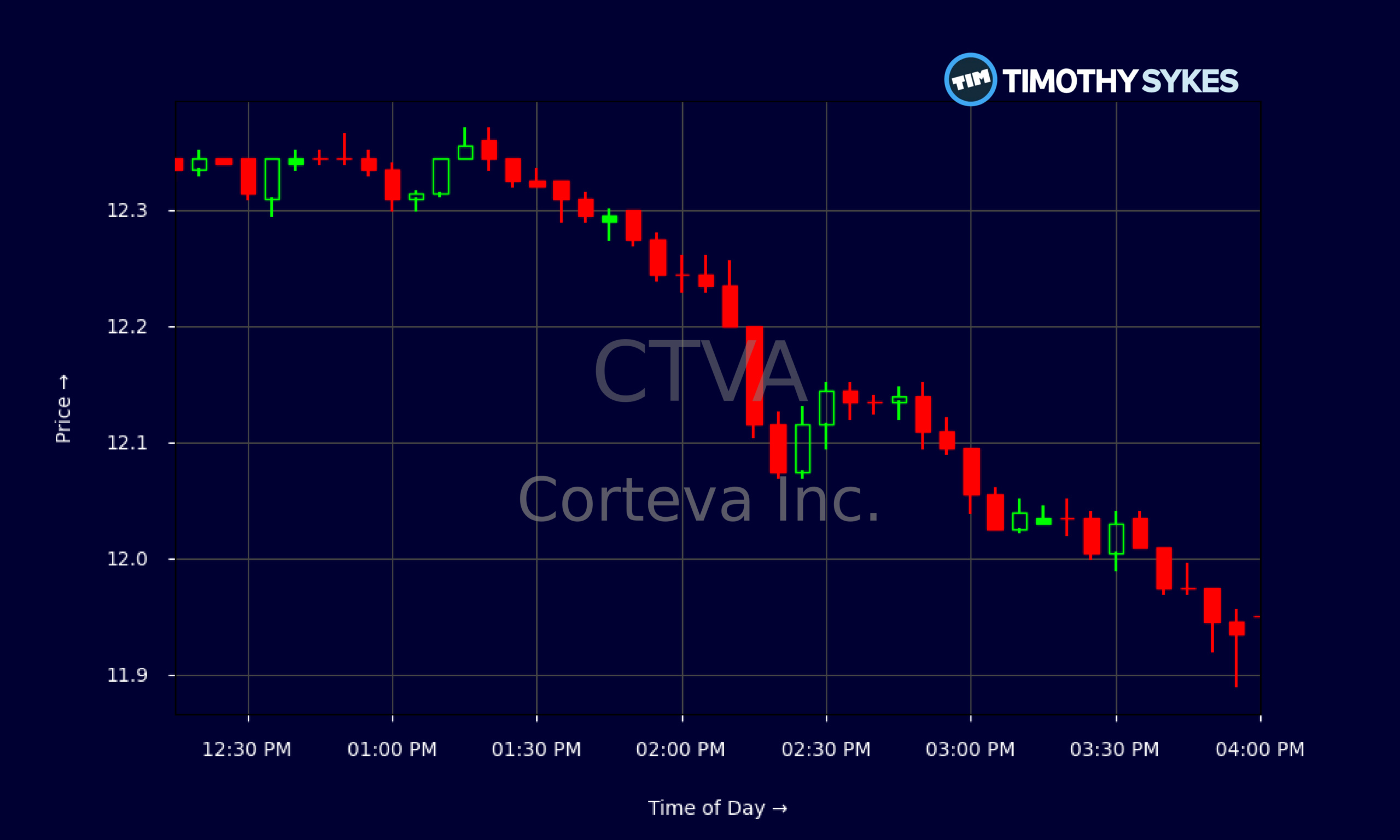
Live Update At 16:46:40 EDT: On Monday, October 26, 2026 Corteva Inc. stock [NYSE: CTVA] is trending down by -3.69%! Discover the key drivers behind this movement as well as our expert analysis in the detailed breakdown below.
Quick Financial Overview
CTVA just went through a massive reset. The Vylor spin-off and subsequent price collapse make the chart look broken at first glance, but traders need to separate optics from actual fundamentals.
Pre-spin, Corteva was a diversified ag giant. Post-spin, CTVA is a leaner crop-protection and ag-solutions play with less seed exposure. The stock now trades around $12 after the 80%+ slide tied to the Vylor separation. That move largely reflects value being carved out into Vylor rather than Corteva’s operations imploding overnight.
Under the hood, Corteva still produces serious numbers. Annual revenue sits near $17.4B, with a hefty 49.5% gross margin and EBIT margin around 9.9%. That puts CTVA on the map as a real cash generator when cycles cooperate. The company’s balance sheet is not overextended, with total debt-to-equity near 0.19 and interest coverage above 17 times, giving trading-focused readers some comfort that this is not a distressed story.
More Breaking News
Valuation has reset hard. A price-to-sales ratio near 0.5 and price-to-book around 0.35 signal that the market is heavily discounting the post-Vylor CTVA footprint. For traders, that combination—brutal chart, solid margins, and compressed multiples—often becomes a breeding ground for sharp relief bounces and short-term momentum setups.
Why Traders Are Watching CTVA After The Vylor Shock
The main story for CTVA right now is simple: the Vylor spin-off detonated the old price structure. Once a federal court denied California’s attempt to halt or delay the separation, the path cleared for Corteva to carve out its seed business into Vylor and list it separately. As soon as that became locked in, the market wasted no time repricing both halves of the story.
Premarket on 2026/10/01, CTVA plunged more than 80%. That was the first wave, driven by overnight orders reacting to the confirmed separation. By the time regular trading wrapped and the spin-off was fully digested, reports showed Corteva down roughly 84.3%. For traders, that is not normal volatility—that is a structural reset plus emotional panic layered on top.
CTVA then took another hit when S&P index reshuffling kicked in after the Vylor separation. Shares dropped an additional 5.2% as passive funds and rules-based strategies were forced to rebalance around the newly sized Corteva and the newly listed Vylor. That selling had little to do with fresh fundamentals and everything to do with mechanical flows. Short-term, that kind of forced activity can exaggerate downside and create extreme intraday moves.
On top of that, management slashed the quarterly dividend from $0.18 to $0.05 per share, effective for the 2026/12/15 payout. For yield-focused holders, that is another gut punch and a clear signal that capital return priorities have been reset for the smaller CTVA. Combined, the spin-off, the 80%+ drop, the index pressure, and the dividend cut explain why Corteva Inc. is now a volatile, high-attention ticker on many traders’ screens.
Conclusion
For active traders, CTVA is now a textbook case of how corporate actions can blow up a chart and reset expectations overnight. Corteva Inc. did not just drift lower; it was repriced violently as Vylor peeled off the seed assets and the market reassigned value between the two companies. The follow-through 5.2% slide around S&P reshuffling and the steep dividend cut to $0.05 per share only added fuel to selling pressure.
At the same time, the new Corteva is not a shell. Revenue of roughly $17.4B, solid gross margins near 50%, and a manageable leverage profile mean CTVA still has real operating muscle behind the ticker. Price-to-sales around 0.5 and price-to-book close to 0.35 suggest traders are paying well below historic multiples for the post-spin entity, at least for now.
For short-term players, that combination of extreme downside, structural catalysts, and still-strong fundamentals tends to create both sharp dead-cat bounces and nasty fade days. This is where discipline matters. As Tim Sykes likes to remind traders, “The market doesn’t care about your opinion, only your preparation and risk management.” As millionaire penny stock trader and teacher Tim Sykes says, “It’s not about how much money you make; it’s about how much money you keep.” Treat CTVA as a live training ground in how spin-offs, courts, and index flows can reshape a stock—and trade it with a clear plan, tight risk, and zero hesitation to cut losses.
This analysis is for educational and research purposes only and is not investment advice.
This is stock news, not investment advice. Timothy Sykes News delivers real-time stock market news focused on key catalysts driving short-term price movements. Our content is tailored for active traders and investors seeking to capitalize on rapid price fluctuations, particularly in volatile sectors like penny stocks. Readers come to us for detailed coverage on earnings reports, mergers, FDA approvals, new contracts, and unusual trading volumes that can trigger significant short-term price action. Some users utilize our news to explain sudden stock movements, while others rely on it for diligent research into potential investment opportunities.
Dive deeper into the world of trading with Timothy Sykes, renowned for his expertise in penny stocks. Explore his top picks and discover the strategies that have propelled him to success with these articles:
- Penny Stocks Trading Guide
- Best Penny Stocks Under $1 to Buy Today
- Top 8 Penny Stocks to Watch on Robinhood
Once you’ve got some stocks on watch, elevate your trading game with StocksToTrade the ultimate platform for traders. With specialized tools for swing and day trading, StocksToTrade will guide you through the market’s twists and turns.
Dig into StocksToTrade’s watchlists here:





Leave a reply