

BIO-key International Inc. stocks have been trading up by 127.08 percent amid heightened investor interest in its biometric security solutions.
Key Takeaways
- Strategic deal with Dubai-based Al Majlis Group pushes BIO-key International deeper into UAE and Saudi Arabian government and private markets, targeting a tight list of priority accounts.
- News of the Al Majlis partnership sent BKYI up roughly 70% intraday on extremely heavy trading volume, signaling fresh speculative interest in the name.
- Passkey:YOU, BIO-key International’s passwordless authenticator, earned Full FIDO Alliance Certification, confirming it meets key global security standards.
- FIDO approval positions BKYI’s Passkey:YOU for wider enterprise and AI-governance use cases, supporting the broader identity and access management (IAM) strategy.
Live Update At 08:32:21 EDT: On Tuesday, October 13, 2026 BIO-key International Inc. stock [NASDAQ: BKYI] is trending up by 127.08%! Discover the key drivers behind this movement as well as our expert analysis in the detailed breakdown below.
Quick Financial Overview
BKYI is a classic small-cap story stock: strong tech angles, tough financials. BIO-key International generated about $5.94M in revenue over the last year, but the company is still deep in the red. Profit margins are sharply negative, with EBIT margin around -89% and net margins near -90%. That tells traders one thing clearly — this is a growth-and-survival play, not a cash machine.
On the balance sheet, BKYI shows total assets of roughly $7.48M and equity of about $4.33M. The current ratio around 1.3 and quick ratio near 1 suggest BIO-key International can cover near-term bills, but there is not much cushion. Debt levels look modest, with total debt-to-equity at 0.2, which helps, but negative cash flow is a concern.
More Breaking News
Recent price action reflects this tension. BKYI ran from the low $2s to the mid-$4s and above on heavy volume, then pulled back into the $1.60–$2.80 range on the daily chart. For traders, that’s a textbook boom-and-fade pattern: huge spike, then consolidation as the market reassesses how much the news really changes the long-term story.
Why Traders Are Watching BKYI Right Now
BKYI forced its way back onto traders’ radar with a powerful catalyst combo: a Gulf-region partnership and a major industry certification. BIO-key International’s deal with Dubai-based Al Majlis Group aims to roll out its biometric-centric identity and access management platform across the UAE and Saudi Arabia, focusing first on a small group of high-priority accounts. For a micro-cap like BKYI, landing even a handful of government or large private contracts in those markets could be meaningful.
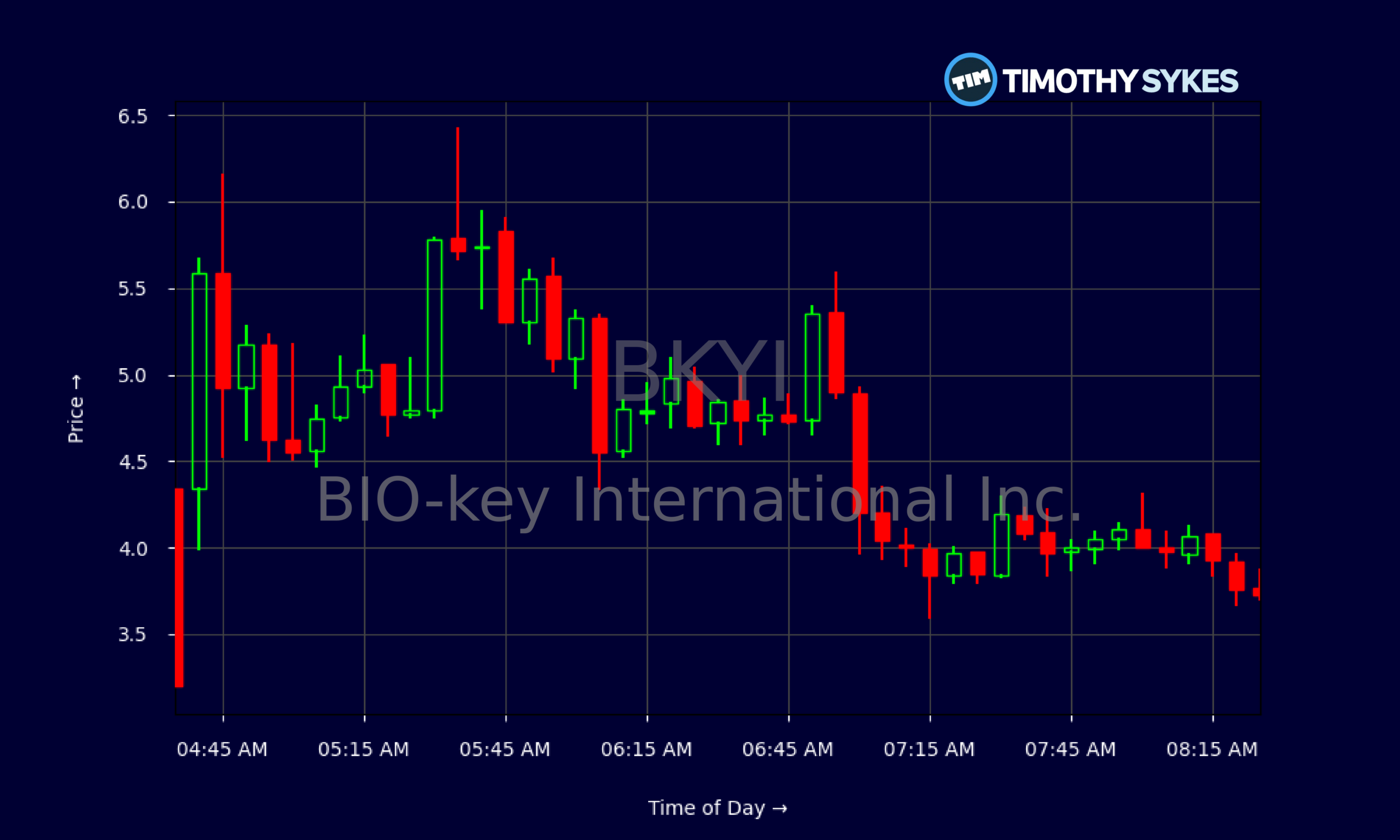
The market’s first reaction was loud. When BIO-key International announced the Al Majlis partnership, BKYI ripped roughly 70% intraday on extremely elevated volume. The 5-minute chart reads like a momentum trader’s playbook: a violent gap-and-run from below $2 up through the $5–$6 area in the premarket, followed by wild swings as late buyers chased and early longs locked in gains. That type of move tells you speculative capital is paying attention again.
At the same time, BIO-key International secured Full FIDO Alliance Certification for its Passkey:YOU authenticator. That matters. FIDO is a core standard in passwordless, phishing-resistant authentication. With this stamp, BKYI can pitch Passkey:YOU as a compliant, standards-based solution that enterprises and AI-governance teams can slot into existing IAM stacks.
Put together, the Al Majlis partnership and FIDO certification give BIO-key International a stronger narrative: validated tech plus a defined path into high-value Gulf customers. Traders are watching to see if that story translates into actual revenue, not just headline spikes.
Conclusion
BKYI now sits at a classic crossroads that active traders know well. BIO-key International still shows heavy losses, negative returns on equity and assets, and ongoing cash burn. Yet the stock just proved it can attract serious momentum when the right headline hits. The daily chart shows BKYI breaking out above $3, squeezing into the $5–$6 zone on the Al Majlis news, then sliding back toward the mid-$1s to low-$2s area as the initial frenzy cooled.
For disciplined traders, that setup demands rules. BIO-key International’s partnership with Al Majlis and the FIDO-certified Passkey:YOU authenticator are real milestones, and they give BKYI a shot at government and enterprise deals in the UAE and Saudi Arabia. But until BIO-key International starts turning those opportunities into consistent contracts and cleaner income statements, BKYI remains a high-volatility, catalyst-driven ticker.
This is where the mindset matters more than the story. As millionaire penny stock trader and teacher Tim Sykes says, “Embrace the journey, the ups and downs; each mistake is a lesson to improve your strategy.” As Tim Sykes likes to remind his students, “The market doesn’t care about your opinion, only your plan and your discipline.” With BKYI, that means respecting the volatility, focusing on the chart and liquidity, and treating every trade as a short-term educational and research exercise — not a long-term promise.
This is stock news, not investment advice. Timothy Sykes News delivers real-time stock market news focused on key catalysts driving short-term price movements. Our content is tailored for active traders and investors seeking to capitalize on rapid price fluctuations, particularly in volatile sectors like penny stocks. Readers come to us for detailed coverage on earnings reports, mergers, FDA approvals, new contracts, and unusual trading volumes that can trigger significant short-term price action. Some users utilize our news to explain sudden stock movements, while others rely on it for diligent research into potential investment opportunities.
Dive deeper into the world of trading with Timothy Sykes, renowned for his expertise in penny stocks. Explore his top picks and discover the strategies that have propelled him to success with these articles:
- Penny Stocks Trading Guide
- Best Penny Stocks Under $1 to Buy Today
- Top 8 Penny Stocks to Watch on Robinhood
Once you’ve got some stocks on watch, elevate your trading game with StocksToTrade the ultimate platform for traders. With specialized tools for swing and day trading, StocksToTrade will guide you through the market’s twists and turns.
Dig into StocksToTrade’s watchlists here:





Leave a reply